
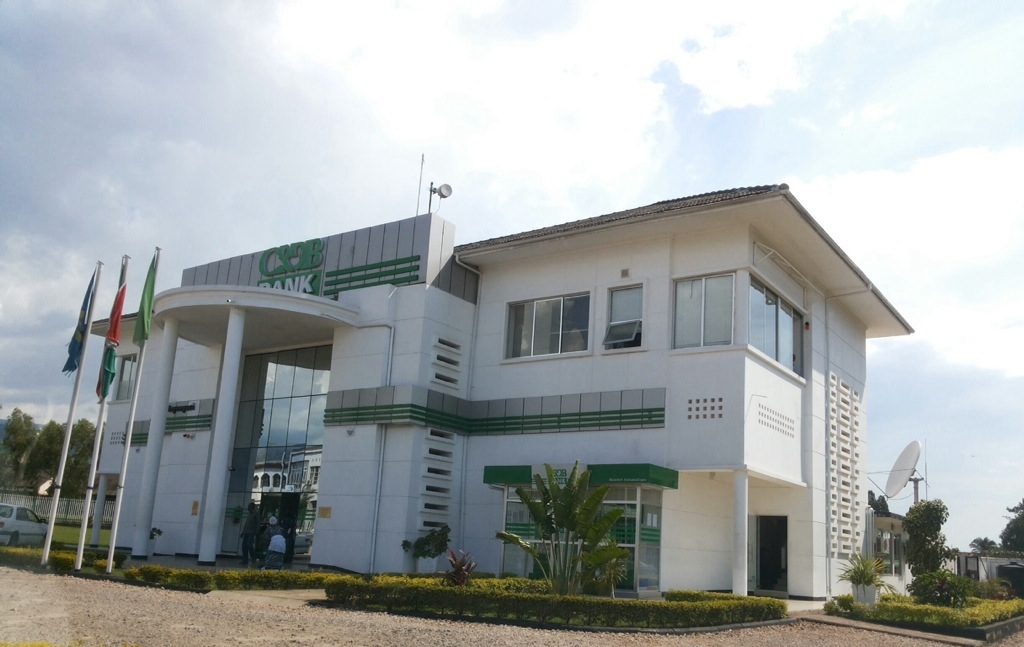
Burundi’s banking sector is undergoing a period of change, balancing between profit-making, structural reforms, and the promise of digital transformation. While the sector remains small compared to regional peers, it plays a central role in supporting the country’s projected GDP growth of 3–6% in 2025, driven by mining investments and the recovery of the secondary sector.
Structure of the Sector
The banking sector in Burundi is composed of about 15 commercial banks, regulated by the Banque de la République du Burundi (BRB). The market is highly concentrated, with the top five banks in Burundi controlling over 60% of total assets. This leaves the system exposed to shocks, since challenges in just one or two large players can ripple across the sector.
The largest bank in Burundi is Banque Commerciale du Burundi (BANCOBU), which holds a 25% market share and focuses on corporate lending and government financing. Other influential players include Banque de Crédit de Bujumbura (BCB), FinBank (formerly Access Bank), Ecobank Burundi, Bank of Africa Burundi, Kenya Commercial Bank (KCB) Burundi, Interbank Burundi (IBB), and United Bank for Africa (UBA) Burundi. These institutions serve a mix of corporate, retail, and cross-border clients.
In September 2025, the market was shaken by Diamond Trust Bank (DTB) Kenya’s decision to exit. DTB sold its 83.67% stake in DTB Burundi to a consortium of local investors. The deal, which still awaits regulatory approval, could reshape how foreign banks engage with Burundi’s financial system and signal a shift toward more localized ownership.
Regulatory Reforms and Digital Push
The BRB has long worked to strengthen supervision under the 2017 Banking Law, which set requirements such as a 10% minimum capital ratio and compliance with international reporting standards. However, implementation gaps remain, especially around adoption of IFRS 9 for expected credit losses and Basel guidelines for credit risk.
A major turning point came in September 2025 with the BRB partnership with London Stock Exchange Group (LSEG). This collaboration introduced an end-to-end digital infrastructure to modernize Burundi’s financial markets. LSEG’s FX Trading Platform now provides greater transparency in foreign exchange, while its Money Market Trading system facilitates interbank liquidity. Additional tools include an Auctions platform for open market operations and Market Tracker for real-time market surveillance.
These systems, integrated through LSEG Workspace, are expected to automate up to 70% of market operations by the end of 2025. This reform directly addresses opacity in Burundi’s forex markets, where parallel exchange rates previously diverged by as much as 20% from official rates.
The reform effort also ties into the IMF-backed Extended Credit Facility worth US$271 million for 2023–2026. The program requires structural changes such as integrating digital IDs into banking for stronger know-your-customer checks and anti-money laundering controls. Economists, however, have warned that reforms will be less effective without stronger independence of the BRB from political interference.
Challenges Facing the Burundi Banking Sector
Despite the progress, several hurdles persist. The credit boom of 2021–2022 exposed weaknesses in loan quality, with IMF assessments pointing to under-provisioning and poor risk measurement. Depreciation of the Burundian franc, linked to the country’s dependence on imports, has eroded bank balance sheets. Climate shocks add further risks, since around 40% of bank lending is tied to agriculture.
Concentration risk is another pressure point: three banks hold 50% of large exposures, meaning any shock to their portfolios could destabilize the entire sector. At the same time, sovereign-bank linkages remain deep, with government debt accounting for about 30% of bank assets. With public debt standing at 69.3% of GDP in 2024, fiscal strain translates directly into vulnerabilities for lenders.
Low financial inclusion further constrains growth. Only 17.3% of adults use mobile money services, leaving much of the rural population outside the banking system. According to IMF projections, external shocks such as coffee price volatility could push non-performing loans to 5% if not carefully managed.
The DTB exit also highlights the risk of foreign investor caution, as political and economic uncertainty continue to weigh on Burundi’s investment appeal.
Outlook and Opportunities
Despite these challenges, opportunities for growth are emerging. The digital rollout through the BRB-LSEG partnership could improve transparency and efficiency, while also making the sector more attractive to international investors. Enhanced trade finance could help Burundi integrate further with the East African Community, where exports grew 15% in 2025, led by mining.
SME lending is another area of potential growth. In August 2025, UNCTAD facilitated a workshop on financing small businesses, emphasizing the role of digital platforms in expanding credit access. Projections suggest that credit penetration, currently below 10% of adults, could rise to 15% by 2027 if reforms take hold.
The African Development Bank projects Burundi’s GDP to grow by 5.9% in 2026, creating further demand for infrastructure loans. Meanwhile, the World Bank’s $168.3 million investment portfolio in energy and agriculture could indirectly strengthen bank balance sheets through new lending opportunities. Non-bank financial institutions, if better regulated, could also play a role in diversifying risks away from traditional banking.
Jefferson Wachira is a writer at Africa Digest News, specializing in banking and finance trends, and their impact on African economies.