
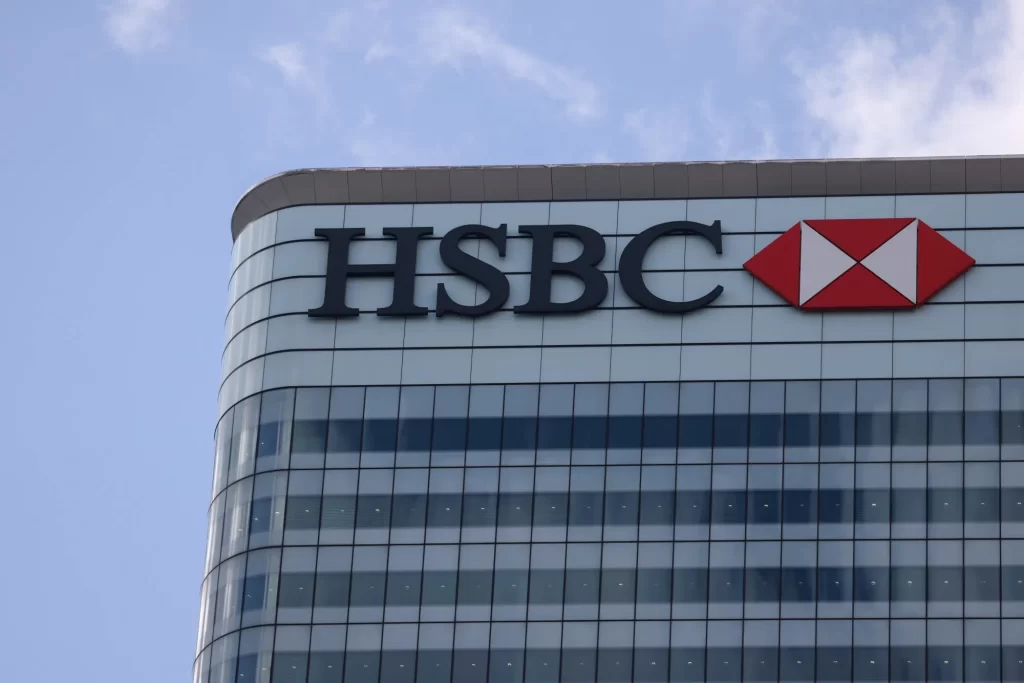
Global banking in Africa is entering a new phase, shaped by exits, consolidations, and a shift toward digital solutions. HSBC Holdings Plc has officially exited South Africa after more than three decades, transferring its clients, employees, and assets to FirstRand Ltd., Africa’s largest lender by market capitalization. The transfer, finalized in September 2025 after regulatory approvals, integrated HSBC’s corporate operations into FirstRand’s Rand Merchant Bank, as the British lender redirected attention to Asia and the Middle East.
Global Banks vs. Foreign Banks: What’s the Difference?
In discussions about banking on the continent, the terms global banks and foreign banks are often used interchangeably, but they are not identical. Global banks are institutions with a worldwide presence, serving multinational corporations and clients across multiple regions, with examples including HSBC, Barclays, Citi, and JPMorgan.
Foreign banks, on the other hand, are defined relative to the host country. Any bank headquartered outside a country but operating within it qualifies as a foreign bank. For instance, HSBC in South Africa was a foreign bank, even though globally it is also considered a global bank. The distinction matters because while all global banks are foreign banks in host markets, not all foreign banks have global footprints. Some operate in just a few outside markets without being worldwide players.
This nuance is central to understanding the changing map of Foreign Banking in Africa, that is global giants are scaling back, while regional and niche players are reassessing their place in African economies.
Global Banks That Have Exited Africa
HSBC’s withdrawal adds to the list of global banks that have exited Africa in the past decade. France’s BNP Paribas SA shut down its South African corporate and investment banking arm in May 2024, moving capital back to Europe and Asia for higher returns. Barclays Plc began scaling back in 2015 when it reduced its stake in Absa (formerly Barclays Africa) to under 15%. Although Barclays remains influential in investment banking, it now focuses heavily on serving high-net-worth individuals across Africa.
Standard Chartered Plc has also restructured its African footprint. In July 2025, it sold operations in Angola, Zimbabwe, and Sierra Leone at a $217 million loss and is considering further divestments in Botswana, Zambia, and Uganda. At the same time, the bank has increased its wealth management services for affluent Africans and is evaluating expansion opportunities in Morocco.
French giant Société Générale SA has rapidly trimmed its African network. In 2025, it finalized the sale of its Mauritanian business to a consortium led by Enko Capital and Oronte and sold its Burkina Faso unit to Vista Group. Earlier divestments in Morocco and Guinea left Société Générale with operations in only five countries: Algeria, Tunisia, Ivory Coast, Equatorial Guinea, and Cameroon.
Swiss banks were ahead of the curve. Credit Suisse, long before its May 2024 collapse and absorption into UBS, had already shut down its wealth management businesses in nine African countries in 2022, including Nigeria, Kenya, Ghana, and Tanzania. Clients were referred to Barclays, and Credit Suisse eventually wound down its South African operations as part of a wider restructuring.
Atlas Mara Ltd., the pan-African bank founded by former Barclays CEO Bob Diamond in 2015, also illustrates the difficulties of Foreign Banking in Africa. Its expansion into seven countries faltered under operational strains and legal disputes. By mid-2024, Access Bank Zambia acquired its local operations, while other subsidiaries were absorbed into larger African banks.
Even Crédit Agricole SA, which has retained a smaller presence, is recalibrating. Through Crédit Agricole du Maroc, the group continues to back fintech projects and sustainable finance, but group-wide strategy is shifting toward more profitable regions, keeping Africa as a niche corporate and investment banking market rather than a retail focus.
Why Global Banks Are Leaving
Global banks in Africa face multiple headwinds that limit profitability. Currency shortages and volatility undermine trade finance, while fragmented regulatory systems inflate compliance costs. Despite partial harmonization under Basel III, managing cross-country rules remains expensive. Many African economies also face debt burdens and vulnerability to commodity price shocks, eroding margins further.
Compared to Asia’s 10–15% returns, African banking often delivers lower yields, making the continent less appealing to global shareholders. Shareholders’ pressure to reallocate capital to faster-growing markets has accelerated exits, especially in the post-pandemic period of 2024–2025, when geopolitical uncertainty and uneven recovery exposed weak spots.
Local Banks Filling the Gap
The retreat of global banks in Africa is not leaving a void. Local and regional banks are rapidly stepping up. Access Bank of Nigeria, after acquiring Atlas Mara’s Zambia unit, now operates in 20 countries. Zenith Bank and Mauritius’ MCB Group are pursuing regional expansion plans, taking advantage of the African Continental Free Trade Area (AfCFTA) to settle transactions in local currencies and avoid foreign exchange traps.
South Africa’s Absa Group, which separated from Barclays, merged its retail units in August 2025, reporting a 17% profit increase in the first half of the year. Vista Group’s acquisition of Société Générale Burkina Faso is another example of local players gaining ground by leveraging local knowledge and leaner cost structures.
The Role of Fintech and Digital Banking
Digital innovation is reshaping the sector even as traditional banks retreat. Ecobank has been recognized for advancing cross-border digital payments, with e-transactions in Africa rising 20% to $40 billion in 2025. Fintech collaborations are also growing. Revolut, for instance, has explored entry into South Africa despite regulatory hurdles, aiming to pair global technology with African distribution networks.
Green financing is another emerging area. Crédit Agricole du Maroc has sponsored fintech initiatives and sustainable lending models, supporting renewable energy projects as Africa added over 850 TWh of new capacity in 2024. These innovations demonstrate how digital finance and sustainability agendas are becoming central to Africa’s financial transformation.
Retreat or Reset?
Global banking in Africa is not disappearing but undergoing a reset. Global players like Barclays and Standard Chartered are focusing on specialized services such as private banking and corporate finance, while local banks expand into retail and regional trade. This hybrid model, foreign banks in niches and African banks scaling mainstream growth, could create a more balanced financial system.
The exits have also freed up billions in assets that local institutions are redeploying, contributing to an estimated 12% growth in continental banking revenues in 2025. With AfCFTA projected to unlock $450 billion in intra-African trade by 2035, the opportunity for African banks is growing.
Jefferson Wachira is a writer at Africa Digest News, specializing in banking and finance trends, and their impact on African economies.