
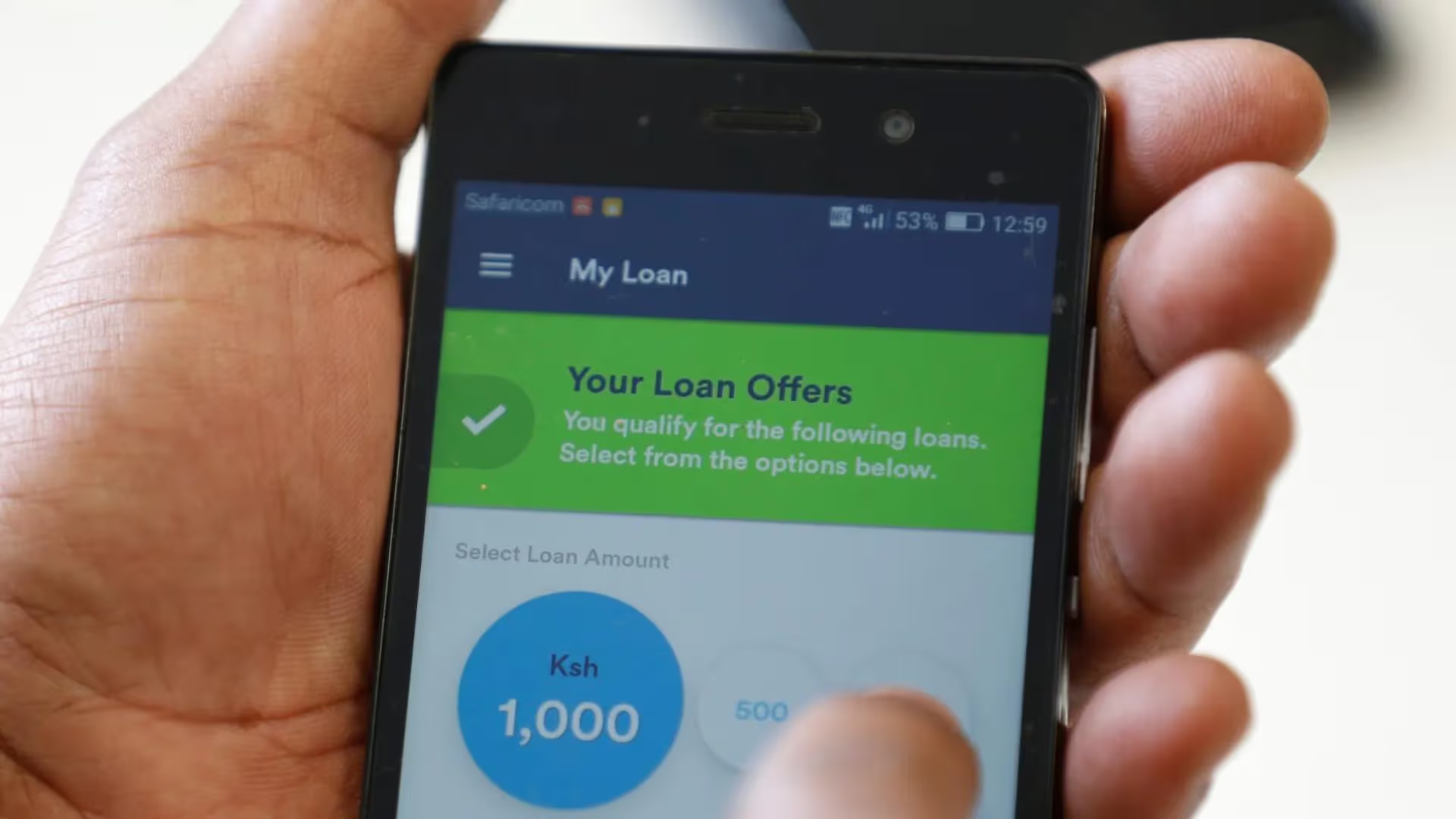
Instant mobile credit has become one of the most widely used forms of short-term financing in Kenya. By 2026, however, its true cost is no longer defined only by the advertised interest rate. Instead, borrowers face a layered expense structure that combines regulated disclosures, statutory levies, penalty mechanics, and non-financial burdens that compound over time.
While regulatory oversight has improved transparency, the long-term cost profile of mobile credit remains materially higher than traditional bank or Sacco lending.
Interest Rates That Appear Clear — but Add Up Fast
Under the Central Bank of Kenya’s Digital Credit Providers Regulations, licensed lenders must issue a Key Fees Statement before disbursement. This has reduced outright opacity but has not lowered borrowing costs.
Most licensed platforms, including Tala, Zenka, and Branch, charge monthly rates ranging from 7% to 19%. On paper, these rates appear manageable. Over repeated borrowing cycles, however, they translate into annualised costs that far exceed conventional lending benchmarks.
Safaricom’s Fuliza overdraft facility stands out as particularly expensive when balances are carried forward. Fuliza applies a daily maintenance charge rather than a fixed monthly rate. A balance held for 30 days can produce an effective monthly cost that exceeds standard term-based digital loans, making it unsuitable for extended use despite its convenience.
Government Levies Now Embedded in Loan Pricing
The total cost of instant mobile credit increasingly includes statutory charges passed directly to borrowers.
Excise Duty applies at a rate of 20% on all mobile loan commissions and fees. A borrower charged KSh 100 in interest or fees ultimately pays KSh 120, with KSh 20 remitted to the government. This levy is unavoidable and inflates the effective borrowing cost without increasing the lender’s margin.
In addition, many platforms now bundle Credit Life Insurance premiums, typically between 1% and 2% of the loan value. These charges are intended to cover outstanding balances in the event of death or permanent disability but further increase the upfront cost of short-term borrowing.
Penalties Are Capped, but the Damage Persists
Regulatory reforms have limited how much lenders can recover from defaulted loans, but financial exposure remains substantial.
Under the In Duplum Rule, interest and penalties on a non-performing loan cannot exceed the original principal. While this prevents infinite accumulation, a borrower can still end up owing double the amount borrowed.
The more enduring consequence is reputational. Even small digital credit defaults can result in negative Credit Reference Bureau (CRB) listings. A default of KSh 500 can restrict access to high-value facilities such as mortgages or business loans worth millions of shillings, as banks treat unresolved digital credit defaults as high-risk indicators.
Time and Psychological Costs Often Overlooked
Beyond monetary charges, borrowers incur non-financial costs that rarely appear in pricing disclosures.
Licensed lenders increasingly rely on automated collection systems that generate repeated calls, messages, and reminders throughout the day. The cumulative effect includes reduced concentration, lost productivity, and elevated stress levels.
The speed of access itself carries a premium. A Sacco loan priced at 12% per annum is nearly fifteen times cheaper than a mobile loan priced at 15% per month. Borrowers effectively pay several hundred percentage points for immediacy.
High Financial Costs Accumulate Rapidly
Although individual loan amounts are small, frequent borrowing erodes household finances over time.
Monthly rates of 7.5% to 15% translate into annual percentage rates exceeding 180%, far above commercial bank lending averages. Many lenders also deduct facility or processing fees upfront. A borrower approved for KSh 1,000 may receive only KSh 920 after an 8% deduction but repay interest on the full amount.
When repayments are missed, daily or weekly late fees begin to accrue. These charges can double the outstanding balance quickly, making recovery mathematically difficult once a borrower falls behind.
The Digital Credit Debt Treadmill
Short repayment windows, often between 7 and 30 days, create structural pressure that sustains repeat borrowing.
Many users repay one loan by taking another from a different platform, moving between apps such as Tala and Zenka to stay afloat. This pattern creates persistent indebtedness rather than short-term relief.
Research shows that sustained digital credit use can reduce household income by approximately 16%, as earnings are redirected toward servicing high-cost debt instead of savings or productive investment. While these loans can cushion immediate shocks such as medical bills, households often face greater financial strain a month later when repayment coincides with normal living expenses.
Social and Reputational Consequences Extend the Cost Curve
The impact of digital credit extends beyond balance sheets.
Negative CRB listings can remain active for five to seven years, blocking access to mortgages, vehicle financing, or business expansion credit. For young borrowers, this can delay wealth accumulation well into their prime earning years.
Unlicensed lenders continue to pose additional risks. Many scrape phone contact lists and engage in aggressive collection tactics that involve family members, employers, or colleagues. This practice has been linked to job losses, social conflict, and reputational harm.
The sustained pressure from automated collections and threats of legal action also contributes to heightened anxiety and stress among borrowers, adding a psychological burden to an already expensive form of credit.
Jefferson Wachira is a writer at Africa Digest News, specializing in banking and finance trends, and their impact on African economies.