
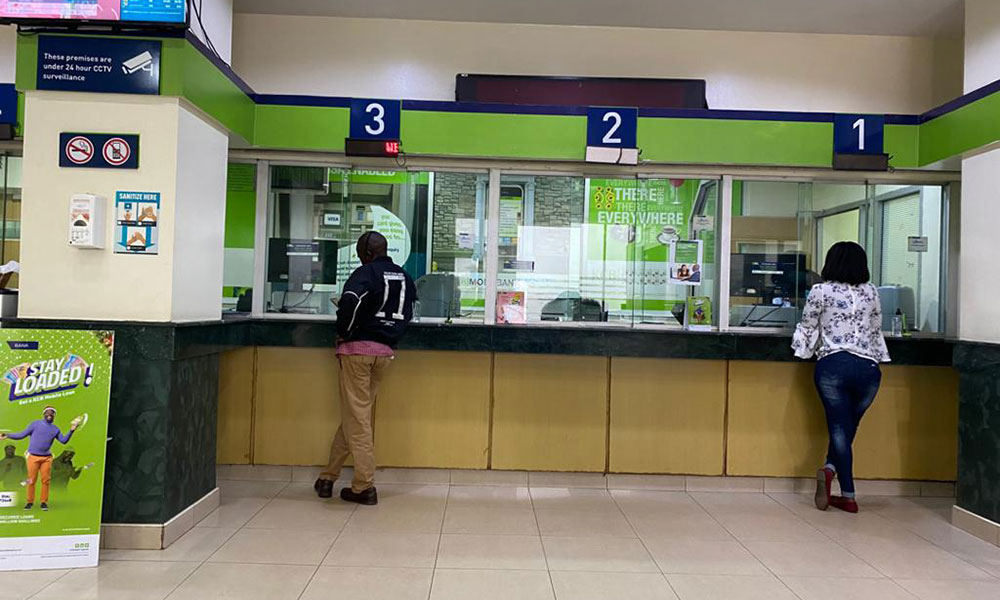
Kenyan banks still earn most of their headline profits from lending, but a growing share of income now comes from routine customer activity, including sending money, paying bills, swiping cards, and holding balances. In financial statements, this stream is recorded as non-funded income (NFI): revenue generated without issuing a loan. As banking becomes increasingly digital in 2026, the frequency and scale of everyday transactions have turned small per-transaction charges into a consistent earnings engine.
The Digital and Mobile “Toll”
Mobile money integration has reshaped how Kenyans move funds, and banks participate in nearly every step of that flow. Transfers between bank accounts and mobile wallets such as M-Pesa or Airtel Money typically attract interoperability fees. Each movement, whether deposit, withdrawal, or transfer generates a small charge shared between service providers.
Real-time bank-to-bank transfers through systems like PesaLink add another layer of fee income. Charges are usually tiered based on transaction size, with customers paying modest amounts that accumulate into meaningful revenue at scale. Bill payments routed through bank apps (electricity, water, school fees, or government services) often carry convenience charges. These digital rails allow banks to monetize speed and accessibility rather than physical branch visits.
The result is a transaction ecosystem where banks earn from volume: frequent, low-value transfers that mirror Kenya’s mobile-first financial habits.
Card-Based Revenue
Card usage in urban Kenya has expanded alongside point-of-sale (POS) infrastructure. Every tap or swipe triggers a chain of payments between banks, card networks, and merchants.
Interchange fees form the backbone of this system. When a customer pays with a debit or credit card, the merchant’s bank transfers a fraction of the transaction value to the cardholder’s bank. Individually small, these percentages add up across thousands of daily retail purchases.
Banks that deploy POS machines to merchants also collect commissions on processed sales, commonly structured as a percentage of each transaction. In addition, many cards carry annual maintenance fees, creating predictable income independent of transaction volume. Together, these mechanisms allow banks to benefit from the steady migration away from cash.
Foreign Exchange Margins
Kenya’s trade flows, diaspora remittances, and cross-border digital commerce keep foreign exchange desks active. Banks generate revenue through spreads, which is the difference between the price at which they buy and sell currencies. Even narrow spreads produce earnings when applied to large volumes of dollar-denominated transactions.
International card spending introduces another margin layer. Purchases made in foreign currencies are converted at bank-determined rates that include a markup. For customers, this appears as a foreign transaction fee embedded in the exchange rate; for banks, it is a scalable revenue stream tied to global consumption and travel.
Account Maintenance and Notifications
Some fee income comes from account administration rather than movement of funds. Premium or corporate current accounts often carry monthly maintenance charges covering account management services. While modest on an individual basis, such fees contribute recurring revenue across large portfolios.
Transaction alerts, typically delivered via SMS, are another steady source. Banks charge small amounts per notification, and high transaction volumes translate into meaningful aggregate income. These charges are closely linked to the digital monitoring expectations of customers who want real-time account visibility.
Float Income From Idle Balances
Not all transaction-related earnings come from explicit fees. Funds temporarily parked in non-interest-bearing accounts represent usable liquidity for banks. These balances can be deployed overnight in interbank markets or short-term instruments, generating interest income while remaining available for customer transactions.
This “float” effect is amplified by the scale of retail banking. Even brief holding periods,like salary deposits awaiting bill payments, merchant settlements pending withdrawal, provide banks with low-cost funding that supports treasury operations.
Jefferson Wachira is a writer at Africa Digest News, specializing in banking and finance trends, and their impact on African economies.