
The World Bank Executive Board is tentatively scheduled to meet on March 19 to review a revised financing package for Kenya’s Affordable Housing, Land Administration, and Sustainable Investments program, a project that has gained prominence in the country’s talks with multilateral lenders after delays linked to reform benchmarks.
Board members are expected to consider raising the Bank’s concessional loan component to $475 million from an earlier $375 million proposal, according to people familiar with the agenda. The package includes $75 million in co-financing from the OPEC Fund for International Development, bringing the multilateral share of the housing-linked program to nearly $550 million.
The revised structure follows a reduction in anticipated commercial lending. The Bank cut its private capital mobilization target to $360 million from $900 million after weaker lender appetite, narrowing the project’s overall envelope to about $910.3 million versus an original estimate of roughly $1.35 billion.
The program is organized around three policy pillars covering housing finance, land reform, and climate-linked investment. A core element is a line of credit for the Kenya Mortgage Refinance Company to expand mortgage access for lower-income and underserved borrowers. Officials see the refinancing vehicle as central to extending loan tenors and easing liquidity constraints in the housing market.
Another segment supports land administration reforms, including digitalization of property records through the Ardhisasa system, intended to shorten processing times and improve transparency in titling. A third pillar targets sustainable housing finance, including climate-linked mortgage products designed to meet environmental standards embedded in Kenya’s infrastructure agenda.
Directors are also expected to review Kenya’s progress on a separate set of reform commitments tied to budget support. About $750 million in Development Policy Operations funding from the World Bank has remained on hold since 2024 pending completion of 11 legislative and policy actions. The status of those benchmarks could influence the pace of future disbursements, according to people briefed on the discussions.
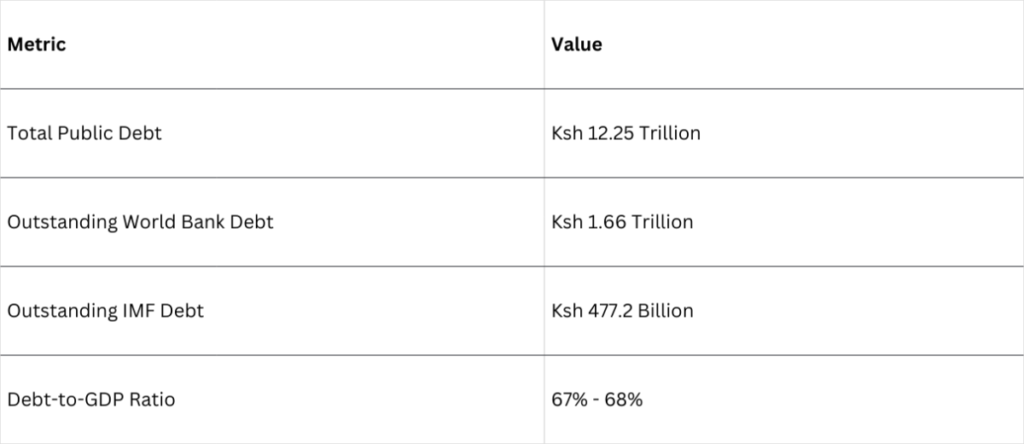
Kenya’s engagement with multilateral lenders has intensified after several scheduled releases in 2025 were delayed. The International Monetary Fund last disbursed funds to the country in October 2024, when its Executive Board approved combined program reviews that unlocked about $606 million under existing facilities. Separately, the World Bank provided a €180 million sector loan in December 2025 to support education reforms, following a $1.2 billion policy-based operation in mid-2024. A planned $850.9 million release for 2025 did not proceed after Nairobi missed performance targets.
An IMF mission is expected in Nairobi later this month to discuss a potential successor arrangement as authorities work to stabilize financing flows while advancing fiscal and structural reforms.
The March board meeting places the housing and land package at the center of Kenya’s near-term funding plans, combining concessional financing, institutional reforms, and private-sector participation under tighter market conditions.
Jefferson Wachira is a writer at Africa Digest News, specializing in banking and finance trends, and their impact on African economies.