
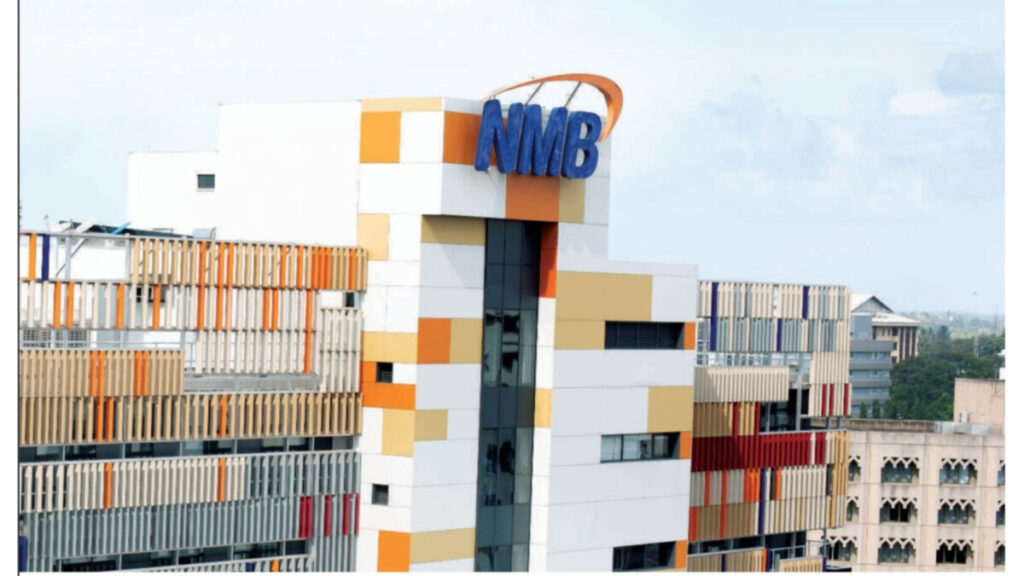
When NMB Bank Plc was established in 1997 by an Act of Parliament following the restructuring of the state-owned National Bank of Commerce, few expected the small microfinance institution created from the breakup to evolve into Tanzania’s most profitable lender.
The restructuring divided the former NBC into three separate entities, including NMB, which was initially called the National Microfinance Bank. At the time, its mandate was limited. The bank was tasked with extending basic financial services to rural and underserved communities, focusing largely on deposit mobilization rather than lending. Its early operations revolved around savings accounts and small-scale banking services, with little capacity to compete with established commercial lenders.
Privatization and Public Listing
A turning point came in 2005 when the Tanzanian government privatized part of the bank, selling a 49% stake to a consortium led by Rabobank. The transaction introduced international banking expertise and stronger governance structures while pushing the institution toward modern commercial banking practices. The transformation continued in 2008 when NMB listed on the Dar es Salaam Stock Exchange, allowing the government to divest an additional stake and bringing thousands of local investors into its shareholder base.
From that point, the bank steadily expanded its product offering beyond its microfinance roots. It moved into retail lending, SME financing and corporate banking while building a national footprint across Tanzania. The strategy helped the lender deepen its reach across both urban and rural markets, eventually giving it the largest customer base in the country.
Market Position in Tanzania’s Banking Sector
Today NMB serves nearly 10 million customers, more than any other bank in Tanzania. Its balance sheet has expanded rapidly, with total assets reaching about TZS 17.2 trillion in 2025, placing it second in size behind rival CRDB Bank. Deposits rose to roughly TZS 12.4 trillion while its loan book climbed to about TZS 10.4 trillion.
Despite being slightly smaller by assets, NMB has emerged as the country’s most profitable lender. In 2025 the bank became the first Tanzanian financial institution to surpass TZS 1 trillion in pre-tax profit, securing roughly 30% of the sector’s total earnings. Together with CRDB, the two banks dominate the industry, accounting for nearly half of Tanzania’s banking assets and a majority of total profits.
Five-Year Growth Acceleration
Much of NMB’s acceleration has occurred in the past five years. Under a medium-term strategy launched in 2021, the bank delivered its fastest growth on record. Total assets increased by 142% between 2020 and 2025 while net profit after tax climbed 258% to about TZS 750 billion. Over the same period, customer deposits more than doubled and the number of accounts expanded from around four million to nearly ten million.
Digital Transformation
Digital banking has been central to that expansion. The lender invested more than TZS 230 billion in technology over five years, shifting the majority of transactions away from physical branches. By 2025 about 94% of all transactions were conducted through alternative channels including mobile banking and agency networks.
One of the pillars of this strategy has been the bank’s extensive agent network known as NMB Wakala. The network has grown to more than 73,000 agents operating in over 1,000 villages, allowing customers to access banking services in areas where traditional branches are scarce. The bank’s mobile platform also offers instant services such as digital micro-loans, extending credit to customers who previously had limited access to formal finance.
Operational Efficiency and Risk Management
Operational efficiency has been another defining feature of the bank’s model. NMB maintains a cost-to-income ratio of roughly 37%, significantly lower than many peers. Its non-performing loan ratio stood at about 2.5% in 2025, comfortably below the regulatory threshold set by the Bank of Tanzania.
Leadership
Leadership continuity has also played a role in shaping the bank’s trajectory. Chief Executive Officer Ruth Zaipuna, who took the helm in 2020 after serving as chief financial officer, has overseen the strategy that pushed the lender past the trillion-shilling profit milestone while accelerating digital adoption.
Shareholding and Market Performance
The bank’s shareholder base combines international investors with domestic ownership. Investment firm Arise B.V. holds the largest stake, while the Tanzanian government remains a significant shareholder alongside institutional and retail investors who acquired shares during the public offering.
Investors have responded to the bank’s performance. NMB’s share price has climbed sharply over the past five years, rising more than fourfold and making it the most valuable company listed on the Dar es Salaam exchange.
Jefferson Wachira is a writer at Africa Digest News, specializing in banking and finance trends, and their impact on African economies.