
When Absa Bank Kenya launched the Absa Kenya Foundation in October 2024, it moved its social investment from scattered initiatives into a defined, funded structure. The KES 500 million seed capital, alongside a commitment to allocate at least 1.5% of annual earnings, introduces consistency in how the bank approaches long-term development work.
What stands out is the decision to tie funding to specific, measurable programs. Rather than broad commitments, the foundation is built around four areas where gaps in Kenya’s economy are clear: small business growth, youth skills, environmental management, and access to basic health support.
Backing MSMEs Beyond Financing
The entrepreneurship pillar speaks directly to the structure of Kenya’s economy. MSMEs account for most businesses but often operate with limited access to financing and advisory support. The target to reach 50,000 enterprises over five years focuses on moving businesses from subsistence operations into stable, income-generating ventures. The inclusion of women, youth, and persons living with disabilities points to segments that are active in business but remain underserved by formal financial systems.
There is also a deliberate allocation toward agribusiness, with at least 10% of interventions directed to the sector. Agriculture continues to anchor rural livelihoods, yet productivity and financing gaps persist. Linking enterprise support with agriculture positions the foundation within a sector that affects both income levels and food systems.
Beyond capital, the combination of mentorship and tailored banking solutions addresses a common challenge for small businesses: access to finance without the capacity to use it effectively. Bridging that gap tends to determine whether funding leads to growth or stagnation.
Scaling Youth Skills and Employability
In education, the scale of ambition is notable. Reaching one million young people through the Ready-to-Work initiative places the focus on employability rather than academic achievement alone. Digital skills, financial literacy, and entrepreneurship training are increasingly tied to how young people enter and navigate the labour market.
The Absa Fellowship Program adds a leadership component, targeting 50,000 participants. This shifts part of the conversation from job readiness to decision-making and governance, areas that shape how businesses and institutions are run over time.
The 500 STEM scholarships and partnerships with firms such as Amazon Web Services extend this into technical capability. Cloud computing and digital infrastructure skills are becoming essential across industries, and targeted training programs help narrow the gap between education and industry demand. Focusing some of these opportunities on women in tech also addresses participation imbalances in the sector.
Linking Climate Action to Finance
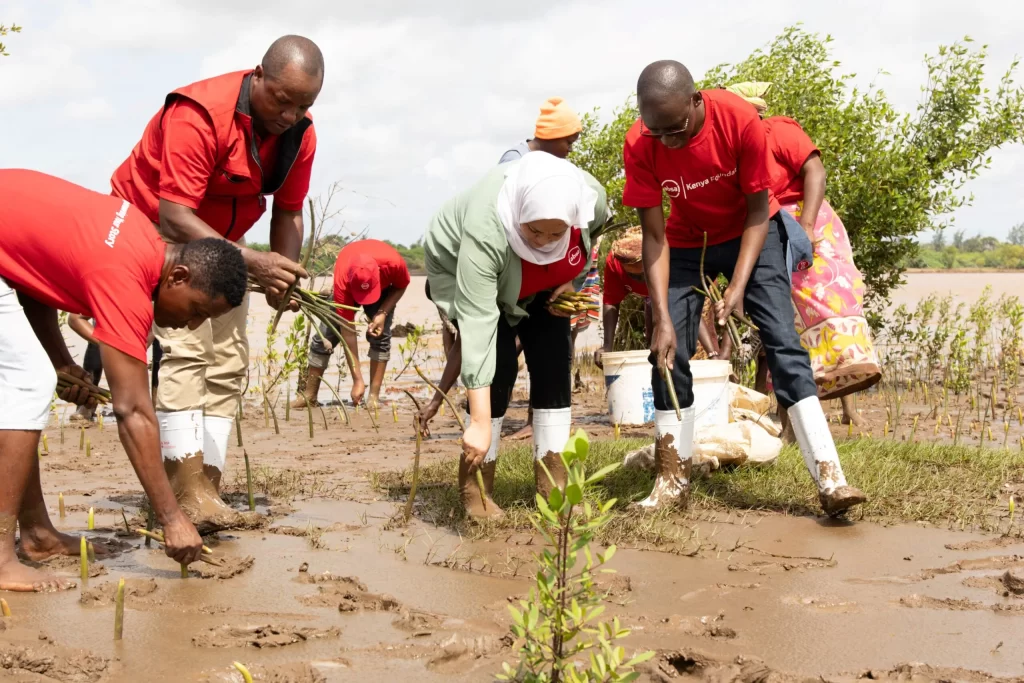
Environmental work forms a third layer of the foundation’s strategy. The plan to plant 10 million trees aligns with national reforestation targets, but the broader focus on climate-smart agriculture and renewable energy introduces a financing angle. As banks assess exposure to climate risk, initiatives that support low-carbon and climate-resilient activities are becoming part of how institutions manage both impact and risk.
Collaboration with government bodies such as the Ministry of Environment links private capital with public policy priorities, particularly in areas where scale is required to make a difference.
Health and Crisis Response
The final pillar, health and humanitarian response, positions the foundation as a support mechanism during periods of stress, including floods and drought. These events continue to affect communities across Kenya, often disrupting livelihoods and access to essential services. Pairing emergency response with preventative health initiatives creates a balance between immediate relief and longer-term community wellbeing.
An Extension of Core Banking Priorities
Taken together, the Absa Kenya Foundation introduces a structured approach to corporate giving that mirrors how financial institutions are starting to think about impact. The funding commitment ensures continuity, while the defined targets create accountability around delivery.
The focus areas also intersect with the bank’s core environment: small businesses that require financing, young people entering the workforce, and sectors adapting to climate pressures. By concentrating resources in these areas, the foundation operates less as a peripheral initiative and more as an extension of how the institution engages with the economy.
Jefferson Wachira is a writer at Africa Digest News, specializing in banking and finance trends, and their impact on African economies.