
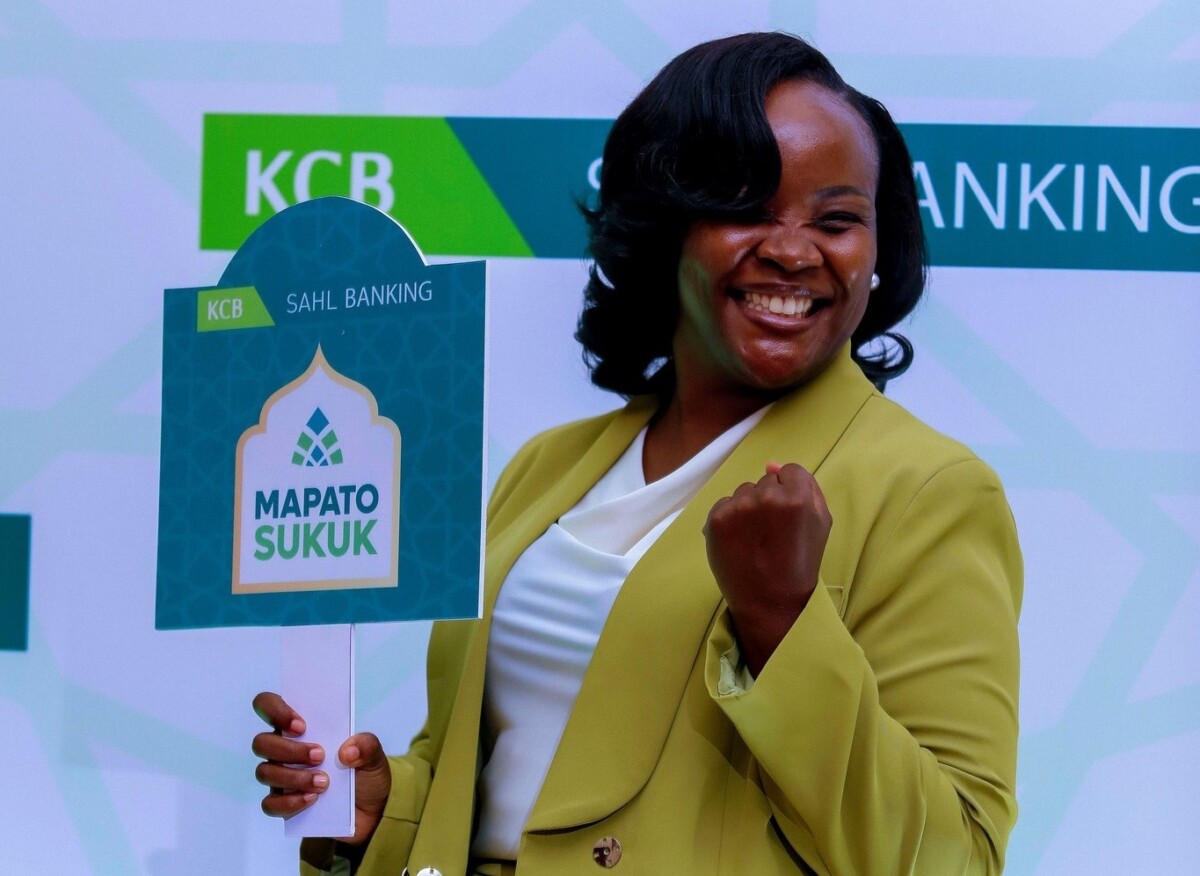
KCB Bank Tanzania has launched Mapato Sukuk, a Shari’ah-compliant investment product that opens fixed-income style returns to investors seeking alternatives to conventional bonds.
The offer was introduced by Amour Muro, head of Islamic banking at the lender, with Exaud Julius, director at the Capital Markets and Securities Authority, attending as guest of honour. The issuance is structured to attract both retail and institutional investors, with a defined return, fixed tenure, and secondary market access.
What the Mapato Sukuk Offers
The Mapato Sukuk is structured as a three-year investment with an expected annual profit rate of 11%, distributed quarterly. Investors can participate with a minimum subscription of TZS 500,000, making it accessible to a wider base compared to many capital markets instruments.
The subscription window runs from April 15, 2026, to May 14, 2026, with profit payments scheduled every August, November, February, and May. The first payout is set for May 28, 2026, while the maturity date falls on May 28, 2029.
The total programme size is TZS 30 billion, with an initial tranche of TZS 10 billion and a greenshoe option of an additional TZS 10 billion in the event of strong demand. Investors can subscribe through KCB Bank Tanzania branches, the bank’s website, licensed stockbrokers, or via the Shirka App.
How the Sukuk Is Structured
Unlike conventional bonds, the Mapato Sukuk is issued under the Mudharabah principle, a profit-sharing arrangement in Islamic finance. Investors provide capital (Rab al Maal), while the bank, through its Islamic window KCB Sahl Banking, acts as the manager (Mudharib), deploying funds into Shari’ah-compliant ventures.
Returns are generated from the performance of these underlying activities rather than interest payments. At maturity, investors receive their initial capital alongside the final profit distribution. The product has been approved by Shari’ah advisory boards, including the Center for Islamic Finance, Compliance and Advice (CIFCA) and KCB Sahl Banking’s independent board.
Difference between Sukuk and Conventional Bonds
Conventional bonds are debt instruments where investors lend money to an issuer in exchange for interest payments. Sukuk, by contrast, represent ownership in a pool of assets or business activities. Instead of interest, investors earn a share of profits generated by those assets. Sukuk structures also avoid riba (interest), making them compliant with Islamic finance principles while still offering predictable income streams.
Key Investment Terms at a Glance
The Mapato Sukuk is issued by KCB Bank Tanzania, with KCB Sahl Banking acting as the investment manager under its Islamic banking window. The programme has an aggregate size of TZS 30 billion, with an initial tranche of TZS 10 billion and a greenshoe option of an additional TZS 10 billion in the event of oversubscription.
The Mapato Sukuk minimum investment is set at TZS 500,000, with additional subscriptions accepted in multiples of TZS 100,000. Investors are offered an expected return of 11% per annum, distributed on a quarterly basis over the life of the instrument.
The Sukuk has a tenor of three years, with the Mapato Sukuk subscription period running from April 15 to May 14, 2026. The Mapato Sukuk maturity date is May 28, 2029, with profit payments scheduled throughout the period.
In terms of tax treatment, returns are exempt from withholding tax on profit income, improving the net yield for investors. The instrument is also set to be listed on the Dar es Salaam Stock Exchange, allowing for secondary market trading before maturity. The planned listing means investors can trade the Sukuk before maturity, adding a liquidity option not always available in traditional fixed-term investments.
Benefits and Risks to Consider
For investors, the structure offers a combination of predictable income and compliance with Islamic finance principles. Quarterly profit payments provide regular cash flow, while the tax exemption improves net returns compared to some taxable instruments. Accessibility is another factor, with multiple subscription channels and a relatively low entry point.
However, returns are tied to the performance of underlying assets, meaning they are not guaranteed in the same way as fixed interest payments. Market liquidity after listing will also depend on investor demand on the exchange.
What Sukuk Are Typically Used For
Sukuk are commonly issued by governments and corporates to raise funds for specific projects or general financing needs. These can include infrastructure such as roads, energy projects, or business expansion. By linking returns to real economic activity, Sukuk provide an alternative funding model that aligns with Islamic finance principles while serving similar purposes to bonds in capital markets.
How to Participate
Investors interested in the Mapato Sukuk by KCB Bank Tanzania can apply during the subscription period through KCB Bank Tanzania’s branch network, online platforms, licensed intermediaries, or the Shirka App. As part of its funding strategy, the bank indicated it may issue additional Sukuk over time, depending on financing needs and market conditions.
Jefferson Wachira is a writer at Africa Digest News, specializing in banking and finance trends, and their impact on African economies.