
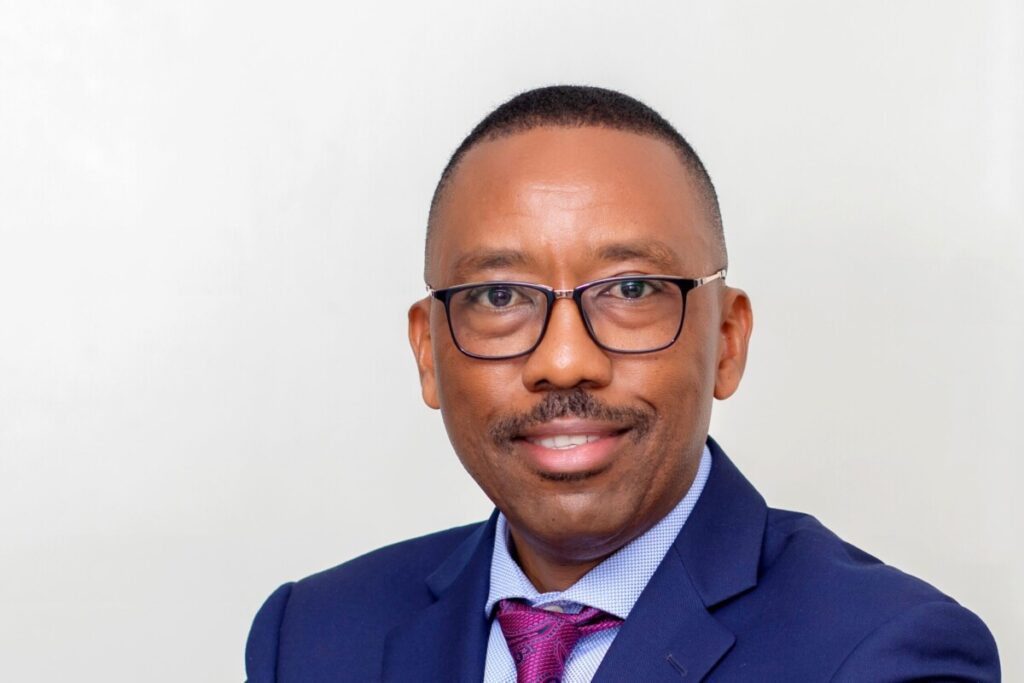
Members of the Uganda Bankers’ Association elected Mr. Micheal Mugabi as the new Association Chair during the Annual General Meeting (AGM) held on 15th May 2026 at Serena Hotel Kampala, ushering in a new leadership team at a time when Uganda’s banking sector is posting strong growth across assets, deposits, and profitability.
Mr. Micheal Mugabi, the Chief Executive Officer of Housing Finance Bank Uganda, succeeds Mr. Julius Kakeeto after the outgoing chair completed his two-year term leading the association between 2024 and 2025. The election took place during the Uganda Bankers’ Association (UBA) Annual General Meeting (AGM) on 15th May 2026 at the Serena Hotel Kampala, where member institutions also voted in a new UBA Executive Committee to guide the association’s agenda over the next term.
The newly elected committee includes Ms. Grace Muliisa, Chief Executive Officer of Ecobank Uganda, who takes up the role of Vice Chair. Mr. Sanjay Rughani, Chief Executive Officer of Standard Chartered Bank Uganda, was elected Honorary Treasurer, while Mr. Robin Bairstow, Chief Executive Officer of I&M Bank, will serve as Honorary Auditor.
Other members of the new UBA Executive Committee include Mr. David Wandera, Chief Executive Officer of Absa Bank Uganda, representing Tier 1 financial institutions; Mr. Moyo Nkisolathi, Chief Executive Officer of Brac Uganda Bank, representing Tier 2 and Tier 3 financial institutions; and Mr. Francis Ogwang, Country Manager at East African Development Bank, representing development finance institutions.
Uganda Banking Sector Posts Growth across Key Metrics
The leadership transition comes as Uganda’s banking industry records growth in assets, deposits, and earnings despite pressure from global economic volatility and domestic fiscal challenges. In his final address as outgoing chairman, Mr. Julius Kakeeto outlined the sector’s 2025 performance, pointing to year-on-year gains across major banking indicators.
Total industry assets increased by 16% to UGX 61.7 trillion as of December 2025, up from UGX 53.3 trillion recorded a year earlier. Customer deposits rose 17% to UGX 41.7 trillion from UGX 35.5 trillion during the same period. Asset quality also improved, with non-performing loans declining to 3.4% from 4.8% in 2024, while total comprehensive income for the sector reached UGX 2.17 trillion. Cost-to-income ratios improved to 67%.
Mr. Kakeeto said the banking sector continues to play a central role in supporting Uganda’s economic activity through financing and financial inclusion initiatives aimed at sustaining long-term growth.
ESG Roadmap and Government Growth Strategy
During the meeting, the outgoing chair highlighted several initiatives pursued under the association’s medium-term strategy, including the banking industry’s engagement with the Government’s 10X GDP Growth Strategy. According to Mr. Kakeeto, the association finalized the industry’s response framework and structural enablers intended to support Uganda’s Agro-Industrialization, Tourism, Mineral Development, and Science, Technology and Innovation (ATMS) agenda through 2040.
He also pointed to progress made under UBA’s Environmental, Social and Governance (ESG) and sustainability roadmap, with the association reaching the midpoint of its 36-month implementation plan focused on capacity building, sustainability standards, and adoption of IFRS S1 and S2 disclosure frameworks. The association additionally continued stakeholder engagement programs through initiatives such as the Anti-Fraud Consortium (AFC), Alternative Dispute Resolution (ADR) mechanisms, and the Women Economic Empowerment Initiative (WEEI).
Industry Warns of Fiscal and Geopolitical Risks
Despite the positive performance, Mr. Kakeeto said the sector continued to face challenges linked to fiscal policy and taxation, noting that the Uganda Bankers’ Association maintained engagements with the Uganda Revenue Authority (URA) on tax-related matters affecting the industry.
Looking ahead to 2026, he said the sector remains optimistic due to expectations surrounding oil production revenues and stable inflation conditions, although risks tied to geopolitical tensions, debt sustainability concerns, and fiscal pressures remain key areas to monitor. Mr. Kakeeto urged the association to continue pushing for regulatory reforms and policy frameworks that support investment and capital flows while remaining responsive to changes in financial technology and digital banking systems.
Jefferson Wachira is a writer at Africa Digest News, specializing in banking and finance trends, and their impact on African economies.