
- Standard Chartered plans to cut over 7,000 back-office jobs globally by 2030 as it increases AI use in banking operations, compliance, and risk management.
- The bank is restructuring its global operations by reducing more than 15% of back-office roles while expanding AI-driven systems across HR, risk, and compliance functions.
- The lender’s long-term strategy links workforce reductions to artificial intelligence adoption, with automation expected to reshape operations and improve efficiency across its global network.
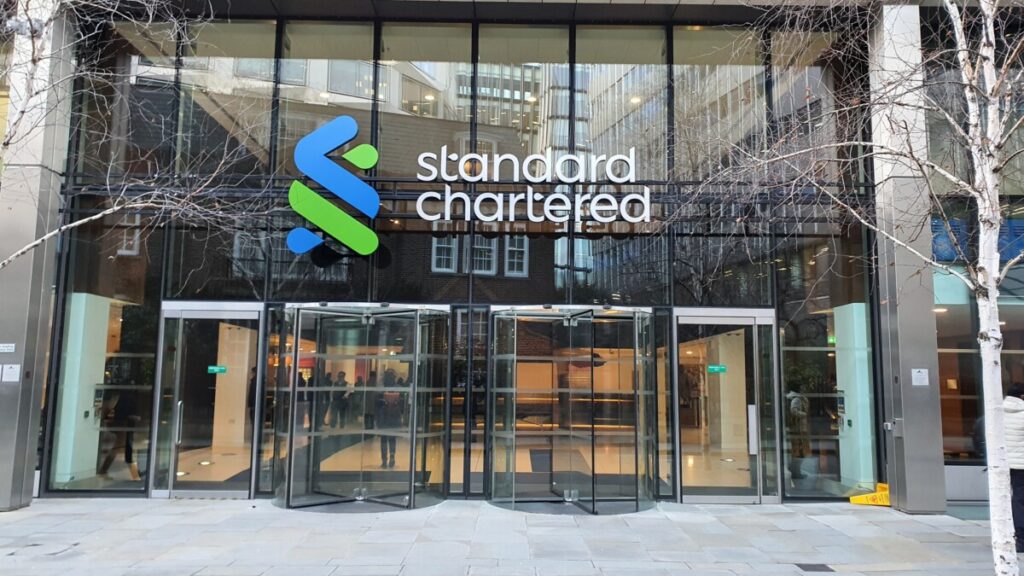
Standard Chartered Kenya parent company Standard Chartered Plc plans to cut more than 15 percent of its global back-office workforce by 2030 as the lender accelerates the use of artificial intelligence across human resources, compliance, risk management and operational functions. The restructuring plan could affect between 7,000 and 7,800 roles globally, making Standard Chartered one of the latest major banks to publicly tie workforce reductions to large-scale AI adoption.
Standard Chartered Group Chief Executive Bill Winters said the bank is replacing “lower-value human capital” with financial and investment capital linked to automation, advanced analytics and generative AI systems as part of a new long-term growth strategy unveiled during an investor presentation in Hong Kong. The move comes as global financial institutions increasingly deploy AI tools to automate repetitive operational work, particularly in non-customer-facing divisions such as transaction processing, compliance reviews, reporting and fraud monitoring.
Standard Chartered said the affected functions would include corporate support units such as human resources, risk and compliance across its international operations network, including major back-office hubs in Bengaluru, Shenzhen and Warsaw. The bank did not disclose the specific countries where redundancies would occur or the exact timeline for the reductions. However, the lender said some affected employees may be moved into new positions or retrained for higher-skilled digital and technology-focused roles.
New Strategy Targets Higher Returns and Lower Costs
The restructuring forms part of a wider efficiency and profitability strategy after Standard Chartered reached its medium-term financial targets for 2026 ahead of schedule. Under the new plan, the bank is targeting a return on tangible equity above 15 percent by 2028 and approximately 18 percent by 2030. It also plans to lower its cost-to-income ratio to about 57 percent by 2028 from 63 percent in 2025. The lender expects AI integration and automation to increase revenue generated per employee by roughly 20 percent over the next four years while supporting income growth of between 5 percent and 7 percent annually between 2025 and 2028.
Alongside the workforce restructuring, Standard Chartered plans to deepen its focus on cross-border corporate banking, wealth management and digital-first retail banking services. The bank aims to attract $200 billion in new wealth management inflows by 2028 while expanding digital banking platforms such as Mox in Hong Kong as part of efforts to reduce dependence on physical branch networks.
Standard Chartered Kenya Has Already Reduced Workforce
Standard Chartered Bank Kenya Plc has already implemented job cuts over the past decade as the lender shifts toward digital banking operations. The bank employed 942 staff members at the end of 2025, down from more than 2,000 employees in 2014, according to company disclosures and industry data. Over the same period, the lender reduced its branch network while investing more than KSh14 billion in digital banking infrastructure, mobile banking systems and automation technologies.
Despite the decline in staff numbers, employee costs rose to KSh11.4 billion in 2025, indicating a transition toward more specialised technology, wealth management and digital operations roles. The Kenyan unit has also adopted enterprise-wide AI tools developed by the parent company, including SC GPT, an internal generative AI platform used to summarise documents, streamline workflows and improve customer support functions. AI systems are increasingly being used across the banking sector to process transactions, identify fraud patterns, automate anti-money laundering checks and handle Know-Your-Customer compliance reviews.
Global Banks Accelerate AI-Led Workforce Changes
The planned layoffs at Standard Chartered mirror a growing trend across global banking institutions as lenders attempt to reduce operating costs while increasing productivity through automation. According to Bloomberg Intelligence estimates, artificial intelligence and automation technologies could eliminate as many as 200,000 banking jobs globally over the coming years, particularly in middle-office and back-office functions.
DBS Bank recently disclosed plans to reduce around 4,000 temporary and contract positions as it deploys AI systems for software testing and data processing tasks. Major Wall Street banks including Goldman Sachs, Citigroup and JPMorgan Chase are also increasing the use of generative AI tools in operational and compliance functions to reduce manual processing work. European lenders, including HSBC Holdings, have also explored reducing non-customer-facing roles as machine learning systems take over transaction screening, fraud detection and regulatory compliance monitoring.
Jefferson Wachira is a writer at Africa Digest News, specializing in banking and finance trends, and their impact on African economies.