
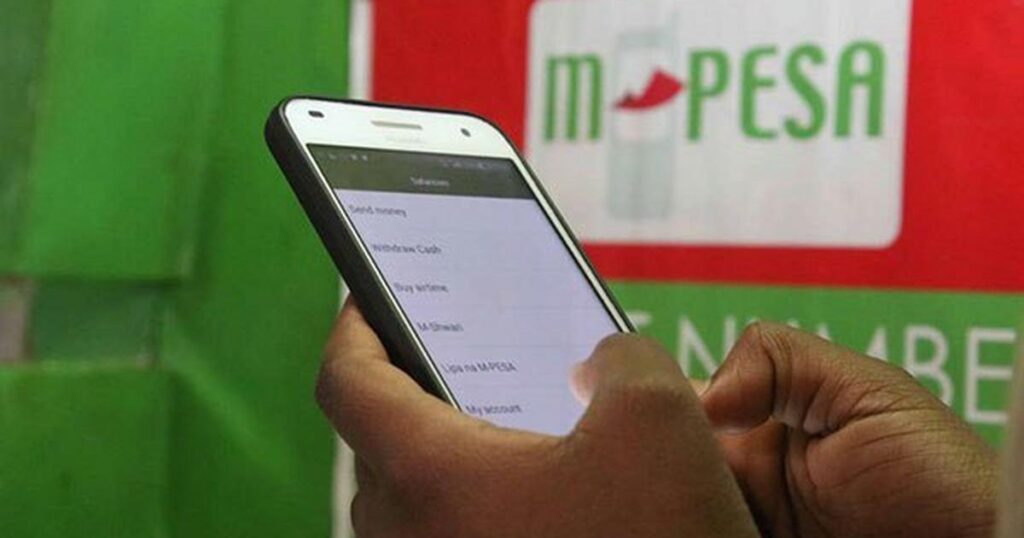
The integration of commercial banks with M-Pesa has become a central part of Kenya’s financial system, linking formal banking structures with mobile money transactions that dominate everyday payments. The setup allows money to move between bank accounts and mobile wallets in real time, supporting both large-scale financial operations and small daily transactions.
Kenya’s financial system now operates in a dual structure. Banks handle salaries, savings, credit facilities, and corporate transactions, while M-Pesa manages high-frequency, low-value payments used for groceries, transport, school fees, and small business activity. With financial inclusion in Kenya rising above 83% and mobile money usage reaching tens of millions of active users each month, the connection between the two systems has become essential for smooth money movement across the economy. Without this integration, users would rely heavily on physical banking channels such as ATMs and over-the-counter services, slowing down transactions and limiting access to digital financial services.
Why Banks Integrate With M-Pesa
Bank integration with M-Pesa ensures seamless movement of funds between formal accounts and mobile wallets. This connection supports salary withdrawals into mobile wallets, business collections into bank accounts, and real-time transfers between individuals and merchants.
The system also helps financial institutions extend services to users who primarily operate through mobile money. At the same time, it allows mobile-first users to access savings products, credit facilities, and investment services offered by banks. This connection creates a continuous flow of money between structured banking systems and mobile payment networks, reducing delays in transactions and expanding access to financial tools.
Here are the ways banks and M-Pesa integration happens:
1. Core Infrastructure Linking Banks and M-Pesa
The integration process relies on digital infrastructure that connects bank core systems with Safaricom’s mobile money platform. Banks use application programming interfaces (APIs) to communicate with M-Pesa systems. One of the key entry points is the Safaricom Daraja API, which allows banks to send and receive transaction requests securely in real time.
Many institutions also rely on interbank switching systems such as PesaLink, which connects multiple banks and supports high-speed transfers across financial networks. This reduces delays when routing funds between different institutions and mobile wallets. To ensure accuracy in transaction processing, systems rely on standardized messaging formats, including ISO 20022, which structures financial data such as account numbers, transaction amounts, and sender details in a consistent format across platforms.
2. Bank-To-M-Pesa Transfers (B2C Flows)
Bank-to-Customer (B2C) transfers allow funds to move from a bank account directly into an M-Pesa wallet. The process begins when a customer initiates a transfer through a mobile banking app, internet banking platform, or USSD shortcode provided by the bank. The bank’s system first verifies that the account has sufficient funds and that the request meets internal compliance requirements.
Before execution, the transaction passes through security checks, including anti-money laundering screening and customer verification processes. Once approved, the bank sends a request to M-Pesa’s B2C API. The mobile money system validates the recipient’s phone number, credits the wallet instantly, and sends confirmation messages to both the sender and recipient. This process supports use cases such as salary payments, supplier payouts, and emergency fund transfers.
3. M-Pesa-To-Bank Deposits (C2B Flows)
Customer-to-Business (C2B) transfers handle money moving from M-Pesa wallets into bank accounts, typically through paybill services. A user enters a bank paybill number on the M-Pesa menu, followed by their specific account number as a reference. This triggers a request to Safaricom’s system, which first sends a validation request to the receiving bank.
The bank confirms whether the account exists and is able to receive funds. Once confirmed, M-Pesa deducts the amount from the wallet and sends a callback notification to the bank. The bank then updates the customer’s ledger in real time, posting the deposit to the account and reflecting it on account statements. This process supports business deposits, savings contributions, and loan repayments.
4. STK Push and Real-Time Payment Prompts
STK Push technology enables instant payment authorization directly on mobile phones without the need to manually enter paybill details. When a user selects a payment option within a banking or merchant interface, the system triggers a request through M-Pesa’s payment gateway. A prompt appears on the user’s phone screen showing the payment amount and recipient details.
The user then enters their M-Pesa PIN, which is encrypted and verified by Safaricom’s system. Once authenticated, the transaction is processed immediately, and both the bank and user receive confirmation. This system is widely used for loan repayments, merchant payments, and digital banking transactions that require fast settlement.
5. Co-Branded Banking Products Powered By M-Pesa
Integration between banks and M-Pesa has enabled the development of co-branded financial products such as micro-savings and digital lending services. Platforms like M-Shwari and KCB M-Pesa operate through partnerships between banks and mobile money systems. These services allow users to save, borrow, and repay loans directly from their mobile wallets.
Banks manage the underlying accounts while M-Pesa provides the transaction interface. Every transaction is recorded in real time, allowing users to access micro-loans and savings products without visiting a physical branch. Credit scoring in these systems relies heavily on mobile transaction history, including deposits, withdrawals, airtime usage, and repayment behaviour. This data is processed instantly to determine loan eligibility and limits. Once approved, funds are disbursed directly into the user’s mobile wallet, allowing immediate access.
Jefferson Wachira is a writer at Africa Digest News, specializing in banking and finance trends, and their impact on African economies.