
Uganda’s commercial banking industry has consolidated into a UGX 61.5 trillion asset base, producing a tightly defined Tier-1 segment of 16 banks each holding over UGX 1 trillion in assets. The group now operates as a clear top layer of the financial system, shaped by restructuring, digitisation, mergers, and expansion into retail and corporate lending.
While all banks meet the same threshold, their trajectories differ widely depending on leadership decisions, market focus, and how each institution adapted to shifts in digital finance and credit demand.
- Stanbic Bank
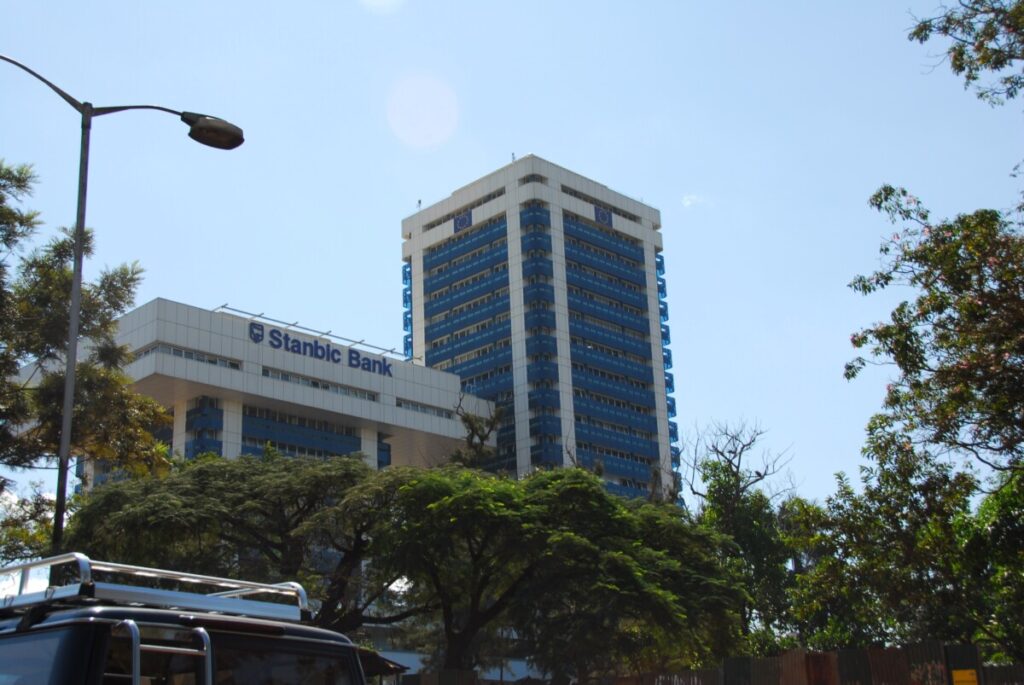
Leading the market by a wide margin, Stanbic Bank Uganda sits at the top of the sector with about UGX 11.34 trillion in assets under CEO Mumba Kenneth Kalifungwa and Stanbic Uganda Holdings CEO Mark Ocitti Ongom.
Its position has been reinforced by a structural overhaul under Stanbic Uganda Holdings, which gave the lender room to streamline operations and scale digital offerings. FlexiPay has become a central driver of its retail expansion, widening access to mobile financial services and reducing reliance on physical infrastructure. The bank now operates a blended model where corporate banking, retail services, and digital transactions are tightly integrated.
- Centenary Bank
From its origins as a church-backed microfinance institution, Centenary Bank has grown into a UGX 8.61 trillion asset lender led by managing director Godfrey Byekwaso and group CEO Fabian Kasi.
The shift away from manual, paper-based processes has been central to its expansion. Kasi and Byekwaso oversaw the rollout of CenteMobile and the CenteAgent network, which extended banking services into rural and peri-urban areas. That transition reshaped the bank’s funding base, drawing in large volumes of small savers and informal traders into the formal financial system.
- Absa Bank
Managing director David Wandera has overseen Absa Bank Uganda’s UGX 5.43 trillion asset base through a period of stabilisation following its transition from Barclays.
Rather than focusing on rapid expansion, the bank concentrated on rebuilding corporate confidence and rebalancing its portfolio toward structured finance. This shift has increased exposure to syndicated lending, infrastructure projects, and treasury services for large institutions, while digital corporate platforms now handle a growing share of transaction flows.
- dfcu Bank
A more cautious restructuring approach defines dfcu Bank, led by managing director Charles Mudiwa, as it manages about UGX 3.46 trillion in assets.
Following the integration of Crane Bank assets, attention has remained on credit clean-up and operational efficiency. Lending has gradually tilted toward SMEs, payroll financing, and property-backed credit, reducing reliance on large corporate exposures and creating a steadier earnings base.
- Equity Bank
Financial inclusion remains the core strategy at Equity Bank Uganda, where managing director Anthony Kituuka has guided growth to about UGX 3.38 trillion in assets.
Expansion through agency banking under the Equi-Duuka model has extended services deep into trading centres and cross-border markets. Digital lending tools embedded in agricultural and retail ecosystems continue to drive transaction volumes, turning informal economic activity into a structured deposit and credit pipeline.
- Housing Finance Bank
Housing Finance Bank, led by managing director Michael K. Mugabi, now holds about UGX 2.69 trillion in assets after moving beyond its traditional mortgage-only identity.
Diversification has played a key role in this transition, with increased activity in trade finance, SME lending, and salary-backed loans. While housing finance remains a core pillar, the bank now balances long-term lending with shorter-term commercial products that improve liquidity and revenue stability.
- KCB Bank
Under managing director Edgar Byamah, KCB Bank Uganda has shifted its focus inward to the domestic market, building its UGX 2.2 trillion asset base through retail expansion.
The bank’s earlier cross-border corporate orientation has gradually given way to deposit mobilisation and mobile lending strategies. Growth in SME financing and digital credit products has strengthened its position within Uganda’s retail banking segment.
- Standard Chartered Bank
A lean corporate model defines Standard Chartered Bank Uganda, where managing director Sanjay Rughani oversees a portfolio exceeding UGX 3.2 trillion in assets.
Branch reduction has been paired with a stronger reliance on digital corporate platforms such as Straight2Bank. Revenue generation now comes primarily from treasury operations, advisory services, and high-value institutional transactions rather than retail banking.
- Diamond Trust Bank
Managing director Varghese Thambi has steered Diamond Trust Bank Uganda to about UGX 2.4 trillion in assets by broadening its focus beyond traditional merchant banking.
Expansion into trade finance, SME lending, and import-export credit has widened its customer base. The introduction of digital tax payment systems and supply chain financing tools has further strengthened its role in corporate and mid-market banking.
- Citibank
A highly specialised model continues to define Citibank Uganda, led by managing director Sarah Arapta, with assets slightly above UGX 1 trillion.
Rather than pursuing retail growth, the bank focuses on multinational corporations, donor institutions, and sovereign clients. Treasury flows, cross-border payments, and corporate cash management form the backbone of its operations.
- Pearl Bank
The transformation from PostBank into Pearl Bank Uganda has been led by managing director and CEO Julius Kakeeto, with the institution now managing UGX 1.87 trillion in assets.
Kakeeto oversaw the shift into a fully commercial bank, strengthening deposit mobilisation through government salary accounts and public payment systems. Digital channels have become central to its role in handling public sector financial flows.
- I&M Bank
Following its transition from Orient Bank, I&M Bank Uganda under managing director Robin Bairstow has built a UGX 1.4 trillion asset base. Integration into the wider I&M Group has provided stronger capital backing and expanded regional connectivity. Growth has been driven by trade finance, logistics funding, and digital asset-based lending.
- Ecobank
A turnaround story has emerged at Ecobank Uganda, where managing director Grace Muliisa has guided assets to about UGX 1.27 trillion after a period of losses.
Transaction banking has become the core driver of performance, supported by integration into Ecobank’s Pan-African payment network. Increased cross-border activity has helped restore profitability through fee-based income streams.
- Bank of Africa
Managing director Arthur Isiko has focused Bank of Africa Uganda on structured trade finance and SME lending, pushing assets above UGX 1.35 trillion. Supply chain financing and digitised merchant collections have improved cash flow for businesses in import, manufacturing, and distribution sectors, strengthening its SME-centric positioning.
- NCBA Bank
Post-merger integration has shaped NCBA Bank Uganda under managing director Mark Muyobo, which now holds about UGX 1.2 trillion in assets. Growth has been supported by vehicle asset financing, SME lending, and telecom-linked microcredit products. These segments continue to anchor its retail and small business expansion strategy.
- Bank of Baroda
Bank of Baroda Uganda, led by managing director Raj Kumar Meena, maintains just above UGX 1 trillion in assets through a conservative banking model. The focus remains on trade finance, government securities, and tightly controlled lending practices. Low-risk exposure has helped sustain stable growth and strong asset quality.
Jefferson Wachira is a writer at Africa Digest News, specializing in banking and finance trends, and their impact on African economies.