
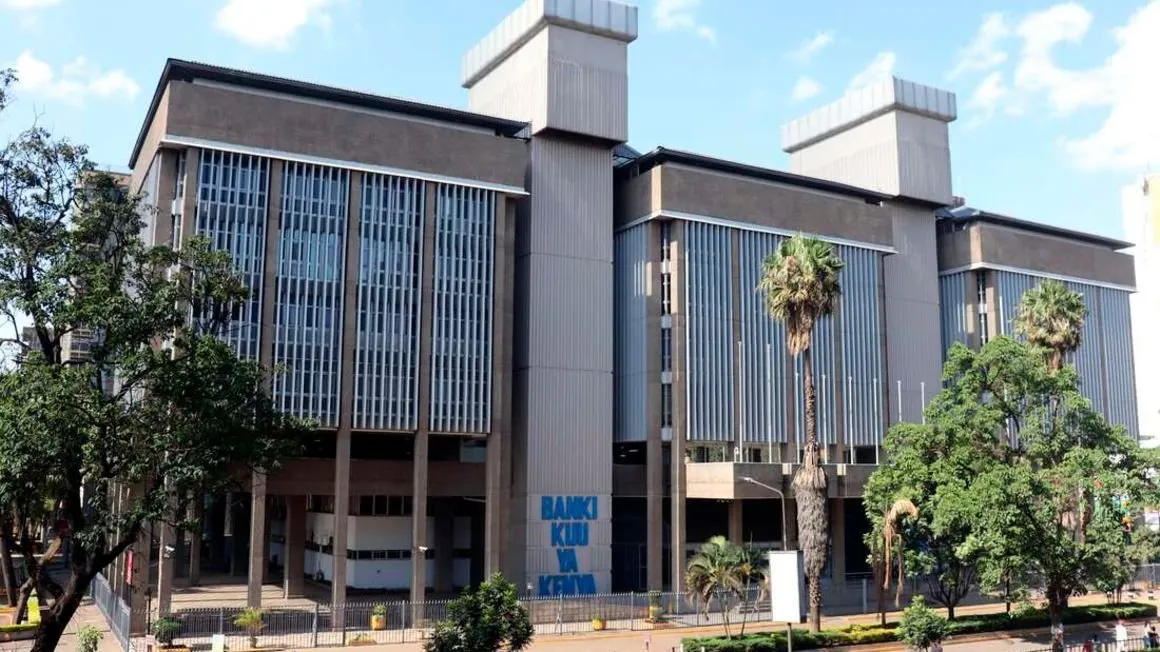
Kenya has ended a 32-year-old bank licence fee structure after introducing a new revenue-based model that replaces the traditional branch-count approach with a Gross Annual Revenue (GAR) framework. This follows the gazettement of Legal Notice No. 81 of 2026 by the Central Bank of Kenya (CBK) on May 8, 2026, through the Banking (Fees) Regulations, 2026. The new rules revoke the Banking (Fees) Regulations, 1994, marking a major transformation in how banks and other licensed financial institutions pay annual regulatory fees.
The new framework aligns banking licence charges with Kenya’s evolving financial sector, where digital banking platforms, mobile services, agency networks and online channels have increasingly replaced physical branches as the main drivers of customer access.
CBK Introduces Gross Annual Revenue-Based Bank Licence Fees
Under the new Banking (Fees) Regulations, 2026, annual banking licence fees will no longer be determined by the number or location of branches operated by an institution. Instead, licensed institutions will pay annual fees based on a percentage of their Gross Annual Revenue, creating a system where regulatory charges increase or decrease depending on the size of a bank’s income base.
The new fee structure will be implemented gradually over four years, with the applicable rates set as follows:
- 2026: 0.13% of Gross Annual Revenue
- 2027: 0.14% of Gross Annual Revenue
- 2028 onwards: 0.15% of Gross Annual Revenue
From 2028, the annual banking licence fee will remain fixed at 0.15% of Gross Annual Revenue. The fees will be paid to the Central Bank of Kenya as a lump sum according to the timelines provided in the regulations.
What is Included in Gross Annual Revenue?
The new regulations define Gross Annual Revenue as income earned by an institution from its banking and financial activities. The calculation will include revenue from:
- Interest income from loans and advances
- Interest earned from government securities and placements
- Fees and commissions from lending activities
- Dividend income
- Foreign exchange trading income
- Other income reported in audited financial statements
For existing institutions, the CBK will use audited and published financial statements from the previous financial year when determining the applicable annual fee. For newly licensed institutions that have not started operations, the annual fee will be calculated using the average projected Gross Annual Revenue for the first three years after receiving the licence.
Why Kenya Replaced the 1994 Branch-Based Banking Fee Model
The previous banking licence fee system was introduced in 1994 when physical branches were the main measure of a bank’s operations and market reach. Under that model, banks paid fixed charges based on their licence status and branch locations. The fees included:
- KES 400,000 upon granting a banking licence and on each anniversary thereafter
- KES 150,000 for each branch located within a municipality
- KES 100,000 for each branch located within a town council area
- KES 30,000 for each branch located within an urban council area
However, the rapid growth of digital banking made the branch-based approach increasingly outdated. Kenyan banks have significantly expanded their mobile banking, internet banking and agency banking services, allowing customers to access financial services without visiting traditional branches. As a result, branch numbers no longer provide an accurate reflection of a bank’s size, transaction volumes or contribution to the financial system.
Digital Banking Growth Drives Regulatory Overhaul
Kenya’s banking sector has undergone significant digital transformation over the past decade, with lenders investing heavily in technology platforms that support mobile payments, online banking and automated financial services.
Kenya Bankers Association (KBA) data reveals that mobile banking adoption has surged by over 20% recently, with 69.9% of users now preferring digital wallets as their primary financial interface. This structural shift has driven overall formal financial inclusion in Kenya from 26% to 85% of the adult population, backed by a robust network of over 473,000 active mobile money agents processing an astounding KES 722 billion in transactions per month.
To sustain this automated ecosystem, the Central Bank of Kenya (CBK) reports that 42% of financial institutions have established dedicated innovation hubs alongside digital transformation teams to scale cloud and automated architectures, permanently moving the sector away from brick-and-mortar reliance.
The new Gross Annual Revenue model reflects this shift by focusing on the economic scale of a financial institution rather than its physical footprint. The move also places Kenya’s banking regulation closer to modern financial markets, where digital transactions and revenue generation are becoming more important indicators of institutional activity.
New Bank Fee Model Creates Proportional Regulatory Costs
The transition from fixed licence fees to a revenue-linked model is expected to create a more balanced contribution system across Kenya’s banking industry. Under the previous framework, large banks generated significantly higher revenues but paid relatively small fixed licence fees, making the cost of regulation a minimal expense compared with their overall operations.
The new model ensures that institutions with larger revenue bases contribute more towards regulatory oversight, while smaller institutions pay fees that better correspond with their scale. The approach is expected to support the CBK’s ability to supervise a more complex banking sector, including digital financial services, cross-border operations and emerging financial risks.
Banks Face Penalties for Failure to Pay Annual Fees
The Banking (Fees) Regulations, 2026 also introduce stricter enforcement measures for institutions that fail to meet their annual fee obligations. A licensed institution that does not pay the required annual fee by the due date will be required to pay double the outstanding amount within 90 days. Failure to comply within the specified period may result in the revocation of the institution’s banking licence in accordance with the Banking Act.
Jefferson Wachira is a writer at Africa Digest News, specializing in banking and finance trends, and their impact on African economies.