
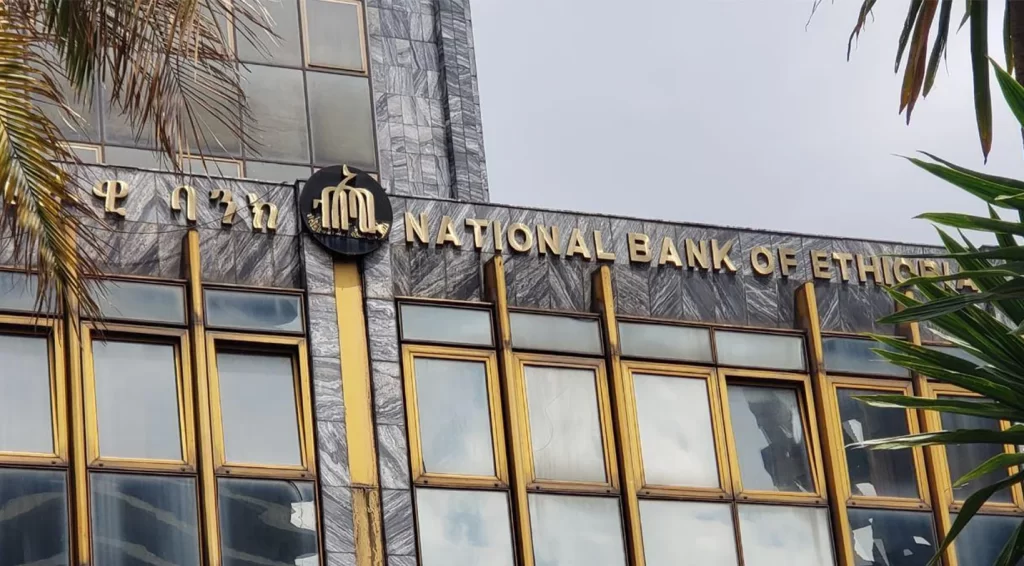
The National Bank of Ethiopia (NBE) has removed its credit growth cap and raised its benchmark policy rate by one percentage point as it moves to strengthen its interest rate-based monetary policy framework and contain renewed inflationary pressures.
The decisions were approved following the seventh regular meeting of the NBE Monetary Policy Committee (MPC), held under the authority of Article 23 of the NBE Establishment Proclamation No. 1359/2025, which mandates the committee to propose monetary policy measures for approval by the NBE Board.
During the meeting, the MPC reviewed developments in Ethiopia’s real economy, inflation trends, external sector performance, monetary and financial conditions, fiscal developments, and global factors affecting the country’s economic outlook.
Following a comprehensive assessment, the committee recommended several monetary policy measures aimed at maintaining price stability, improving foreign exchange market efficiency, and supporting Ethiopia’s transition toward indirect monetary policy instruments.
Inflation Rebounds after Fuel Supply Disruptions
The MPC noted that Ethiopia recorded a significant decline in inflation following the July 2024 economic reforms, with inflation falling into single-digit territory by December 2025 after a prolonged period of elevated price pressures. The committee attributed the earlier disinflation trend to tight monetary policy measures, fiscal consolidation efforts, and improvements in productivity across key sectors of the economy.
However, inflationary pressures resurfaced after the Middle East conflict disrupted global fuel supplies, pushing transportation costs higher and increasing import-related costs. Headline inflation increased to 13.4 percent in May 2026, rising from 11.7 percent in April and 9.7 percent in December 2025. The latest figure marked a nine-month high, driven by increases in both food and non-food prices. Food inflation reached 15.0 percent in May, while non-food inflation stood at 11.1 percent during the same period.
The MPC also noted that month-on-month inflation remained elevated, standing at 2.3 percent in April and 1.69 percent in May. These levels were above the five-year historical average for the same months and exceeded the average monthly inflation rate recorded during the current fiscal year. The committee said the increase reflected renewed inflation risks linked to international oil price shocks and supply disruptions. Despite the short-term pressures, the NBE expects inflation to moderate by December 2026 but warned that inflation is likely to remain in double digits over the next six months.
Ethiopian Banking Sector Maintains Resilience
The MPC reported that Ethiopia’s banking sector remained stable during the review period, with improvements recorded in deposit mobilisation, loan collections, asset quality, and capital buffers. Banks continued to demonstrate resilience, with non-performing loans (NPLs) and other safety and soundness indicators maintaining a healthy trajectory.
The committee highlighted improved liquidity management among private banks, noting that the loan-to-deposit ratio declined to 72.7 percent from 90.3 percent in the 2022/23 financial year.
NBE Removes Credit Growth Cap after Policy Transition
The MPC recommended the removal of the credit cap, which was introduced as a temporary measure during Ethiopia’s transition toward an interest rate-based monetary policy framework. The NBE Board approved the full removal of the credit cap after determining that its objectives had been achieved through the successful implementation of indirect monetary policy instruments.
The central bank clarified that the removal does not represent a shift away from its restrictive monetary policy stance. Instead, the NBE said it will continue using indirect monetary policy tools to manage liquidity conditions and control inflation.
“The removal of the credit cap is a result of a successful transition to an interest-based policy framework with full implementation of indirect monetary policy instruments,” the MPC noted.
Central Bank Raises Policy Rate by 1 Percentage Point
To offset the impact of removing the credit cap and reinforce its commitment to controlling inflation, the MPC recommended an increase in the NBE policy rate. The NBE Board approved a one percentage point increase in the policy rate while maintaining the existing interest rate corridor of plus or minus three percentage points.
The move is intended to strengthen monetary tightening and limit inflationary pressures arising from external shocks, particularly higher global fuel prices. The central bank said maintaining a restrictive monetary policy stance remains necessary to achieve its medium-term objective of returning inflation to single-digit levels.
The MPC also approved the introduction of targeted reserve requirements based on periodic assessments of individual banks’ loan-to-deposit ratios. Under the measure, the NBE will impose additional reserve requirements on banks whose credit expansion contributes to inflationary pressures.
Ethiopia Cuts FX Commission Rate to Support Market Efficiency
In another policy adjustment, the NBE reduced its foreign exchange commission rate from 2.5 percent to 1.5 percent. The one percentage point reduction is intended to lower import-related costs, reduce inflation transmission effects, and improve efficiency within Ethiopia’s foreign exchange market. The central bank said the move would support better foreign exchange allocation and contribute to improved market functioning.
The MPC also approved a reduction in the foreign exchange surrender requirement for goods exporters. The requirement has been lowered from 50 percent to 30 percent, allowing exporters to retain a larger share of their foreign currency earnings. The NBE said the adjustment aims to improve export competitiveness, strengthen confidence in the foreign exchange market, deepen liquidity, and enhance price discovery.
The Monetary Policy Committee said its next regular meeting will take place at the end of September 2026, although an earlier meeting may be convened if economic conditions require additional policy action.
Jefferson Wachira is a writer at Africa Digest News, specializing in banking and finance trends, and their impact on African economies.