
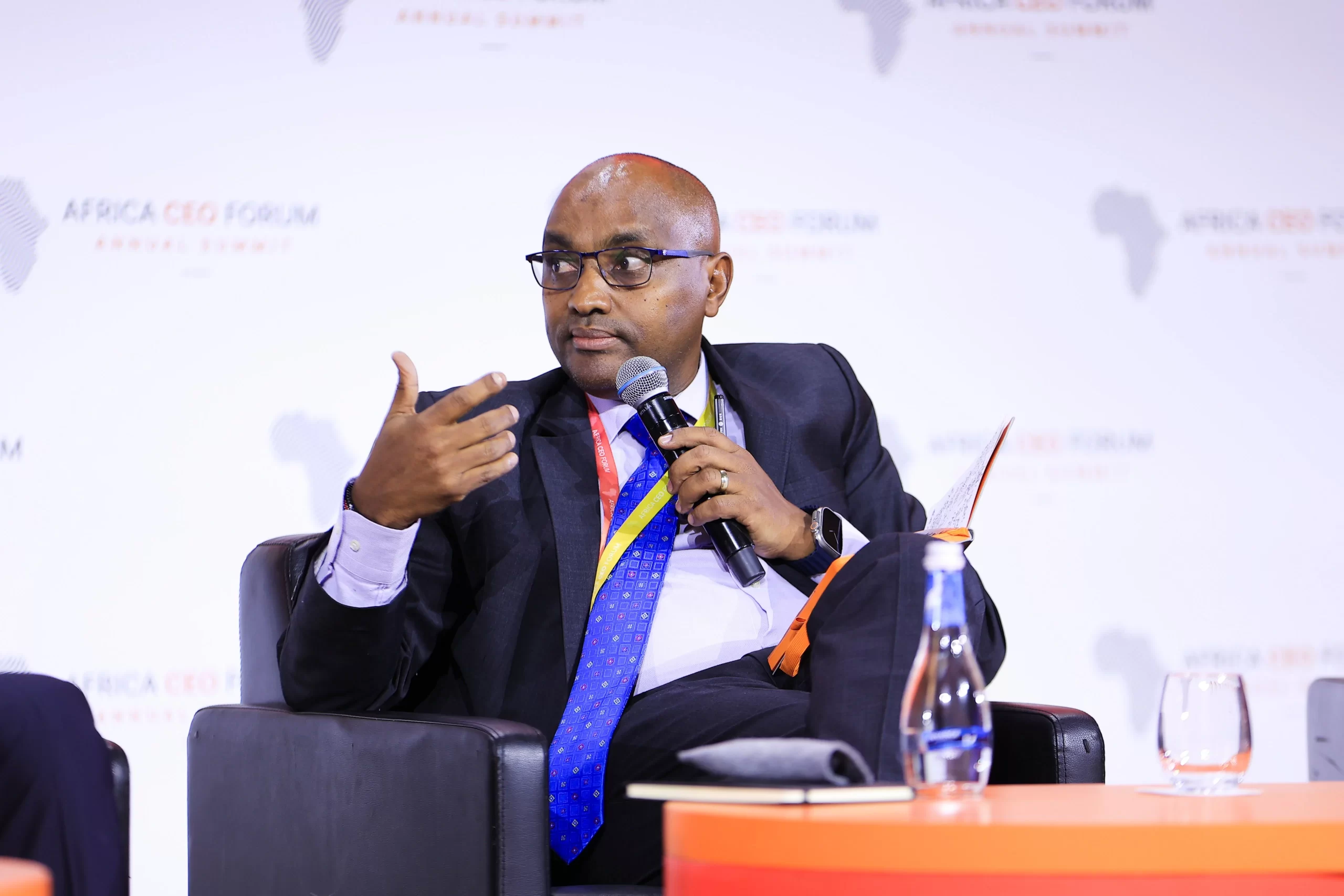
KCB Group CEO and Kenya Bankers Association (KBA) Chairman Paul Russo has challenged banks across East Africa to move beyond traditional risk avoidance and embrace technology, artificial intelligence (AI), alternative data and collaboration to expand access to finance.
Speaking at the 23rd East African Banking School (EABS) Conference held in Diani, Kwale County, Paul Russo said the future of banking will depend on institutions’ ability to understand and manage risk better rather than simply avoiding high-risk customers.
The five-day regional banking summit, being held from July 13–17, 2026, brought together banking executives, regulators and policymakers from across the East African Community (EAC) to discuss the challenges and opportunities shaping the financial sector.
The conference, themed “Navigating Credit Risk in the Digital Transformation Era,” is focused on improving credit quality, managing rising non-performing loans (NPLs), leveraging alternative data for lending decisions and integrating climate and environmental risks into financial management.
Technology Can Unlock New Lending Opportunities
Russo said financial institutions should use emerging technologies to develop deeper insights into borrowers and create more inclusive lending models.
“My challenge to all of us is not simply to explore better ways of identifying high-risk borrowers and avoiding them. Instead, our ambition should be to explore how innovation, technology, artificial intelligence, alternative data and collaboration can help us better understand risk, reduce it and ultimately make more individuals, businesses and communities bankable,” he said.
The KCB CEO noted that digital transformation presents an opportunity for banks to move away from conventional lending approaches that rely heavily on collateral and historical credit records. By using technologies such as machine learning, cash-flow analytics and alternative credit scoring models, banks can assess the financial behaviour of customers who may previously have been excluded from formal lending.
This approach could help increase financing access for small businesses, informal enterprises and individuals without traditional forms of collateral.
Kenya’s Banking Sector Faces Credit Access Challenge
Kenya’s banking industry has expanded significantly, with 38 commercial banks and 14 deposit-taking microfinance institutions managing assets worth more than Ksh7.1 trillion, equivalent to nearly 40% of the country’s gross domestic product (GDP). Despite this growth, access to formal credit remains a challenge for millions of businesses.
Kenya has more than 7.4 million micro, small and medium enterprises (MSMEs), but fewer than 20% are able to access formal financing. This has contributed to a financing gap estimated at more than Ksh3 trillion. At the same time, banks continue to deal with elevated credit risks, with gross non-performing loans remaining close to 15% of total sector lending.
The conference highlighted artificial intelligence and alternative data as key tools that could reshape lending across East Africa. Traditional credit assessments often depend on collateral, income documentation and formal financial histories, limiting access for many small businesses and individuals operating outside formal systems.
However, alternative data sources, including transaction records, digital payment histories and cash-flow patterns, can provide lenders with a broader understanding of borrowers’ ability to repay. Banks across the region are increasingly exploring data-driven lending models to improve decision-making, reduce defaults and support financial inclusion.
The EABS Conference emphasized that responsible adoption of AI and digital tools will require collaboration between banks, regulators, technology providers and policymakers.
East African Banking Leaders Address Credit Risk Challenges
The 23rd EABS Conference was opened by Central Bank of Kenya Governor Dr. Kamau Thugge and hosted by KBA Chairman Paul Russo. The annual conference serves as a platform for banking leaders from Kenya, Uganda and Tanzania to discuss common challenges affecting the region’s financial sector.
The event follows a rotational model between the three countries and is jointly organized by the Kenya Bankers Association (KBA) Institute, the Uganda Institute of Banking and Financial Services (UIBFS), and the Tanzania Institute of Bankers (TIOB). Since 2024, the conference has expanded its participation to include national bankers associations and microfinance institutions, reflecting the region’s growing focus on financial sector cooperation.
Jefferson Wachira is a writer at Africa Digest News, specializing in banking and finance trends, and their impact on African economies.