
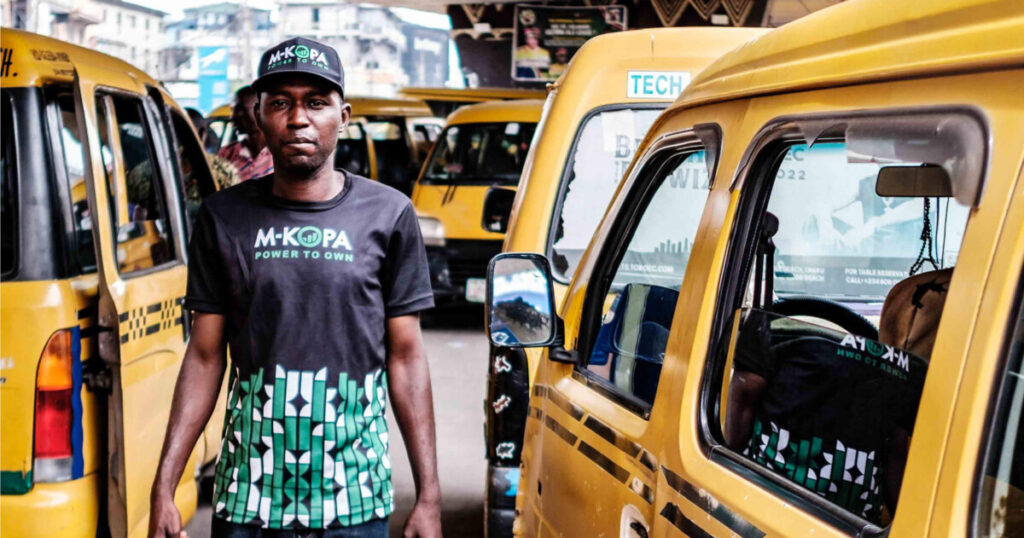
Pan-African fintech company M-KOPA has reached 10 million customers across Kenya, Uganda, Nigeria, Ghana and South Africa. Since launching smartphone financing in 2020, M-KOPA has added nine million customers in six years, compared with the eight years it took to reach its first one million customers. The company is now onboarding approximately 10,000 new customers every day, reflecting rising demand for its “More than a Phone” platform, which combines smartphone financing with digital credit, insurance and device protection services.
M-KOPA’s growth has been driven by its focus on Africa’s informal economy, where millions of workers earn daily incomes but often lack access to traditional financial services. The fintech company was built around serving what it calls “Every Day Earners”, including traders, boda riders, tailors and small business owners, by providing financial products designed around their income patterns rather than conventional employment requirements.
Traditional banks have often relied on formal salaries and credit histories when assessing borrowers. M-KOPA has instead developed alternative financing solutions that use technology and customer behaviour data to provide access to credit for people who are active in the economy but underserved by mainstream financial institutions.
“Every Day Eamers have always been creditworthy. What they needed was credit built around how they really make a living, not a payslip. informal has never meant unviable. 10 million customers on, that’s no longer a belief. It’s proven,” said Jesse Moore, Co-Founder and Chief Executive Officer of M-KOPA.
The company says nine out of 10 independently surveyed customers report that M-KOPA products have improved their lives, demonstrating the impact of affordable digital financing solutions.
Smartphone Financing Drives M-KOPA’s Customer Growth
M-KOPA’s smartphone financing business has become central to its expansion strategy, allowing customers to access smartphones through flexible payment plans while also unlocking additional digital financial services. The company’s “More than a Phone” platform provides customers with smartphones alongside services such as embedded insurance, device protection, credit facilities and mobile data packages. By combining hardware financing with financial services, M-KOPA has created an ecosystem where customers can access multiple products through a single platform.
The company uses artificial intelligence-powered credit scoring models to evaluate customers based on alternative indicators such as mobile data usage and repayment history. This approach enables M-KOPA to extend credit to customers who may not qualify under traditional lending models while managing repayment risks.
M-KOPA Expands Smartphone Manufacturing in Kenya
M-KOPA’s growth has been supported by local manufacturing investments, including the launch of Africa’s largest smartphone assembly factory in Kenya in 2023. The facility, which employs more than 400 people, has achieved global ISO certification and has produced more than 3.3 million devices to date. The Nairobi-based assembly plant has helped strengthen M-KOPA’s supply chain, reduce device acquisition costs and increase access to affordable smartphones across its African markets.
The company has also expanded rapidly beyond East Africa, with Nigeria becoming the fastest market in M-KOPA’s history to surpass one million customers. Its expansion is supported by Africa’s largest direct sales distribution network in its sector, comprising more than 40,000 agents operating across Kenya, Uganda, Nigeria, Ghana and South Africa.
M-KOPA Turns Profitable After 13 Years of Expansion
The 10 million customer milestone comes as M-KOPA reports its first profitable financial year after more than a decade of investment, product development and market expansion. The fintech company has transitioned from an aggressive customer acquisition phase into a profitable asset-backed financial services business.
M-KOPA’s revenue increased by 66 percent to $416 million in 2024, up from $250.6 million in 2023. During the same period, the company moved from a $24.7 million loss to a $9.2 million net profit. The company’s risk-adjusted gross profit increased by 80 percent to $173 million, while operating income grew fivefold to $51 million. M-KOPA also contributed approximately $45 million in local taxes across its five primary markets.
The company’s profitability turnaround has been driven by several strategic changes, including the expansion of smartphone financing, improved credit assessment and the development of a broader digital financial ecosystem. M-KOPA shifted its business focus from traditional off-grid solar products towards high-growth smartphone financing, which has generated stronger customer demand and increased opportunities for additional financial services.
Its proprietary AI credit scoring systems have helped improve lending decisions by analysing customer behaviour and repayment patterns. The company has also strengthened customer retention by offering multiple services through its platform, including loans, insurance products and data services, creating a long-term relationship beyond the initial smartphone purchase.
M-KOPA Expands Into Electric Mobility Financing
M-KOPA is now positioning electric mobility as its next major growth opportunity through its subsidiary, M-KOPA Kenya Mobility Ltd. The company has become one of Kenya’s largest financiers of electric motorcycles, having deployed and financed more than 4,000 electric bikes across the region. The electric mobility business targets commercial riders, including boda operators, by providing affordable financing options that enable them to access electric motorcycles while reducing operating costs.
M-KOPA’s financing model supports electric motorcycles produced by regional manufacturers, including Ampersand, Spiro and Roam, through an open hardware approach.
M-KOPA has also partnered with ride-hailing company Bolt to expand access to electric motorcycles for gig economy drivers. Under the partnership, M-KOPA plans to lease 5,000 electric motorcycles over three years, creating a pathway for riders to transition from daily rental models towards ownership. The company says electric motorcycle users benefit from significant cost savings compared with fuel-powered alternatives, helping improve earnings for commercial riders.
Additionally, M-KOPA has secured a senior debt facility of up to $23 million from Dutch development finance institution FMO to support its electric mobility expansion. The local currency financing facility will help fund the company’s growing portfolio of electric motorcycle assets while reducing exposure to foreign exchange fluctuations.
M-KOPA is also developing battery-swapping and rapid-charging infrastructure to support electric motorcycle adoption, allowing riders to replace batteries quickly rather than waiting for vehicles to recharge. The company reports that riders using its electric motorcycles are saving an average of $5.62 per day in operating costs, representing a 61 percent improvement from early pilot programmes and reducing daily operating expenses by approximately 30 percent.
Jefferson Wachira is a writer at Africa Digest News, specializing in banking and finance trends, and their impact on African economies.