
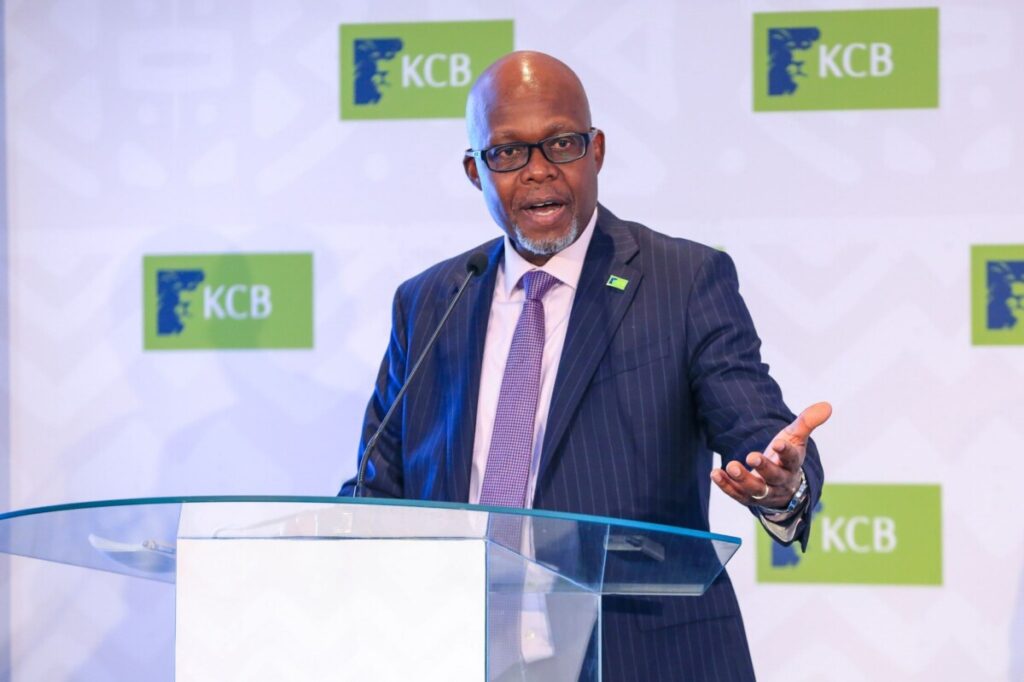
KCB Group’s businesses outside Kenya are taking a larger share of the banking group’s balance sheet and earnings, with subsidiaries across East and Central Africa accounting for nearly a third of Group assets and profit before tax in the first half of 2026.
The subsidiaries outside KCB Bank Kenya increased their combined assets by 21 percent year-on-year to about KSh717 billion in the six months to June 2026. Their contribution to KCB Group’s total assets consequently rose to 31.3 percent from 30.7 percent in the same period last year.
The regional businesses also contributed 29.6 percent of KCB Group’s profit before tax, generating a combined KSh15 billion, up 10 percent from the previous year.
Regional Subsidiaries Now Hold Ksh 717 Billion in Assets
The increase in the regional businesses’ contribution to KCB Group has been driven by asset growth across all six banking subsidiaries outside Kenya. Trust Merchant Bank (TMB) in the Democratic Republic of Congo remained the largest regional business, with assets increasing 25 percent year-on-year to KSh340 billion.
BPR Bank Rwanda followed with assets of KSh132 billion, up 12 percent, while KCB Bank Tanzania increased its assets by 18 percent to KSh101 billion. KCB Bank Uganda’s assets rose 21 percent to KSh88 billion, while KCB Bank South Sudan recorded 26 percent growth to KSh31 billion. KCB Bank Burundi increased its assets by 24 percent to KSh25 billion.
Combined, the six businesses held about KSh717 billion in assets at the end of June, compared with KCB Bank Kenya’s KSh1.58 trillion. KCB Bank Kenya’s assets increased 17 percent year-on-year, meaning the regional subsidiaries grew at a faster rate collectively during the period.
TMB Is Driving the Regional Expansion
TMB has become the largest contributor to KCB Group’s regional operations since the Group acquired an 85 percent stake in the Democratic Republic of Congo-based bank in 2022. Its KSh340 billion asset base accounted for almost half of the combined assets held by KCB’s subsidiaries outside Kenya.
TMB also remained the largest contributor to regional profit before tax, generating KSh6 billion in the first half of 2026, up 7 percent year-on-year.
BPR Bank Rwanda was the second-largest regional contributor, with KSh2.8 billion in profit before tax, up 5 percent, while KCB Bank Tanzania generated KSh2.6 billion, representing 22 percent growth.
The performance of these three businesses means that TMB, BPR and KCB Tanzania together accounted for the bulk of the KSh15 billion in profit before tax generated by KCB’s businesses outside Kenya.
Regional Businesses Account For Nearly 30 Percent of KCB’s Profit
The growing importance of the subsidiaries is also visible in their contribution to KCB Group’s earnings. The businesses outside KCB Bank Kenya generated KSh15 billion in profit before tax in the first half of 2026, a 10 percent increase from the previous year. This represented 29.6 percent of KCB Group’s total profit before tax.
Several subsidiaries recorded double-digit growth in profit during the period. KCB Tanzania increased profit before tax by 22 percent to KSh2.6 billion, while KCB South Sudan recorded a 34 percent increase to KSh867 million. KCB Investment Bank recorded the largest percentage increase, with profit before tax rising 227 percent to KSh503 million.
However, the performance was uneven across the regional businesses. KCB Burundi’s profit before tax declined 29 percent to KSh451 million, while KCBIL’s profit before tax fell 47 percent to KSh336 million.
How KCB Built the Regional Businesses
KCB’s growing regional contribution comes from a network that has been built over several years through both new operations and acquisitions. KCB Bank Tanzania, established in 1997, was the Group’s first international subsidiary. KCB later established operations in South Sudan in 2005 and Uganda in 2007, followed by Burundi in 2012.
In Rwanda, KCB initially entered through a greenfield branch network in 2008 before acquiring Banque Populaire du Rwanda from Atlas Mara in 2021 and merging it with KCB Bank Rwanda. The acquisition gave KCB an expanded banking operation in Rwanda and resulted in the formation of BPR Bank Rwanda.
The Group’s largest regional expansion came with the acquisition of an 85 percent stake in TMB in the Democratic Republic of Congo in late 2022. TMB subsequently became KCB Group’s largest subsidiary outside Kenya by assets and profit contribution.
Leadership Points to the Regional Footprint
KCB Group Finance Director Lawrence Kimathi said the Group’s businesses across its markets remained resilient despite difficult operating conditions in some markets, including Kenya.
“The business across markets remains resilient despite the tough operating environment in key markets like Kenya. Despite this, we have placed our customers at the fore, to ensure we meet their needs in a timely manner.”
KCB Group CEO Paul Russo attributed the Group’s half-year performance partly to its diversified business model and regional footprint.
“Our strong half-year performance reflects the resilience of KCB Group’s diversified business model, the strength of our regional footprint, and the confidence our customers continue to place in us.”
Group Chairman Dr Joseph Kinyua also pointed to the growth outlook across the markets where KCB operates.
“With the region expected to grow by approximately 4.3% in 2026, strong prospects in Uganda, Rwanda, Tanzania and Kenya continue to support this outlook.”
He added that the regional trends support KCB Group’s diversified business model and its ability to provide financial solutions to households and businesses across the region.