
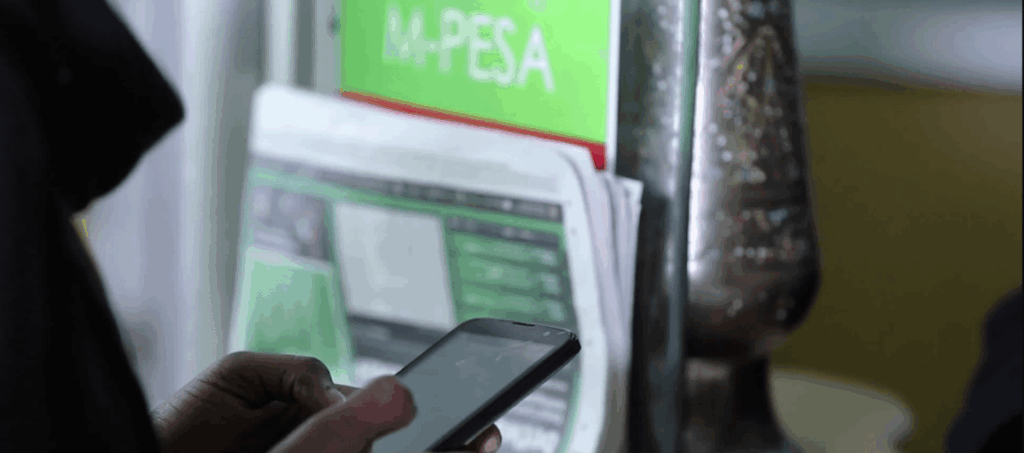
A Sh125,658 loss suffered by M-Pesa user Paula Rogo has developed into a court case involving Safaricom PLC, M-Pesa Holding Company Ltd, the Central Bank of Kenya (CBK) and the Communications Authority of Kenya (CA).
The case, Paula Rogo v. Safaricom PLC & Another, Commercial Case E091 of 2025, was filed after Rogo alleged that a fraudster who posed as a Safaricom employee used detailed information about her M-Pesa account to convince her to make transactions that resulted in the loss of her money.
What began as an individual mobile money fraud complaint has since developed into a constitutional case concerning customer information, consumer rights, fraud reporting, compensation and the responsibilities of regulators overseeing mobile money services.
The latest development came after the High Court rejected CBK’s attempt to leave the case, finding that the regulator’s supervisory powers could be needed to enforce any orders eventually issued against the payment service providers.
A Phone Call That Started the Dispute
The case began with an incident on January 3, 2024, when Rogo received a phone call from an unfamiliar number. She later returned the call and spoke to a man who introduced himself as Michael Kiptoo, claiming to be a Safaricom employee.
According to Rogo’s court papers, the caller appeared to know detailed information about her M-Pesa account. He allegedly knew her account balance, recent transactions and two of her most frequent contacts.
The information made the caller appear to be a genuine Safaricom employee. Rogo says the caller told her that another person had been assigned her telephone number and that he needed to verify and secure her M-Pesa account.
She was then guided through a series of instructions involving M-Pesa’s Pochi la Biashara service. She was allegedly instructed to send what she believed was a test amount and to include zeros before the amount. Rogo entered 00119658.
The transaction initially appeared unsuccessful, but she was instructed to repeat it. The transaction subsequently went through, with Sh119,658 deducted from her M-Pesa account.
The caller then allegedly told her that her loans and savings accounts also needed to be secured. Rogo obtained a Sh6,000 M-Shwari loan and was instructed to send the money through the same process. Her total reported loss reached Sh125,658.
The Information the Caller Already Had
According to Rogo’s account in the case, she did not disclose her M-Pesa PIN. She says the caller repeatedly warned her not to share the PIN, which reinforced her belief that she was dealing with a legitimate Safaricom employee.
The case therefore centres not only on the transactions themselves but also on how the fraudster allegedly obtained detailed information about her account and used it during the scam.
Rogo’s Attempts to Recover the Money
Rogo says she attempted to recover the money immediately after realising she had been defrauded. She contacted the M-Pesa reversal line, attempted to use Safaricom’s WhatsApp platform and made nine calls to customer care before reaching an agent.
According to her court papers, about 40 minutes passed before she was able to speak to a customer care representative. The representative allegedly attempted to reverse the transaction but informed her that the recipient had already withdrawn the money. She was then advised to report the matter to the police.
Rogo subsequently followed up on the matter and says she did not receive compensation, an update on the investigation or information on whether the incident had been reported to the Data Commissioner. She also complained to Safaricom and M-Pesa Holding through the available consumer complaint channels.
How the Fraud Complaint Reached the High Court
Rogo’s case goes beyond a demand to recover the Sh125,658. She alleges that the companies failed to adequately protect customer information and failed to establish sufficient systems for preventing and responding to M-Pesa fraud.
She also alleges that the companies failed to provide adequate information about fraud investigations and compensation. The petition invokes three constitutional provisions:
- Article 35, concerning access to information.
- Article 46, concerning consumer rights.
- Article 47, concerning fair administrative action.
Rogo is suing on her own behalf and on behalf of M-Pesa account holders who have been victims of fraud. This means the case raises issues beyond her individual loss and asks the court to consider measures affecting the handling of mobile money fraud more generally.
The Remedies Rogo Is Seeking
Rogo is seeking several forms of relief. She wants compensation of Sh125,658, together with general and punitive damages and interest. She is also seeking orders requiring Safaricom and M-Pesa Holding to establish systems for preventing or reducing M-Pesa fraud.
Other requested measures include dedicated fraud-reporting lines and teams, transparent and timely compensation procedures for fraud victims, and systems for keeping affected customers informed about investigations and their outcomes.
Rogo is also seeking a 180-day period within which the companies would establish the proposed fraud-prevention measures. The petition further seeks disclosure of fraud statistics and investigation information.
Why Safaricom and M-Pesa Holding Opposed the Case
Safaricom and M-Pesa Holding opposed the lawsuit and raised preliminary objections over whether the High Court was the appropriate forum for the dispute.
Their argument was that Rogo should first have used the statutory dispute-resolution mechanisms available under the Kenya Information and Communications Act (KICA) and the relevant regulations.
The companies therefore sought to have the case dismissed before the court could consider the substantive allegations. The dispute over jurisdiction became one of the central issues in the case.
The Communications Authority’s Place in the Dispute
The Communications Authority of Kenya was initially involved in the proceedings because of the dispute-resolution framework under KICA. The defendants argued that the CA had mechanisms through which Rogo’s complaint could be handled.
The High Court, however, rejected the argument that Rogo was required to pursue that process before approaching the court. Justice Josephine Mong’are noted that the relevant regulation uses the word “may” when referring to the initiation of the dispute-resolution process.
The court therefore treated the process as optional rather than a mandatory requirement that would prevent Rogo from approaching the High Court. The court also struck the CA from the case after considering the scope of its mandate in relation to the financial-services aspects of the dispute.
Why CBK Became Part of the Lawsuit
The CBK became involved because of its role in supervising payment service providers. Rogo’s petition joined the central bank as an interested party, while the CBK later sought to have itself removed from the proceedings.
The central bank argued that it was not the party against whom Rogo was seeking damages and that it was therefore not a necessary party to the dispute. Rogo opposed the application, arguing that the CBK’s regulatory powers were relevant to the reliefs she was seeking.
Why the High Court Kept CBK in the Case
Justice Mong’are rejected the CBK’s application. The court found that the central bank’s statutory supervisory mandate over payment service providers meant it could be required to enforce any orders eventually issued against Safaricom or M-Pesa Holding.
The court did not find that CBK itself was liable for Rogo’s loss. Instead, its continued presence in the case was linked to its regulatory role. If the court ultimately orders changes to the way mobile money fraud is prevented or handled, the CBK could be required to use its supervisory powers to ensure compliance. The court therefore found that CBK was necessary for the dispute to be fully and effectively determined.
Why the Case Has Wider Implications
The central issue in the case is not simply whether Rogo lost Sh125,658. The petition asks the court to examine whether the companies’ handling of customer information, fraud prevention, complaints, investigations and compensation complies with constitutional consumer protections.
It also asks what responsibilities mobile money providers have when fraudsters obtain detailed customer information and use it to carry out fraudulent transactions. The case therefore places the operation of Kenya’s mobile money regulatory framework before the High Court.
A legal analysis of the July 2026 ruling describes it as a case testing whether mobile money fraud can be litigated as a constitutional matter rather than being treated solely as an ordinary consumer dispute.
What the High Court Has Decided So Far
The High Court has not yet decided whether Safaricom or M-Pesa Holding is liable for Rogo’s loss. The rulings so far have dealt primarily with preliminary issues, including jurisdiction and which regulators should remain parties to the proceedings. The court has:
- Rejected Safaricom and M-Pesa Holding’s preliminary challenge to the High Court’s jurisdiction.
- Found that the relevant CA dispute-resolution mechanism did not prevent Rogo from bringing the case before the High Court.
- Removed the Communications Authority from the proceedings.
- Rejected CBK’s application to be removed from the case.
- Allowed the substantive dispute to proceed.
The case is therefore yet to reach a final determination on the allegations against Safaricom and M-Pesa Holding.
What Happens Next in the M-Pesa Fraud Case
The case is proceeding to consideration of its substantive claims. The court will ultimately have to consider Rogo’s allegations concerning the alleged exposure of customer information, the handling of her fraud complaint, the loss of Sh125,658 and the remedies she is seeking.
The proceedings will also determine whether the constitutional provisions cited by Rogo apply to the circumstances of her case and whether the court should order changes to the way mobile money fraud is prevented, reported, investigated and compensated.
The case is scheduled for mention on September 17, 2026. For now, the High Court’s preliminary rulings have allowed the lawsuit to move forward, with CBK remaining in the proceedings because of its regulatory role over payment service providers.