
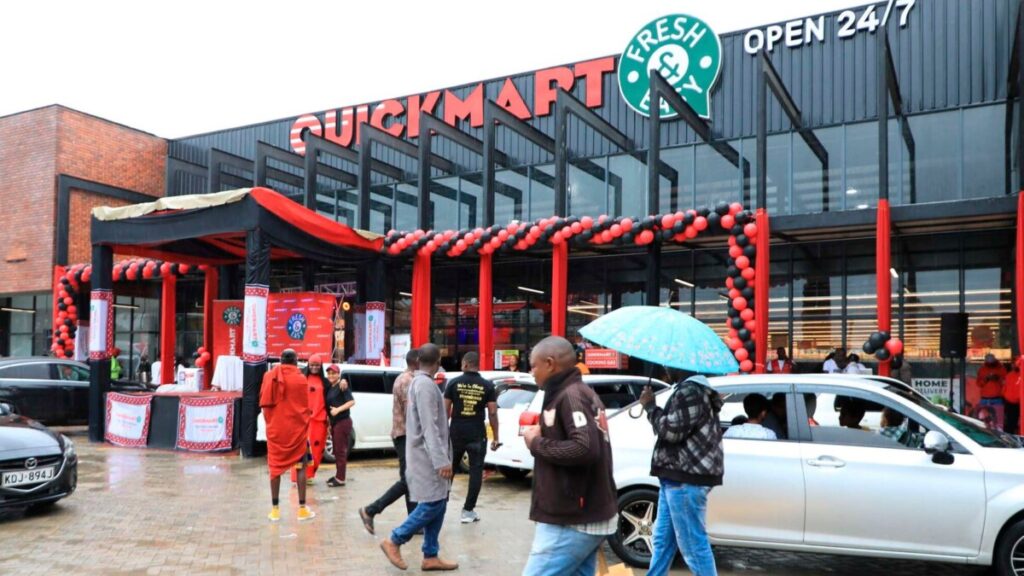
The International Finance Corporation’s conditional KSh 1.94 billion ($15 million) investment in Quickmart is drawing inevitable comparisons to its earlier, highly successful bet on Naivas. Both deals put IFC capital into Kenya’s leading homegrown supermarket chains. Beyond that surface similarity, the two transactions could hardly be more different in structure, timing, strategy, and risk-reward profile.
In 2020, IFC joined a consortium with Amethis, MCB Equity Fund and Germany’s DEG to acquire a minority stake in privately held Naivas through a negotiated private-equity deal. There was no public market involvement. Roughly KSh 6 billion changed hands, with a significant portion flowing into the company as growth capital.
That money helped fund store expansion, operational upgrades and professionalisation at a moment when rivals such as Nakumatt, Tuskys and Uchumi were collapsing. The consortium took approximately 30–31.5 percent of the business, giving it meaningful influence, potential board representation and strategic input. Naivas was valued at about KSh 20 billion at entry. IFC’s contribution was in the region of $15 million (then roughly KSh 1.6–1.8 billion).
The consortium’s exit came just two years later. In 2022 the group sold its stake as part of a larger transaction involving some family shares to a new investor group led by Mauritius’s IBL Group and France’s Proparco, more than doubling its money in a classic private-equity multiple. Throughout the holding period the shares were completely illiquid; any sale required a negotiated secondary transaction.
Quickmart’s 2026 transaction is a public-market cornerstone investment. IFC is buying shares as an anchor investor in the company’s Initial Public Offering on the Nairobi Securities Exchange.
The IPO is a pure offer for sale of 2 billion existing shares, exactly 50 percent of the company, by the current owner, Sokoni Retail Kenya Limited, controlled by private-equity firm Adenia Partners and the founding Kinuthia family. All proceeds, up to KSh 15 billion, go to the selling shareholders. Quickmart itself raises no new capital for expansion or debt reduction.
IFC is acquiring only about 6.5 percent of the entire company (258.67 million shares, or roughly 13 percent of the shares on offer). At the IPO valuation of KSh 30 billion (KSh 7.50 per share), the absolute dollar amount is similar to the Naivas cheque, but the stake is far smaller and more passive.
Management has said growth will be funded internally; the company already operates more than 70 stores. IFC’s thesis centres on continued operational performance, a high dividend policy (recent payout ratio of 109 percent, with a committed minimum of 80 percent of earnings going forward), and the potential for liquidity and capital appreciation once the shares trade publicly.
After listing, expected around 12 November 2026, the shares will be highly liquid. IFC can sell on the open market subject to any lock-up periods and market conditions. There is no pre-arranged buyer.
Governance influence is correspondingly limited: a 6.5 percent stake in a listed company leaves IFC as one institutional shareholder among many, without the stronger board or veto rights available to the Naivas consortium.
The risk profiles diverge accordingly. Naivas carried classic private-company risks—less disclosure, higher operational and governance uncertainty—offset by the growth capital injection and the opportunity for outsized returns during a retail-sector recovery.
Quickmart brings public-company risks of market volatility, analyst scrutiny and the possibility that an aggressive dividend policy could constrain reinvestment. At the same time, the business is already larger and more established, and the IPO itself will increase transparency.
In strategic terms, the Naivas deal exemplified IFC’s traditional development-finance role: injecting both capital and advisory support (including food-safety programmes) to help a local champion scale.
The Quickmart investment is more commercial and capital-markets oriented. IFC is acting as a cornerstone investor to lend credibility to the IPO and support successful subscription, while seeking returns through dividends and share-price appreciation. The institution has been explicit that its participation is commercial and does not constitute an endorsement of the offer.