
When conversations turn to corporate social responsibility in Kenya, few institutions operate at the scale and structure of the Equity Group Holdings social arm, the Equity Group Foundation (EGF).
Established in 2008, EGF is not a traditional philanthropic unit that simply distributes grants. It functions as an implementing foundation, that is, designing, managing, and scaling its own programs using the bank’s infrastructure. That distinction matters. It allows impact to move beyond one-off donations and into system-level transformation.
Over time, EGF has built a multi-pillar model focused on education, healthcare, agriculture, enterprise development, climate action, and social protection, all anchored on one objective: transitioning low-income individuals into the formal economy.
Education as the Entry Point Out of Poverty
If there is a single pillar that defines EGF’s philosophy, it is education. The Wings to Fly scholarship program has supported more than 60,000 students from vulnerable backgrounds, covering full secondary school costs from tuition, books, uniforms, transport, to upkeep. That level of coverage is not symbolic support, it removes structural barriers that typically prevent high-performing students from progressing.
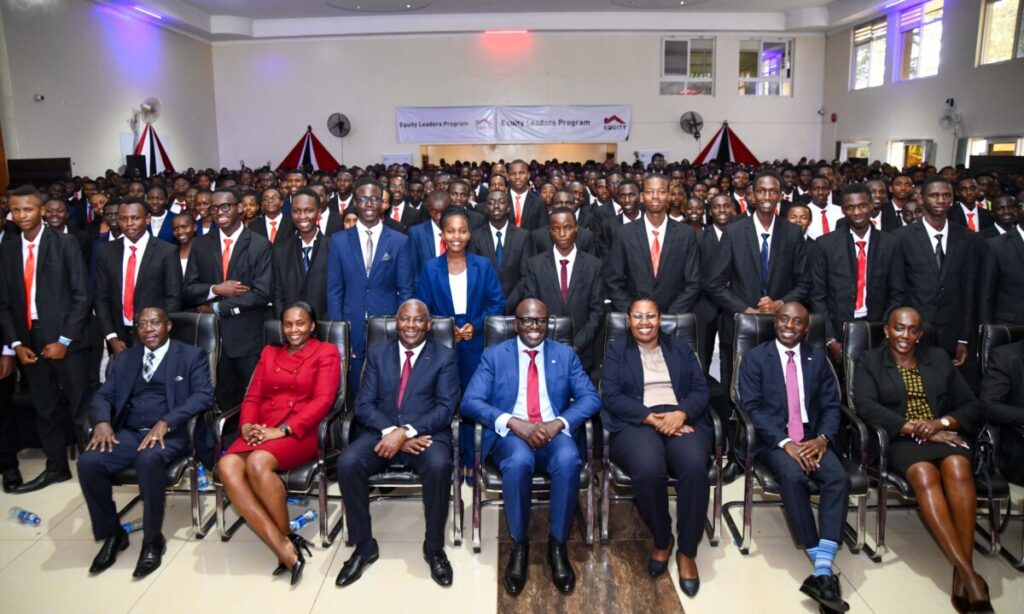
The Equity Leaders Program (ELP) extends this model beyond secondary school. It provides mentorship, leadership development, a paid internship at Equity Bank, and academic guidance for top performers, including access to global university placements. This layered pipeline, from scholarship to leadership development to professional exposure, is what separates EGF from conventional bursary programs. It builds human capital in stages.
Health Access Through Equity Afia
Healthcare is often treated as a separate development issue. EGF integrated it into its ecosystem. Launched in 2014, Equity Afia operates as a network of medical centers managed by trained health professionals, many of whom are ELP alumni. The network has expanded to over 140 clinics across Kenya, with ambitions to reach 1,000 facilities by 2030.
The model is notable because it blends social mission with franchise discipline. Rather than relying solely on donor-funded clinics, it builds a scalable structure that can expand sustainably.
Turning Farmers into Agri-Entrepreneurs
Agriculture remains the backbone of Kenya’s economy. EGF approaches it with a commercialization lens. Through financial literacy training, Good Agricultural Practices (GAP), and tailored lending products such as Kilimo Biashara, the foundation has supported over 3.8 million farmers in accessing agricultural finance.
The objective is not simply to provide credit, it is to shift farmers from subsistence to structured, market-oriented production. That transition is critical for income stability and rural economic mobility.
Enterprise Development and Financial Inclusion
Micro, small, and medium enterprises (MSMEs) represent the largest source of employment in Kenya, accounting for over 80% to 90% of the total labor force. EGF’s enterprise programs focus on equipping entrepreneurs with skills and financial knowledge. Through initiatives such as Young Africa Works (in partnership with the Mastercard Foundation), the foundation supports mentorship and business training.
Additionally, its Financial Knowledge for Africa (FiKA) program has trained more than 2.5 million people in budgeting, savings, and debt management. Financial literacy is often overlooked in development discussions, yet it is foundational to long-term inclusion.
Climate and Environmental Commitment
EGF’s environmental pillar focuses on clean energy adoption and reforestation. The distribution of solar products and clean cookstoves reduces reliance on traditional biomass fuels, while its tree-planting target of 35 million trees signals a long-term environmental commitment. In an era where sustainability is increasingly tied to economic resilience, integrating environmental action into development programming strengthens the overall model.
Social Protection Through Digital Infrastructure
Perhaps one of the most practical aspects of EGF’s work is its integration with digital payment systems. Using Equity Bank’s infrastructure, the foundation supports government and humanitarian cash transfers, including programs such as Inua Jamii, reaching over 5.9 million beneficiaries. Direct digital disbursement reduces leakage, improves transparency, and ensures beneficiaries receive funds efficiently.
Why This Model Matters
What makes Equity Group Foundation distinctive is not just the scale of its programs, but the architecture behind them. It operates within a commercial banking group yet maintains a structured social mandate. It combines financing, training, healthcare delivery, digital payments, and environmental initiatives into one ecosystem. This integrated model is uncommon in the region. Many foundations operate as funding vehicles. EGF operates as an execution platform.
Over time, that approach has allowed it to support:
- 60,000+ scholarships
- 3.8 million farmers
- 2.5 million financial literacy beneficiaries
- 5.9 million social protection recipients
- 140+ healthcare clinics
Whether viewed through an education lens, a financial inclusion lens, or an enterprise development lens, the foundation represents a long-term attempt to embed economic mobility into institutional design.
Jefferson Wachira is a writer at Africa Digest News, specializing in banking and finance trends, and their impact on African economies.