
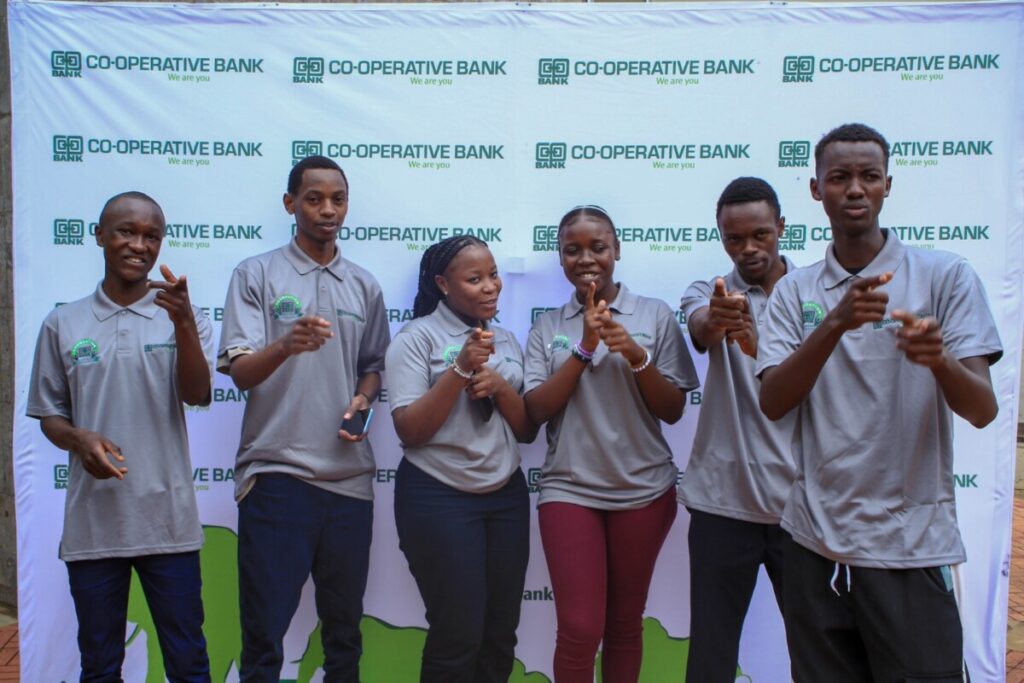
Corporate social investment in Kenya often oscillates between short-term donations and project-based philanthropy. What makes the model run by the Co-operative Bank Foundation, the social-impact arm of Co-operative Bank of Kenya, stand out is its long-term structure, alignment with the cooperative movement, and focus on measurable outcomes.
Established in 2007 as a registered trust, the foundation operates on a shared-value philosophy. Instead of positioning itself as an external charity unit, it works within the ecosystem that gave rise to the bank, the cooperatives, counties, schools, and community groups. That structure shapes how its impact is distributed.
Education as a System, Not a Gesture
Education is the central engine for achieving Vision 2030, Kenya’s long-term blueprint for becoming a newly industrialised, middle-income nation. It is viewed not just as a service, but as a strategic investment in human capital required to drive economic, social, and political transformation. The shift toward Competency-Based Education (CBE) and the expansion of Technical and Vocational Education and Training (TVET) are specifically designed to align youth skills with modern labour market demands.
It is therefore notable that education is also the Co-operative Bank Foundation’s largest and most consistent investment area. Each year, it awards 655 secondary school scholarships to students transitioning from primary school, alongside 56 full university scholarships for high-performing graduates admitted to public universities. Since inception, the program has supported over 11,000 secondary students and 650 university students.
What stands out is not just the numbers, but the distribution model. Scholarships are allocated through regional cooperative delegates and county governments, ensuring geographic representation across Kenya’s 47 counties. This reduces centralization and integrates local leadership into selection processes. In a country where secondary and university transition costs remain a barrier for low-income households, the foundation’s education pipeline functions as a structured mobility channel rather than a one-off intervention.
Youth Programs That Focus on Skills, Not Just Funding
Beyond scholarships, the Co-operative Bank Foundation has shifted toward employability and entrepreneurship. The Jijali Program, launched in 2018 in partnership with Yusudi Ltd, provides structured mentorship through two tracks: career preparation and entrepreneurship. It reflects a growing recognition that access to education alone does not guarantee employment.
The Jenga Rider initiative, which has supported 3,500 boda riders, extends this logic into the informal sector. The program, by combining driving licenses, financial literacy, digital skills, and mobile tools, acknowledges that economic transformation in Kenya depends heavily on improving productivity in existing informal systems.
Meanwhile, the foundation’s provision of over 700 vocational internships inside Co-operative Bank bridges academic learning with workplace exposure. For many students, such structured internships can be more valuable than theoretical training alone.
Returning to Cooperative Roots
Agriculture remains central to Kenya’s economy, contributing between 21.8% and 25% of GDP directly, with additional indirect linkages across manufacturing, distribution, and services. The foundation’s programming builds on the bank’s origins in the cooperative movement, focusing on strengthening smallholder farmers and Saccos.
Through partnerships with advisory institutions, it supports Saccos in sectors such as dairy, rice, and poultry with training and fund management capacity building. This approach focuses on institutional strengthening rather than short-term input distribution.
The introduction of solar-powered greenhouses in arid regions such as Marsabit and Isiolo, in partnership with EDP, combines climate adaptation with education. These projects serve dual purposes, improving school nutrition while teaching students practical agribusiness skills. That integration of climate resilience and economic training positions agriculture as a skills-based pathway rather than subsistence support.
Environmental and Energy Transition Support
The foundation’s environmental pillar includes promotion of biomass digesters, solar energy adoption, and internal 3R (Reduce, Reuse, Recycle) practices. More importantly, it supports clients transitioning to low-carbon operations through green financing mechanisms. In a financial landscape where sustainability is increasingly linked to access to capital, this type of institutional alignment matters.
Environmental programming within corporate foundations often remains symbolic. In this case, the focus on renewable adoption within communities suggests a practical orientation rather than awareness campaigns alone.
Health as a Complementary Intervention
While not its primary focus, the foundation has supported health initiatives. For instance, through its support of the Beyond Zero Campaign, the Co-operative Bank Foundation contributed to one of Kenya’s most visible maternal and child health initiatives. The campaign deployed 52 fully equipped mobile clinics across all 47 counties, expanding access to primary healthcare services to over 1.2 million people through outreach programs.
During its peak years, Kenya recorded notable improvements in maternal and child health indicators, including a reduction in annual maternal deaths from 6,000 to 4,000, and a decline in new HIV infections among children from 12,000 cases in 2013 to 6,600 in 2016. The proportion of women delivering without skilled health workers also fell from 56% to 34% over the same period.
Beyond clinic services, the initiative reached approximately 35 million people with health promotion messages, while more than 45,000 households benefited from free specialized care through Medical Safaris. It also provides emergency relief and health awareness during crises. These interventions complement its education and youth programs, reinforcing a community-based rather than sector-isolated model.
A Development Model Built on Structure
What distinguishes the Co-operative Bank Foundation is not simply its program list, but its integration within a financial institution rooted in cooperatives.
By combining:
- Large-scale scholarships,
- Youth mentorship and skills programs,
- Agricultural capacity building,
- Environmental initiatives,
- And targeted health partnerships,
the foundation operates as a structured social-investment platform rather than a traditional CSR department.
Jefferson Wachira is a writer at Africa Digest News, specializing in banking and finance trends, and their impact on African economies.