
By Thuita Gatero | Managing Editor, Africa Digest News
They’ll blame global oil prices. They’ll point at OPEC. They’ll even mention the Red Sea. But here’s the truth: fuel prices in Kenya aren’t skyrocketing because oil is expensive, they’re going up because our government is quietly leveraging fuel levies to borrow billions off the books.
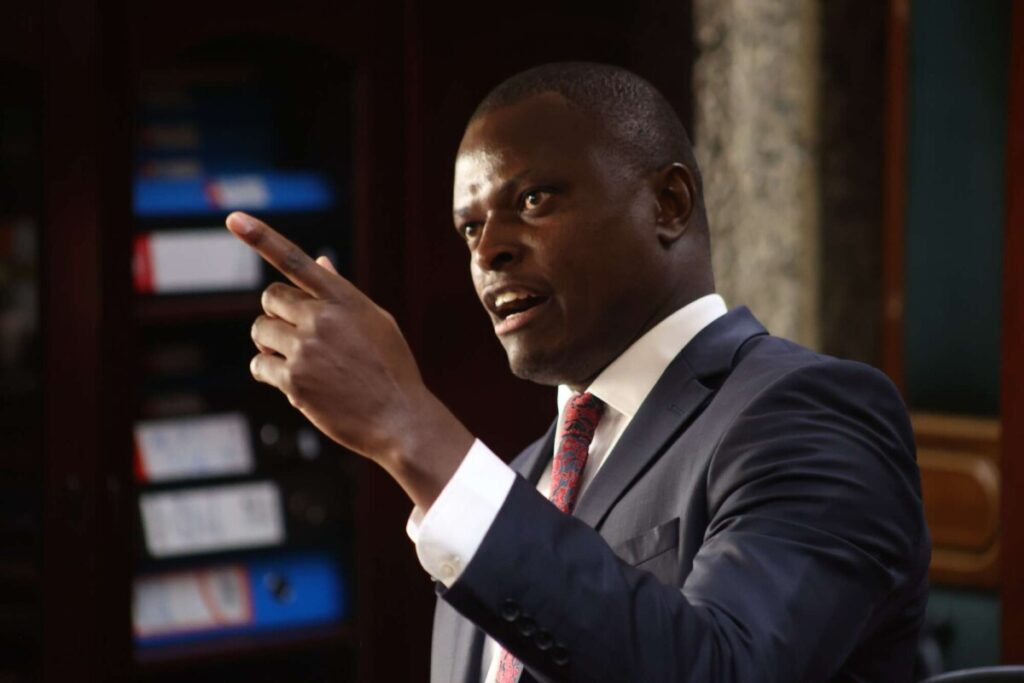
Today, Ndindi Nyoro, Member of Parliament for Kiharu, dropped a financial truth bomb: that a 7-shilling fuel levy, sneaked in when global oil prices were falling, was securitized to raise a 175 billion shilling loan.
Read that again.
This wasn’t a publicized, debated loan. It wasn’t approved by Parliament.
This was backroom borrowing, funded by you, every time you pay for petrol.
Check the EPRA fuel prices today in Kenya and ask yourself: Why is petrol so high when oil is cheaper globally? Why is petrol price today in Nairobi not reflecting the global market trend?
Because it’s not about oil. It’s about securitized levies.
Fuel Prices and Taxes in Kenya Are No Longer About Energy
The fuel price in Kenya today is a political tool. It is a debt vehicle. It is the new collateral. According to Ndindi Nyoro, over 80 shillings of every litre of petrol you pay goes to taxes and levies. And now we know part of that isn’t just for development, it’s used as loan security.
That’s the danger.
The government didn’t come to Parliament. It didn’t hold a press conference. It just quietly packaged that 7-shilling levy, took it to banks, and borrowed KSh 175 billion.
This is the securitization of levies. It means future government revenues are being sold to fund today’s political priorities. And once the levy is used as loan security, you can’t lower it, even if global prices fall. The bankers want their repayment. Not your relief.
What the Books Don’t Show
This loan isn’t on record. It’s not listed in the official debt register. It’s off-balance sheet debt. That means it doesn’t count toward Kenya’s official debt-to-GDP ratio. It also means no institutional oversight, no public debate, no accountability.
That’s more than a financial trick. It’s a constitutional betrayal.
Because the Constitution demands that all public borrowing be tabled in Parliament. If Treasury officials themselves, as Nyoro suggests, can’t answer where this money came from, at what interest, and under what repayment terms, then we’re looking at the clearest case of hidden government borrowing Kenya has ever seen.
And that means it’s illegal.
What Happens When You Pre-Spend the Future?
Once a fuel levy is securitized, it’s locked in. The money is already committed. The loan has already been disbursed. So even if Kenyans protest, if oil prices plummet, or if international energy markets stabilize, EPRA fuel prices today in Kenya will not drop. Why? Because repayment has priority.
You are not paying for fuel. You are repaying debt.
It gets worse. Nyoro warns that this practice is spreading. The same “creative financing” is being applied to the Sports Fund, the Digital Levy, even U-Levy streams. That means the government is rapidly locking itself out of future fiscal decisions.
It’s like burning your paychecks for the next seven years and still expecting to feed your family.
Securitization Is a Weapon of Economic Capture
The Ndindi Nyoro fuel levy revelations show us that Kenya’s government has found a way to spend ahead of earning. It’s called securitization, and while it’s not inherently illegal, doing it without transparency, parliamentary oversight, or public knowledge is fiscal sabotage.
When banks lend against these levies, they become invested in keeping taxes high. And as long as the loans are hidden, citizens have no way to push back.
Ask yourself: What if the Chinese Exim Bank now demands to securitize our VAT? What if another lender targets our PAYE, or corporate income tax? At what point do we admit we’ve sold the Republic in installments?
Where Are the Institutions?
Why isn’t the Central Bank of Kenya calling this out as fiscal risk? Why hasn’t Parliament opened a public inquiry? Why are mainstream news outlets silent?
Because securitization is the perfect political tool: it avoids public debate, spends money now, and lets someone else clean up later.
We’ve seen this play out elsewhere. In Greece, in Argentina, in post-Soviet economies. The tactic is always the same: offload future revenue, hide the debt, and hope voters stay distracted.
Fuel Prices Will Not Come Down Until Truth Comes Out
Check the petrol price today in Nairobi. Ask yourself: Do global market trends justify it? No. But the repayment schedule for that 175 billion loan Kenya took on says otherwise.
This is financial capture disguised as energy policy. And the people paying for it are not the politicians, not the bureaucrats, but the citizens who wake up every day to high fares, high food costs, and zero relief.
We are being bled dry one litre at a time.
The Truth Is the First Step Toward Freedom
Kenya doesn’t just need better leadership. We need fiscal detox. We need to pull back the curtain on these hidden debts, demand full accounting of every securitized levy, and put strict limits on how revenue streams can be used for collateral.
Otherwise, it won’t matter who wins in 2027. Because the money will already be spent. The loans are already signed. The next government reduced to a ceremonial accountant for yesterday’s sins.
And that’s not a future worth fueling.