

The World Bank has recommended an overhaul of Kenya’s Pay-As-You-Earn (PAYE) tax brackets, proposing the introduction of a sixth tax band that would raise the marginal rate for monthly incomes above KSh 800,000 from 35% to 38%. The new framework is intended to be revenue-neutral, shifting more of the tax burden to top earners while reducing rates for low- and middle-income groups.
Under the proposal, incomes below KSh 166,677 per month would attract lower PAYE rates, with notable adjustments including a cut in the tax rate for salaries between KSh 24,000 and KSh 32,333 from 25% to 15%. A 25% rate would apply to pay up to KSh 166,667, while intermediate earnings up to KSh 500,000 would be taxed at 32.5%. Those earning between KSh 500,000 and KSh 800,000 would continue paying 35%, and a new 38% rate would be introduced for those exceeding KSh 800,000.
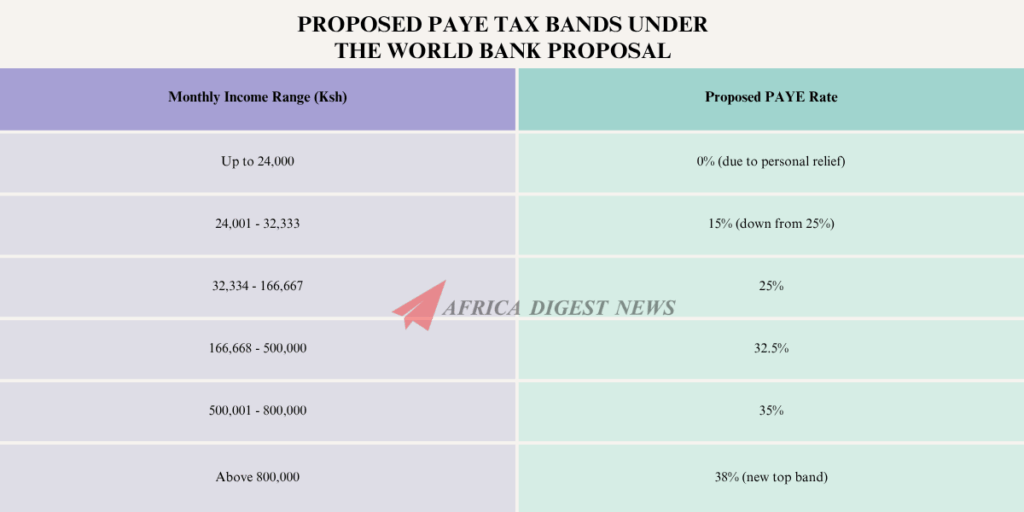
The World Bank argues that Kenya’s existing PAYE structure places an excessive burden on low-wage earners and discourages formal employment. Incomes have been hit by multiple statutory deductions in recent years, including the 1.5% housing levy, 2.75% social health insurance contribution, and higher NSSF deductions. Data shows that average real monthly wages fell from KSh 62,256 in 2020 to KSh 55,451 in 2023.
For example, under the proposed tax structure, a worker earning KSh 50,000 per month would see a net income increase of about KSh 179. In contrast, someone earning KSh 1 million would pay approximately KSh 12,100 more in tax. According to the World Bank, this adjustment affects less than 10% of formal-sector workers but helps maintain total tax revenue by shifting the tax load to high-income earners.
Read: How Big Firms May Soon Pre-Negotiate Their Taxes
The revised PAYE structure is aimed at addressing Kenya’s public finance gap without deepening the tax strain on the majority. By making the tax curve more progressive, the World Bank hopes to expand the tax base over time by encouraging formalisation among low-income earners, while also improving tax equity.
Currently, Kenya’s PAYE system comprises five bands. Under the Finance Act 2023, the first KSh 24,000 is taxed at 10%, followed by 25% on the next KSh 8,333. Income falling within the next KSh 467,667 is taxed at 30%, while the subsequent KSh 300,000 attracts a 32.5% rate. Any monthly income exceeding KSh 800,000 is taxed at 35%. A personal relief of KSh 2,400 per month applies, setting the minimum taxable income at KSh 24,001.
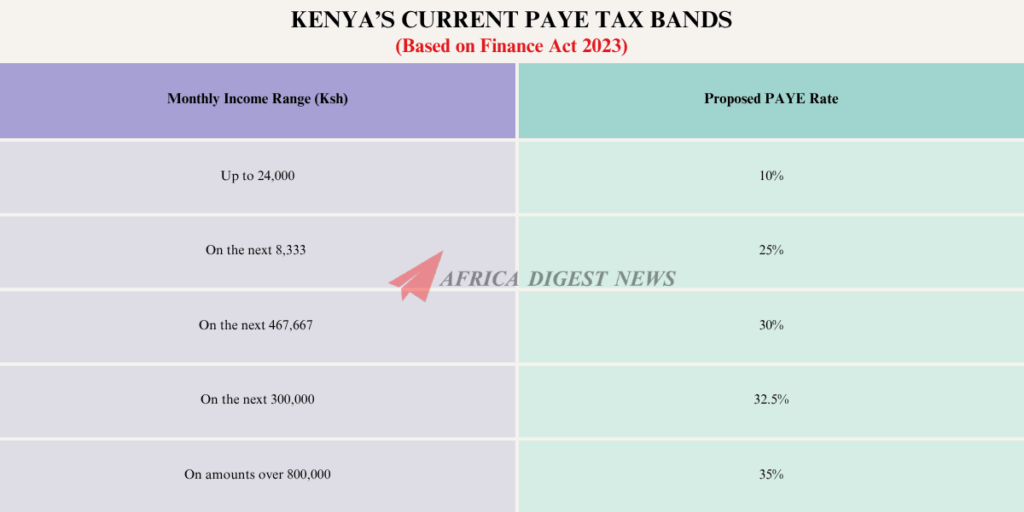
The lender has argued that current band widths result in individuals with vastly different incomes, such as KSh 400,000 and KSh 9 million annually, being taxed at similar marginal rates. This undermines vertical equity, where higher earners should contribute proportionately more.
Read: Why Kenya Now Wants the Wealthy to Trade Shares Tax-Free
The proposed reforms also aim to reduce the average effective tax rate for low-income earners to about 18.7%, thereby increasing disposable income and stimulating consumption. Lower taxation in these brackets could also boost formal sector participation, particularly among younger and informal workers.
The World Bank has framed its recommendation as a means of balancing equity, fiscal responsibility, and growth. It notes that raising the top PAYE rate to 38% is necessary to recover lost revenues from lowering rates at the bottom, especially in light of Kenya’s rising debt and persistent fiscal deficits.
Jefferson Wachira is a writer at Africa Digest News, specializing in banking and finance trends, and their impact on African economies.