
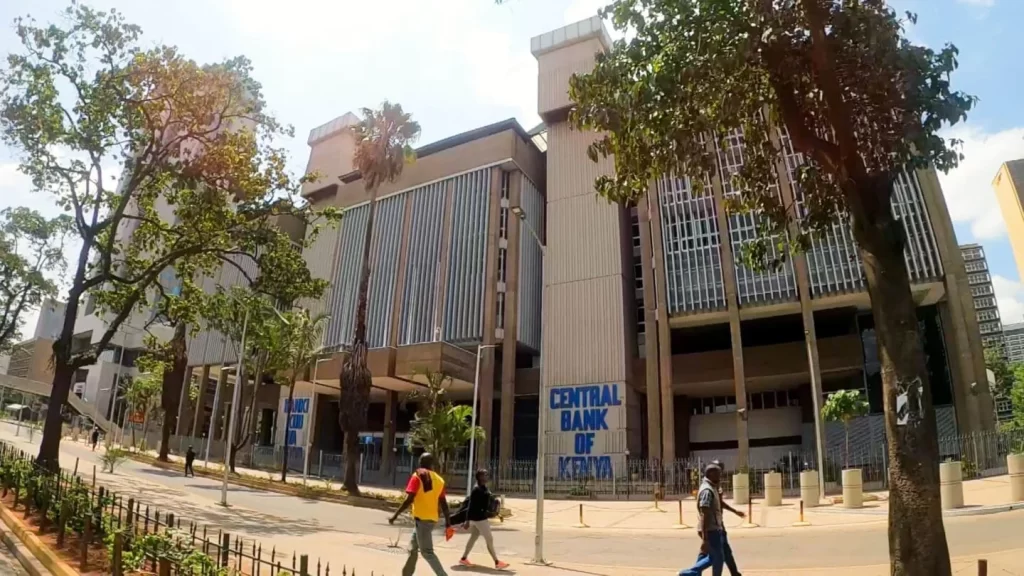
The Central Bank of Kenya (CBK) is set to begin identifying financial institutions whose failure could disrupt the country’s financial system and cause wider economic consequences.
The institutions, to be classified as Domestic Systemically Important Financial Institutions (D-SIFIs), will be subject to additional capital, liquidity, supervision, stress-testing and recovery requirements once designated.
CBK defines a D-SIFI as a financial institution operating in one or more countries whose disorderly failure could cause significant dislocations in the domestic or regional financial system and adverse economic consequences in the country or region. The framework will apply to banks and mortgage finance institutions licensed by the Central Bank.
How CBK Will Identify Systemically Important Institutions
CBK will assess financial institutions against five main metrics when determining whether they are systemically important. These are size, interconnectedness, substitutability, complexity and importance to the domestic economy.
The size assessment will consider the scale of an institution’s operations, while interconnectedness will examine the extent to which it is linked to other financial institutions and markets.
Substitutability will consider the availability of other institutions that can provide similar financial services if an institution fails. Complexity will capture the nature and structure of an institution’s operations, while importance to the domestic economy will assess its role in economic and financial activity.
The Central Bank will conduct the assessment once every calendar year, using information from banks and mortgage finance institutions licensed by the regulator. The assessment will be conducted as at December 31 each year.
Institutions designated as D-SIFIs will be notified in writing by the end of March of each calendar year, while the list of designated institutions will be published by June.
Higher Capital and Supervision Requirements
Once an institution is classified as systemically important, CBK will require it to hold higher levels of capital through additional loss-absorbency requirements. The additional capital is intended to provide greater capacity to absorb losses in the event of financial stress.
D-SIFIs will also face more intensive supervision under CBK’s Risk Based Supervision framework. This will include greater intensity and/or frequency of targeted on-site and off-site supervision, together with closer monitoring and surveillance of key performance indicators.
The requirements will therefore place systemically important institutions under a higher level of regulatory scrutiny than other institutions in the banking and mortgage finance sectors.
Quarterly Stress Tests
Designated institutions will also be required to conduct stress tests every quarter to assess their ability to absorb losses arising from a range of economic and financial shocks. The tests will be used to evaluate the resilience of an institution under different adverse scenarios and its capacity to continue meeting its obligations.
D-SIFIs will additionally be required to conduct an Internal Capital Adequacy Assessment Process (ICAAP) and an Internal Liquidity Adequacy Assessment Process (ILAAP) at least once every year. The results of these assessments will be reviewed by CBK.
Recovery and Resolution Plans
Systemically important institutions will also be required to prepare recovery and resolution plans. The recovery plan will set out measures that an institution can take to restore its financial position during periods of stress, while the resolution plan will address how the institution could be handled if it becomes unable to continue operating normally.
The plans are intended to reduce the cost of failure and improve the ability of authorities and institutions to manage financial distress through early intervention, crisis recovery and resolution arrangements. D-SIFIs will be required to update and submit their recovery and resolution plans to CBK every year by April 30.
Higher Liquidity Requirements Possible
CBK may also require systemically important institutions to maintain higher liquidity ratios than non-D-SIFIs. The additional liquidity requirements will depend on prevailing funding and liquidity risks.
This means institutions considered critical to the financial system could face additional requirements not only on capital but also on the amount of liquid resources they are required to maintain.
The annual identification process will allow CBK to reassess which institutions meet the criteria for systemic importance based on their size, financial links, complexity and role in the domestic economy.
The designation will consequently determine which institutions are subject to the additional prudential requirements covering capital, liquidity, supervision, stress testing and recovery and resolution planning.