
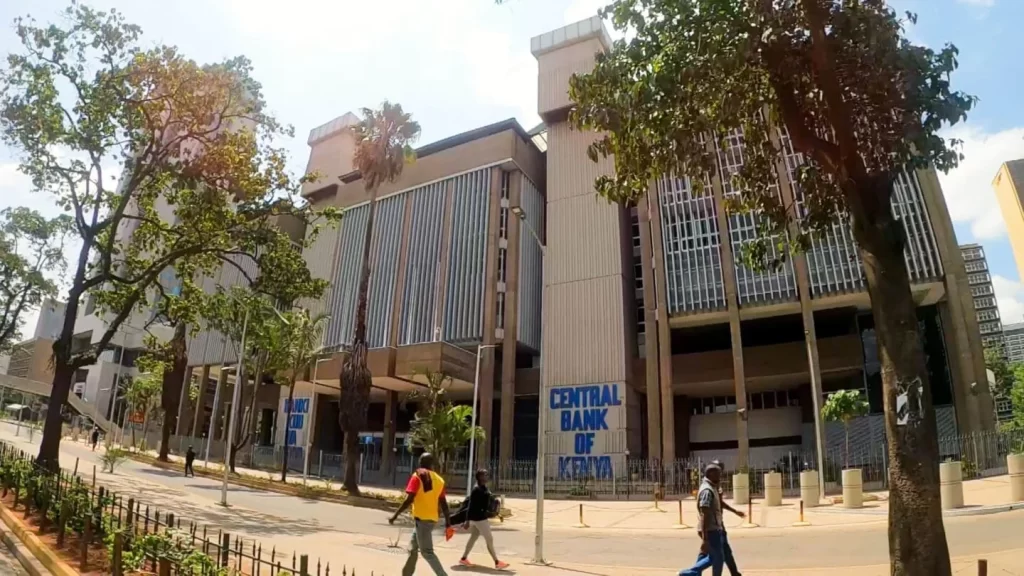
Kenya’s banking sector recorded multiple regulatory breaches in 2025, with commercial banks found to have violated requirements covering credit concentration, insider lending, capital adequacy, foreign exchange exposure, liquidity and corporate governance, according to the Central Bank of Kenya (CBK).
The findings were contained in the CBK’s 2025 Bank Supervision Annual Report, which reviewed compliance by financial institutions as of December 31, 2025. The central bank said appropriate remedial action was taken against the institutions involved.
Banks Breached Key Lending Limits
Ten commercial banks breached the single-obligor limit under Section 10(1) of the Banking Act. The rule limits a bank’s exposure to a single borrower to 25% of its core capital.
Insider lending requirements were also breached. Two banks exceeded the 20% limit for lending to a single insider borrower, while one bank exceeded the 100% aggregate limit for total insider borrowing.
The breaches are among the prudential requirements used to limit excessive concentration of credit and insider exposures within individual institutions.
33 Banks Penalised Over Credit Pricing Models
CBK also conducted targeted inspections in 2025 to assess how commercial banks were implementing Risk-Based Credit Pricing Models (RBCPM), which had been rolled out in 2019.
The inspections resulted in penalties against 33 banks, while administrative action was taken against two others. Only three banks were found to be fully compliant with the RBCPM requirements.
CBK subsequently issued a revised Risk-Based Credit Pricing Model in August 2025 following a consultation process.
Other Prudential Breaches
CBK identified further violations involving how banks used their capital and managed large exposures. Two commercial banks invested more than 20% of their core capital in land and buildings, breaching restrictions on prohibited business.
Another three banks exceeded the limit on aggregate credit facilities to large exposures, which is capped at five times an institution’s core capital under the relevant CBK prudential guideline.
Capital adequacy was another area of concern. Seven commercial banks failed to maintain the minimum core capital requirement of KSh3 billion. Five banks did not meet the 14.5% total capital-to-total-risk-weighted-assets requirement, while four failed to meet the 10.5% core capital-to-total-risk-weighted-assets ratio.
Three banks also failed to maintain the required core capital-to-total-deposit ratio of 8%.
Foreign Exchange and Liquidity Requirements
Two commercial banks breached CBK rules requiring foreign exchange exposure to remain at no more than 10% of core capital.
Liquidity requirements were also breached by one commercial bank, which failed to maintain the statutory minimum liquidity ratio of 20%.
These requirements form part of the prudential framework through which CBK monitors banks’ ability to absorb risks and meet their obligations. The central bank’s supervisory mandate includes monitoring the solvency, liquidity and proper functioning of regulated financial institutions.
Corporate Governance Breaches
The 2025 CBK review also identified breaches related to ownership and board structures. Three banks violated requirements limiting ownership by any one person to a maximum of 25%. Another three institutions failed to meet requirements for board composition, which include having at least five directors and having at least three-fifths of directors serve as non-executive directors.
One institution also breached the requirement that transfers involving 5% shareholding in a bank receive CBK approval. CBK said remedial actions were taken against the institutions concerned.
Microfinance Banks Remained in Losses
While the commercial banking sector faced multiple compliance issues, Kenya’s microfinance banking industry continued to record losses in 2025, although the size of the loss narrowed.
The sector posted a cumulative pre-tax loss of KSh2.9 billion in the year ended December 31, 2025, down 17.4% from KSh3.5 billion in 2024. Six of the 14 microfinance banks reported profits, up from four in 2024. The remaining eight recorded losses.
Kenya Women Microfinance Bank was the largest contributor to the sector’s losses, recording a KSh2.2 billion loss. Faulu Microfinance Bank posted a KSh387 million loss, while SMEP Microfinance Bank recorded a KSh270 million loss.
Lower Expenses Helped Reduce Losses
The improvement in the microfinance sector’s overall performance was driven largely by lower expenses. Total expenses fell 10.6% from KSh14.8 billion in 2024 to KSh12.5 billion in 2025. CBK attributed the reduction to cost-rationalisation measures implemented by microfinance banks and easing interest rates.
Staff costs fell by KSh841 million, or 19.1%, while interest and fees on borrowings declined by KSh519 million, or 42.5%. Interest and fees on deposits fell by KSh223 million, or 5.9%. The lower expenses helped reduce the sector’s overall loss compared with the previous year.
Returns Remained Negative
The sector’s return on assets improved from negative 6.1% in 2024 to negative 5.3% in 2025, reflecting the reduction in losses relative to total assets.
However, return on shareholders’ funds deteriorated sharply, falling from negative 78.2% in 2024 to negative 168.2% in 2025. CBK attributed the deterioration to the erosion of shareholders’ funds caused by the KSh2.9 billion sector-wide loss.
Capital adequacy also weakened. The microfinance sector’s core capital-to-total-risk-weighted-assets ratio fell to 0.1% in 2025 from 6.0% in 2024, while the total capital-to-total-risk-weighted-assets ratio declined to 1.1% from 7.0%. Both were below the applicable minimum requirements of 10% and 12%, respectively.
Five microfinance banks failed to meet capital adequacy requirements. Despite the capital challenges, the sector’s liquidity ratio stood at 44.4% at the end of 2025, above the statutory minimum of 20%. Two microfinance banks, however, failed to meet the liquidity requirement.