
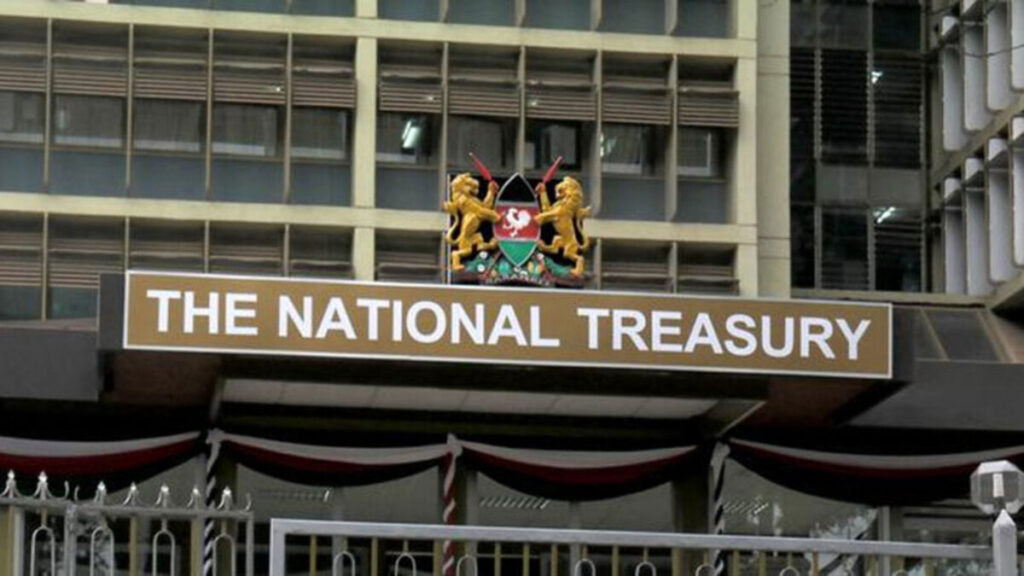
Kenya’s National Treasury has confirmed the initial capitalization of the National Infrastructure Fund (NIF) at KSh 310.6 billion ($2.4 billion), drawn from recent privatizations, as the government seeks to shift infrastructure financing away from taxes and public debt.
The fund, created under the National Infrastructure Fund Act, 2026, which was assented to in March, received KSh 106.3 billion from the Kenya Pipeline Company initial public offering and KSh 204.3 billion from the partial sale of the government’s stake in Safaricom PLC. Officials say the money is legally ring-fenced exclusively for commercially viable projects in transport, energy, water, and digital infrastructure.
“The National Infrastructure Fund and Sovereign Wealth Fund were established to mobilize private and institutional capital for commercially viable infrastructure projects, reduce reliance on taxation and public debt, and support long-term investments in strategic sectors,” the Treasury stated. The companion Sovereign Wealth Fund is intended to manage natural resource wealth for current and future generations.
Leverage Strategy Aims For Trillions
Treasury officials plan to use the KSh 310.6 billion as equity to attract private capital at a targeted 1:10 ratio. The goal is to unlock between KSh 3.5 trillion and KSh 4 trillion in long-term financing from pension funds, sovereign wealth funds, and other private investors. Over the next decade, the broader ambition is to mobilize about KSh 5 trillion.
The fund is designed to take major capital projects off the national budget, co-invest as equity to de-risk projects for private partners, prioritize local-currency financing, and recycle capital by refinancing or selling mature assets. Priority pipelines include the Rironi–Naivasha–Mau Summit highway, Standard Gauge Railway extension to Malaba, major dams for irrigation, high-voltage power lines such as Loosuk–Lessos, and fiber-optic and data-center expansions.
Unlike earlier privatizations whose proceeds entered the Consolidated Fund and often covered recurrent spending, the 2026 law requires these revenues to remain sequestered for infrastructure.
Governance And Early Obstacles
An investment policy proposing a minimum equity return of 7% and a 40% maximum sector exposure limit has been submitted to the National Assembly’s Finance and Planning Committee. The fund is to be overseen by a seven-member board comprising an independent chairperson, a Treasury representative, four private-sector directors, and two development banking experts, with a competitively recruited CEO serving up to two four-year terms. Parliament retains veto power over the investment policy.
Despite the capitalization, operations have not begun. No independent board has been appointed, and the law bars disbursements until one is in place. The High Court has ordered the Treasury to submit Auditor-General-certified accounts within 30 days and provide quarterly transaction statements tracking the KPC and Safaricom proceeds.
Legal challenges add further uncertainty. The High Court declared the Safaricom stake sale unconstitutional on procedural grounds. While the court declined to freeze the broader infrastructure fund to avoid disrupting major projects, the Treasury is appealing to the Court of Appeal.
Kenya’s public debt stands near KSh 12 trillion, and fiscal space is constrained. Officials present the NIF as a move toward an investment-led, blended-finance model. Critics and civil-society groups, however, point to the unresolved court cases, the absence of a board, and the need for stronger transparency as tests of whether the fund can avoid the opacity that has affected previous state vehicles.