
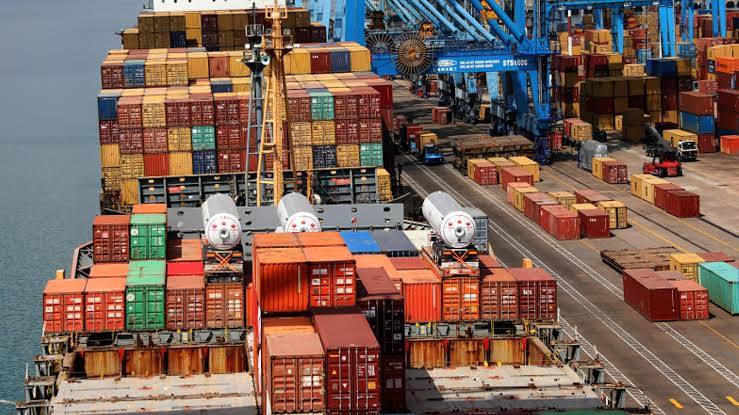
The Kenya Revenue Authority (KRA) has implemented a revised Customs Minimum Benchmark for general containerised consolidation cargo, increasing the reference value from KSh2.5 million to KSh3.2 million effective August 20, 2026.
The implementation follows the conclusion of a transitional period after consultations between KRA, the Kenya International Freight and Warehousing Association (KIFWA), representatives of small traders, cargo consolidators and other private-sector stakeholders.
The consultations focused on establishing a more predictable and equitable framework for customs valuation while addressing concerns over the misuse of cargo consolidation arrangements.
KRA said the revised benchmark is intended to promote fairness in trade, protect government revenue and ensure compliant businesses are not disadvantaged by traders who evade customs obligations.
“This is not about targeting small traders. It is about creating a level playing field where businesses compete fairly. A trader who declares goods correctly and pays the taxes due should not be disadvantaged by another trader who gains an unfair cost advantage through undervaluation, under-declaration or concealment of goods.”
Ksh3.2 Million Benchmark For Consolidated Cargo
The KSh3.2 million figure is a minimum reference point and is not a flat valuation applicable to every container. Containers carrying high-value electronics, machinery, specialised equipment or other goods may have an actual customs value above the benchmark.
Where the actual value of goods exceeds KSh3.2 million, importers are required to make accurate declarations, with the goods subjected to the applicable customs valuation and tariff treatment.
“The KSh3.2 million benchmark does not mean that every container is valued at KSh3.2 million. If the actual value of the goods is higher, that value must be declared and the correct taxes paid. The benchmark is intended to strengthen valuation controls, not to provide a ceiling for the value of imported goods.”
KRA Cites Customs Compliance Concerns
Cargo consolidation allows small traders to combine shipments in a single container, helping reduce the cost of international trade.
However, KRA has identified instances where consolidation arrangements have been used to facilitate customs non-compliance through undervaluation, under-declaration, misdescription, misclassification and concealment of high-value goods.
According to the Authority, such practices can result in revenue leakage and distort competition by allowing non-compliant businesses to bring goods into Kenya at artificially low costs.
High-value electronics, including smartphones, are among the products that can be affected. A high-end phone, for instance, could be declared as a lower-value model to reduce the customs value and taxes payable.
KRA has also raised concerns over larger importers using consolidation arrangements to reduce their tax obligations, which the Authority said creates an unhealthy business environment for compliant traders.
The review of the customs benchmark also takes into account the fact that the previous KSh2.5 million threshold had remained unchanged for approximately six years. The KSh2.5 million benchmark was agreed following engagements between small traders and the Government, with an understanding that it would be reviewed upwards after one year.
The review did not take place, leaving the benchmark unchanged despite changes in economic conditions, import values and the nature of goods entering Kenya. The adjustment to KSh3.2 million provides a more current and predictable reference point for customs administration.
Revised Benchmark and Local Manufacturers
KRA said the revised benchmark also seeks to protect legitimate businesses and local manufacturers from competition created by undervalued or inaccurately declared imports.
When imported goods are undervalued or incorrectly declared, they can enter the Kenyan market at artificially low costs. This can give them an advantage over locally manufactured goods whose producers comply with tax and other regulatory requirements.
“Fair competition requires businesses to compete on the basis of efficiency, quality and innovation, rather than through avoidance of taxes. Protecting the integrity of the customs system also protects compliant businesses and supports local manufacturing.”
The Authority said the revised benchmark should not be characterised as a dispute between KRA and small traders. KRA recognises the contribution of small businesses to the economy and acknowledged that many traders and consolidators comply with customs requirements and pay the taxes due.
The concern, according to the Authority, is with non-compliant practices that give some businesses an unfair advantage.
Traders Reminded Of Domestic Tax Obligations
KRA has also reminded traders that compliance does not end after consolidated cargo has been cleared through customs. Traders who subsequently sell their goods in markets including Eastleigh, Kamukunji, Nyamakima and Toy Market are required to meet their applicable domestic tax obligations.
These include appropriate business registration, electronic invoicing requirements where applicable, and accurate declaration of income and taxes due.
KRA said traders should maintain compliance across the entire supply chain, from importing goods and paying customs taxes to selling the goods in the domestic market.
“Importing goods and paying customs taxes is only one part of compliance. When the goods enter the domestic market and are sold, the trader must also meet the applicable tax obligations. Every business must contribute its fair share towards national development.”