
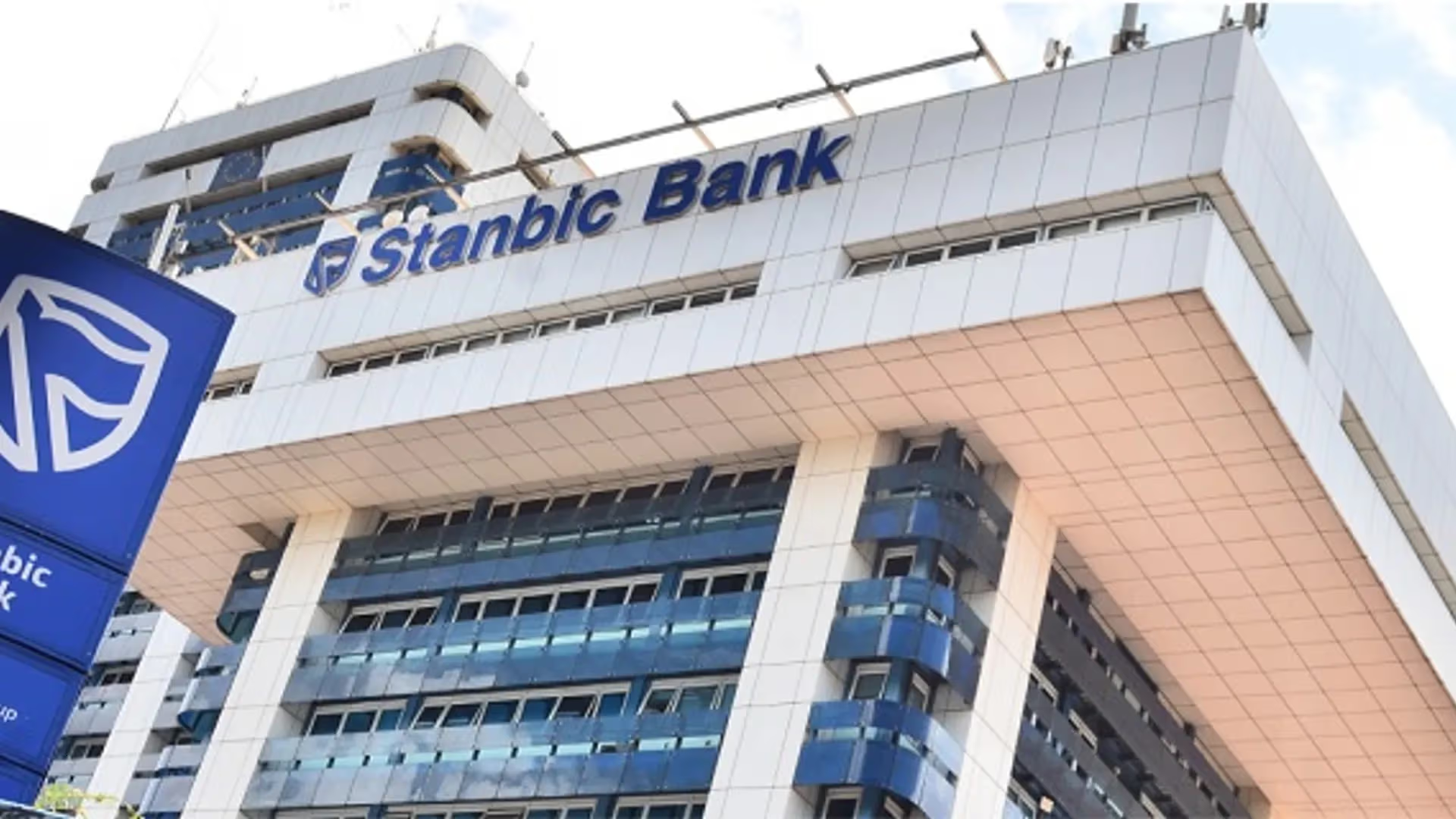
Francis Karuhanga said Stanbic Uganda Holdings Limited posted profit after tax of UGX 591 billion, a 23.6% increase, as the lender expanded lending, deposits and digital banking usage across its operations.
“We delivered UGX 591Bn in profit after tax, up 23.6%. But beyond the numbers, this performance reflects something bigger, a franchise executing with discipline, scaling with purpose, and actively driving Uganda’s growth. Every shilling of growth is anchored in supporting businesses, households, and national development priorities.”
Total income rose 11% to UGX 1.44 trillion, supported by activity across corporate, retail and institutional banking segments.
“Total income grew 11% to UGX 144Tn. This growth is powered by a diversified, resilient business model, enabling us to support clients across sectors while sustaining long-term value creation. It is this scale that allows us to invest in financial inclusion, enterprise growth, and infrastructure development,” Karuhanga said.
Deposits and Lending Drive Balance Sheet Growth
Customer deposits increased 12.9% to UGX 8.0 trillion, providing liquidity for lending across key sectors of the economy.
Mumba Kalifungwa said deposit growth pointed to continued uptake across retail and corporate customers.
“Customer deposits grew 12.9% to UGX 8.0Tn. This is a strong signal of trust from individuals, businesses. and institutions across Uganda. These deposits are not idle, they are transformed into loans that fuel businesses, support households, and unlock economic opportunity.”
The bank’s loan book expanded 16.4% to UGX 5.1 trillion, with credit extended to trade, manufacturing, agriculture and households.
“Our loan book expanded 16.4% to UGX 5.1Tn. This represents real capital deployed into the economy. supporting trade, manufacturing. agriculture, and households. It is how we translate balance sheet strength into enterprise development, job creation, and national productivity,” Kalifungwa said.
Return on equity reached 26.8%, above the group’s 20% target.
“We are delivering strong returns while staying anchored to purpose, proving that financial performance and positive impact can go hand in hand,” Karuhanga said.
Digital Channels Reshape Customer Behaviour
Stanbic reported a shift toward digital banking, with fewer than 10% of customers visiting branches for transactions.
“Fewer than 10% of our customers now need to visit a branch to transact. The vast majority prefer self-service and alternative channels – from agency banking to our mobile app. USSD, and internet banking platforms. This behavioural shift reflects the impact of our sustained investment in digital banking, which is expanding access, reducing barriers, and accelerating Uganda’s transition toward a cashless economy. Digital is no longer just an option; it is a powerful driver of financial inclusion, efficiency, and nationwide economic participation,” Kalifungwa said.
SME Financing, Women-Focused Lending and Industrial Investment
In 2025, the group mobilised more than UGX 8 trillion in deposits, channeling funds into lending and investment. Through its Stanbic4Her programme, 9,379 loans were extended to 21,653 women, with deposits reaching UGX 109.88 billion. The bank also disbursed UGX 289 billion to 912 SACCOs and VSLAs since 2021. The Stanbic Incubator Programme reached 3,396 SMEs and 5,555 individuals, including 3,611 women and youth-led enterprises. A total of 2,485 SMEs completed digital capability training.
Stanbic invested over UGX 650 billion in energy and infrastructure in 2025, including a $36 million term loan to support construction of a second pharmaceutical manufacturing facility by Quality Chemicals Uganda. A further $195 million was extended to finance new local manufacturing projects. The bank also supported 1,164 innovators through climate-focused incubation programmes aimed at improving agricultural productivity and sustainability.
Community Investment and Education Programmes
Stanbic invested more than UGX 2.7 billion in corporate social initiatives, reaching about one million people. Education accounted for 61% of the funding, led by the National Schools Championship programme involving over 600 schools focused on entrepreneurship and innovation.
Jefferson Wachira is a writer at Africa Digest News, specializing in banking and finance trends, and their impact on African economies.