
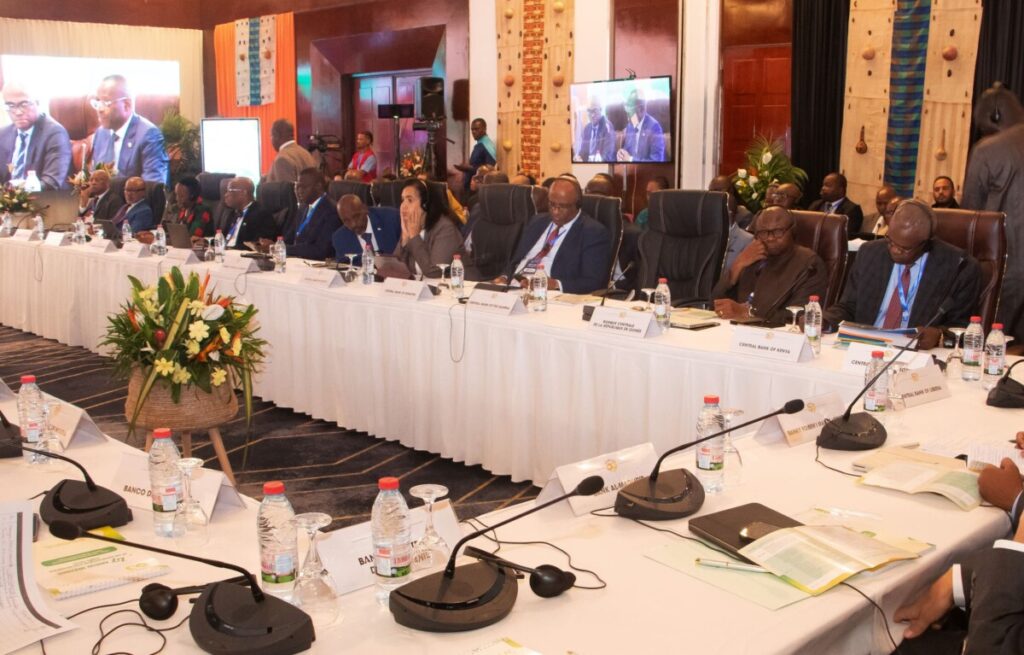
Artificial intelligence, financial stability, climate-related risks, digital finance and African monetary cooperation will feature among the key issues as central bank governors and other monetary authorities gather in Nairobi for the 2026 Annual Meetings of the Association of African Central Banks (AACB).
The meetings, scheduled for September 13 to September 18, will bring together African central banking institutions for a series of technical and policy discussions. The agenda comes as African central banks continue to address changes in technology, financial markets, cross-border payments and macroeconomic conditions across the continent.
Artificial Intelligence and Machine Learning in Central Banking
Artificial intelligence will be among the major areas of discussion during the AACB Nairobi meetings, with a dedicated AI Conference forming part of the programme.
Central bank officials are expected to examine the growing use of AI and machine learning in central banking and financial regulation. Applications under discussion include economic modelling, fraud detection, systemic risk assessment and regulatory technology.
The increasing availability of data and automated analytical tools is creating new applications for monetary authorities and financial regulators. At the same time, the adoption of AI raises questions around governance, data management, cybersecurity and the reliability of automated systems.
The AI Conference will provide a platform for discussions on how central banks can approach the use of emerging technologies within their policy, supervisory and operational functions.
Financial Stability and Climate-Related Risks
Financial stability will also be a key subject during the meetings, building on the work of the AACB’s African Financial Stability Committee.
Central bank governors are expected to consider developments affecting financial systems across the continent, including systemic vulnerabilities and the interaction between banking sectors and sovereign governments.
The discussions will also cover the integration of climate-related financial risks into financial stability monitoring and regulatory frameworks.
Climate events and environmental changes are increasingly being considered by financial authorities because of their potential effect on economic activity, asset values, insurance systems and financial institutions.
The African Financial Stability Report is expected to remain an important reference point in discussions involving the continent’s financial stability framework.
Digital Finance, Financial Inclusion and Cybersecurity
The continued expansion of digital financial services will also feature on the agenda. African countries have experienced rapid growth in mobile money, digital payments and other technology-based financial services. The expansion of these systems has increased access to financial services while also creating new regulatory and operational challenges.
Central bank officials will consider issues surrounding the development of digital financial infrastructure, including cross-border financial services and payment systems.
Cybersecurity will form part of these discussions as financial institutions and regulators address risks associated with increasingly interconnected digital systems.
The challenge for regulators is to develop frameworks that address cyber threats and other risks associated with digital finance while supporting the continued development of financial technology.
African Monetary Cooperation and Macroeconomic Convergence
The meetings of the Technical Committee and the Bureau will also focus on African monetary cooperation. Officials will review progress under the African Monetary Co-operation Programme, which supports cooperation and macroeconomic convergence among African countries and regional blocs.
The discussions are expected to cover developments related to inflation, reserve management and payment system integration.
Macroeconomic convergence remains central to efforts aimed at strengthening cooperation between African economies and supporting greater economic and financial integration across the continent.
The integration of payment systems is also becoming increasingly relevant as African countries seek to facilitate cross-border trade and financial transactions.
The Role of the Technical Committee and Bureau
The first part of the programme will be dedicated to meetings of the AACB’s Technical Committee from September 13 to September 15. The Technical Committee provides a forum for technical discussions on issues affecting central banking and monetary cooperation across Africa.
The Bureau will then meet on September 16 before the main symposium and official gala dinner scheduled for September 17.
These meetings will precede the 48th Meeting of the Assembly of Governors on September 18, where central bank governors will consider matters arising from the AACB’s work and discussions during the week.
CBK@60 and Six Decades of Central Banking in Kenya
The 2026 AACB Annual Meetings will also coincide with the CBK@60 celebrations, marking 60 years since the establishment of the Central Bank of Kenya in 1966. The anniversary will provide an opportunity for knowledge exchange on the development of central banking in Kenya over the past six decades.