
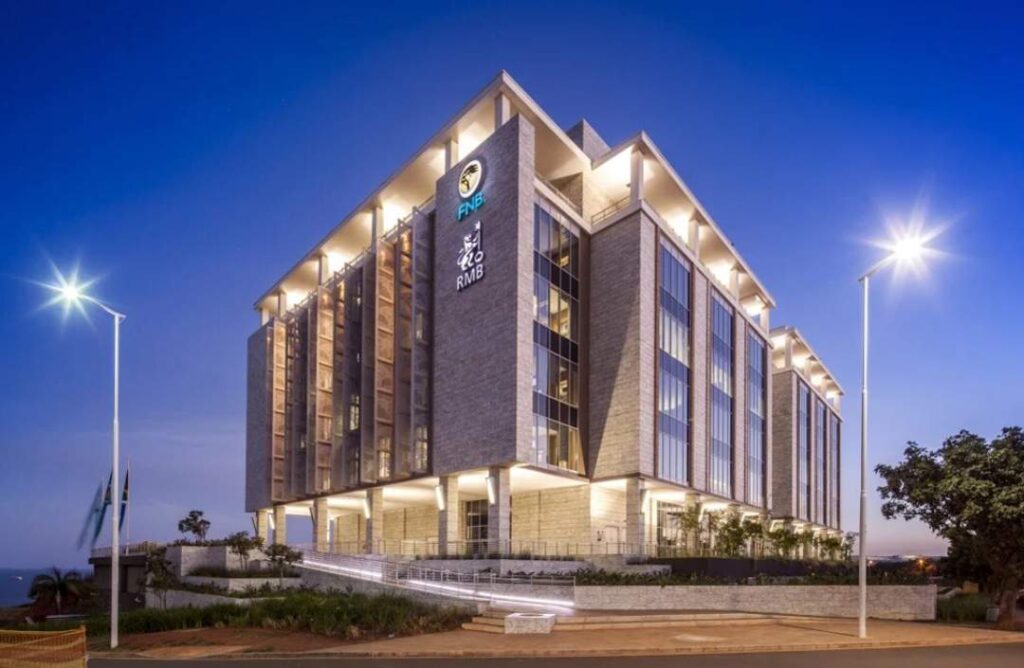
South African banking group FirstRand is searching for a bank to acquire in Kenya, but its preference for medium-sized acquisitions and reluctance to overpay could narrow the list of lenders that fit its strategy.
FirstRand chief executive Mary Vilakazi said the group has been looking for an opportunity to enter Kenya’s banking market through an acquisition for several years.
“We have been looking for opportunities in Kenya, even in my previous role [as COO]. However, there must be a willing seller at the right price for us to do any deal. What we will not do is overpay for any asset,” Vilakazi said.
FirstRand already maintains a representative office in Kenya but does not operate a full commercial banking subsidiary in the country. The group’s interest comes as South African lenders step up their expansion in Kenya, including through acquisitions and increased ownership of existing banking operations.
What kind of Kenyan bank is FirstRand looking for?
FirstRand’s acquisition strategy provides some clues about the type of lender that could attract its interest. The banking group has said its broader African expansion is focused on medium-sized bolt-on acquisitions that can provide existing infrastructure, local scale and an established customer base.
Such a deal would give FirstRand a platform from which to deploy its three core brands: FNB, which focuses on retail and digital banking; RMB, its corporate and investment banking business; and WesBank, which specialises in vehicle and asset finance.
This makes a mid-sized Kenyan commercial bank potentially more suitable than the country’s largest lenders, which already have substantial market share and could require a much larger investment.
- Prime Bank
Prime Bank is one of the mid-sized commercial banks that could fit FirstRand’s stated preference for a bolt-on acquisition. The bank has an established presence in corporate and business banking, giving it characteristics that could complement RMB’s corporate and investment banking operations.
An acquisition of an established lender would also give FirstRand access to an existing customer base and banking infrastructure rather than requiring it to build its Kenyan operation from scratch.
- Bank of Africa Kenya
Bank of Africa Kenya is another mid-sized lender whose corporate and SME banking operations could fit FirstRand’s expansion model. The bank provides FirstRand with a potential example of the type of established commercial banking platform that could support the group’s FNB and RMB businesses.
- Family Bank
Family Bank could appeal to FirstRand from a different angle because of its exposure to retail customers and small and medium-sized businesses.
The lender’s positioning in the SME and retail segments could provide a platform for FNB’s consumer and digital banking capabilities. Its established customer base would also give FirstRand an opportunity to introduce its digital banking products to an existing market rather than starting with a new customer base.
- Sidian Bank
Sidian Bank is another smaller commercial lender that could fit the profile of a bolt-on acquisition.
The bank has a strong focus on SMEs and micro-enterprises, giving it exposure to a segment that could complement FirstRand’s retail and business banking operations. Its smaller scale could also make it more consistent with FirstRand’s preference for medium-sized acquisitions than Kenya’s largest banks.
- SBM Bank Kenya
SBM Bank Kenya offers another potential fit because it already has an established commercial banking operation in the country. The bank entered Kenya through the acquisition of selected assets and liabilities of the former Chase Bank and has since developed its own banking operations.
For an international banking group, an established operation of this type could provide the infrastructure and customer base needed to scale more quickly. A transaction would nevertheless depend on whether the existing owner is willing to sell and whether the valuation meets FirstRand’s requirements.
Smaller banks could also attract interest
FirstRand’s search may not be limited to the better-known mid-sized lenders. Kenya’s smaller banks are facing increased pressure to strengthen their capital as regulators raise the minimum capital requirements for commercial banks.
The minimum core capital requirement is being increased from Sh1 billion to Sh10 billion, with banks given until December 2032 to meet the new threshold. The higher requirement could create further opportunities for consolidation if smaller lenders seek new investors or decide to combine with larger institutions.
For an acquirer such as FirstRand, a smaller bank could offer an existing banking licence, infrastructure and customer relationships that could be expanded through additional capital and the group’s banking brands. The trade-off would be the amount of capital and operational investment required to bring a smaller institution to the scale FirstRand wants.
Kenya’s banking consolidation race
FirstRand’s search comes as competition for Kenyan banking assets intensifies. Nedbank has already acquired up to 66 percent of NCBA Group, a transaction that gave the South African lender control of one of East Africa’s major banking groups.
Absa Group has also sought to increase its ownership of Absa Bank Kenya, although its recent offer to minority shareholders resulted in only a partial increase in its stake.