
Kenya’s banking sector continues to evolve, with some lenders recording strong growth in profits, assets, customer deposits, and loan books. While large banks often dominate in terms of total assets, growth rates provide a clearer picture of which institutions are expanding their businesses the fastest.
Bank growth is commonly measured using four key indicators. The first is total assets, which include cash, loans, investments, buildings, and other resources owned by a bank. The second is loan growth, which shows whether a lender is extending more credit to households and businesses. Customer deposits are another important measure, as rising deposits indicate growing public confidence and provide banks with funds to lend. Lastly, analysts look at profit after tax, which reveals how much income a bank retains after meeting all operating expenses and tax obligations.
The fastest growing banks in Kenya include:
- Family Bank: The Agile Mid-Tier Challenger
Family Bank has established itself as one of Kenya’s fastest-growing mid-tier lenders by focusing heavily on micro, small and medium enterprises (MSMEs), agriculture financing, and branch expansion. The bank has steadily increased its market presence while attracting fresh capital to support its growth plans.
The lender reported a 55.4% increase in profit after tax for the full financial year and carried that momentum into early 2026. During the first quarter of the year, net profit rose by 52.6% to KSh1.60 billion. Family Bank’s balance sheet has also grown considerably, with total assets nearly tripling since 2020.
One of the main reasons behind Family Bank’s rapid growth has been its increased lending to MSMEs and agricultural businesses. By targeting sectors that form a large portion of Kenya’s economy, the bank has been able to expand its loan portfolio and boost earnings. This strategy helped net interest income rise by 45.5%, showing stronger returns from its lending activities.
Family Bank strengthened its capital base after raising KSh8 billion through an oversubscribed private placement. The additional funds have supported an aggressive branch expansion strategy, allowing the lender to increase its footprint across 32 counties. The wider physical presence complements its digital channels and enables the bank to reach more customers in underserved markets.
The bank’s rapid expansion has also fueled expectations surrounding its planned listing on the Nairobi Securities Exchange. Access to public capital markets could provide additional funding opportunities and support its long-term growth ambitions.
- Equity Group: The Regional Tech Powerhouse
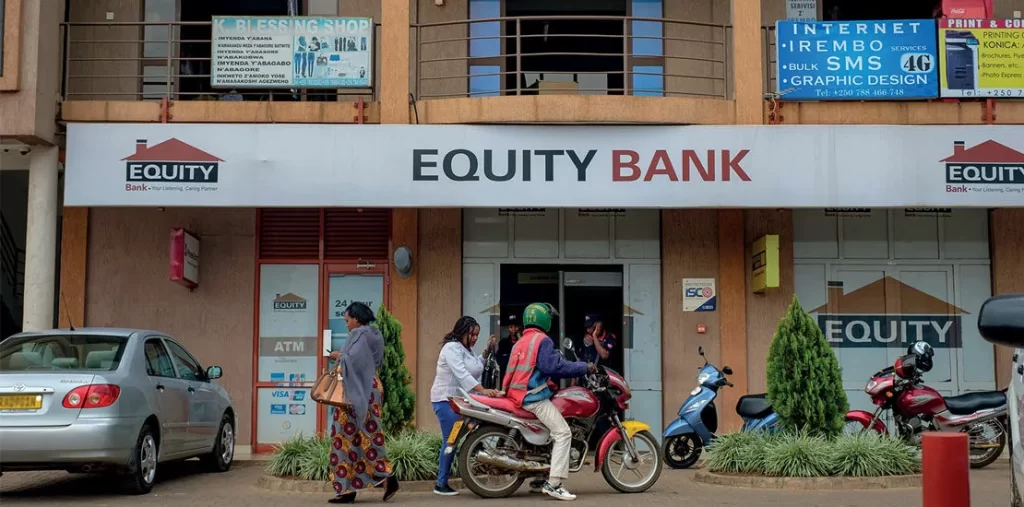
Equity Group remains one of the fastest-growing banking groups in East Africa, supported by regional subsidiaries, diversified business segments, and extensive investments in technology.
The banking group reported a 55% increase in profit after tax, reaching KSh75.5 billion for the year. During the first quarter of 2026, net profit grew by another 24% to KSh19.1 billion, while total assets expanded to KSh2.04 trillion.
A growing share of Equity Group’s earnings now comes from markets outside Kenya. The bank’s operations in Tanzania recorded a 150% increase in net profits, while Rwanda posted growth of 36%. In the Democratic Republic of Congo, profits rose by 32%.
The expansion of regional subsidiaries has enabled the group to diversify income streams and reduce dependence on a single market. This geographical spread has become an important contributor to overall profitability.
Equity Group has continued broadening its offerings beyond traditional banking services. Its insurance business has become an increasingly important source of revenue, with profit before tax increasing by 53% as gross written premiums expanded. Diversification into complementary financial services allows the group to serve customers through multiple channels while generating additional income streams.
Technology remains a central part of Equity Group’s growth strategy. Most customer transactions are now conducted through digital platforms, helping reduce operating costs and improve service delivery.
The lender has also invested in generative artificial intelligence training programs for employees to support operational efficiency and automate selected processes.
- I&M Group: The Corporate and Retail Hybrid
I&M Group has gradually transformed from a lender largely focused on corporate clients into a banking group with a growing retail presence and stronger digital capabilities.
The group posted a net profit of KSh5.04 billion during the first quarter of 2026 after maintaining strong earnings growth in previous periods. Its total assets have expanded to KSh742.51 billion.
Digital banking has played a major role in I&M’s expansion strategy. Approximately 98% of customer transactions are processed through digital channels, reducing branch-related costs and making banking services more accessible.
The increased use of digital platforms has enabled the bank to acquire and serve customers more efficiently while maintaining profitability.
As the bank continues expanding its loan portfolio, management has also taken steps to strengthen its balance sheet. Loan loss provisions increased by 63.3% to KSh2.61 billion, creating a buffer against potential defaults. Maintaining adequate provisions allows the bank to pursue lending opportunities while managing credit risks associated with economic uncertainties.
Operations outside Kenya have also supported growth. In Rwanda, profit before tax increased by 21%, while operating income in Tanzania rose by 40%. The contribution from regional subsidiaries helps diversify earnings and provides additional opportunities for expansion beyond the Kenyan market.
- KCB Group: The Asset Giant
KCB Group remains Kenya’s largest lender by assets and continues to grow through regional operations, corporate banking activities, and ongoing efforts to improve asset quality.
The group’s balance sheet expanded by 10.8% to KSh2.3 trillion. In the first quarter of 2026, pre-tax profit increased by 15.3% to KSh24.4 billion.
Regional businesses are becoming increasingly important to KCB’s earnings profile. Subsidiaries outside Kenya now contribute 29.5% of total group profits and account for 31.5% of the balance sheet.
This diversified structure enables the group to capture growth opportunities in multiple markets and reduce exposure to fluctuations in a single economy.
KCB has also focused on improving the quality of its loan book. The group reduced its non-performing loan ratio from 19.2% to 16.9% through debt recovery initiatives, restructurings, and enhanced risk management practices.
Lower levels of problem loans help preserve profitability and free up capital that can be deployed toward new lending opportunities.
The completion of the sale of its interest in National Bank has allowed KCB to redirect resources toward areas such as trade finance, corporate lending, and cross-border banking services. The move provides additional flexibility as the group pursues growth opportunities across East Africa.
Jefferson Wachira is a writer at Africa Digest News, specializing in banking and finance trends, and their impact on African economies.