
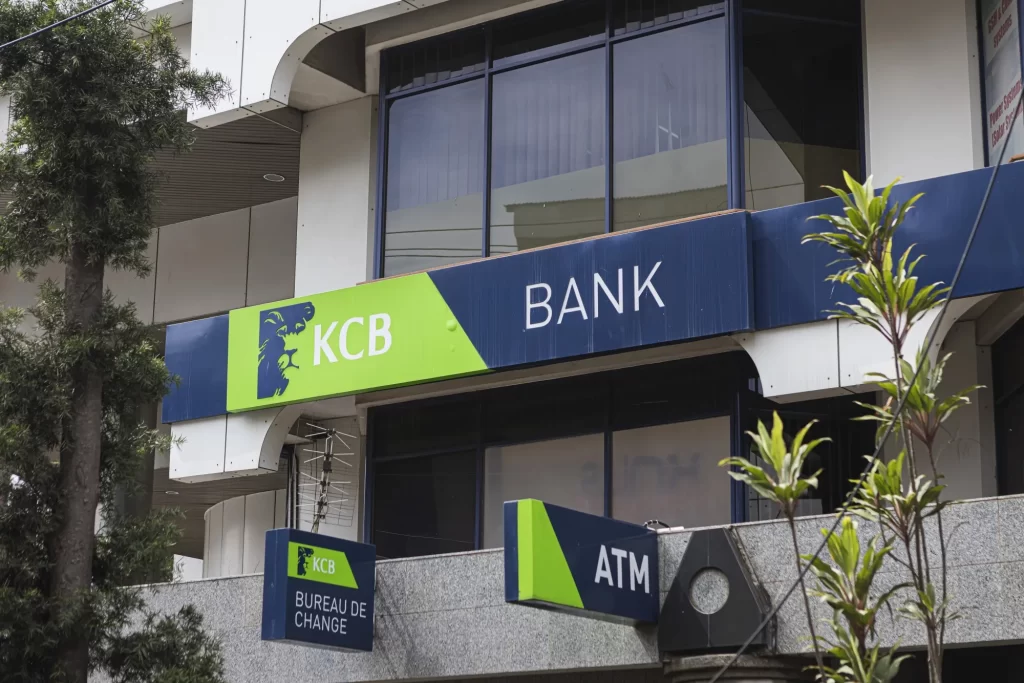
Ethiopia is opening its financial sector to foreign banks for the first time in over 50 years, and Kenya’s KCB Bank Group is preparing to become the first foreign lender to enter under the new regulations. According to officials at the National Bank of Ethiopia (NBE), KCB is in active discussions with regulators, following the enactment of a revised banking law that permits foreign ownership and participation in Ethiopia’s domestic banking system.
The change is anchored in the Banking Business Proclamation No. 1360/2024, passed in December 2024 and implemented in 2025. The law permits foreign banks to operate in Ethiopia through four modalities: as subsidiaries incorporated under Ethiopian law, as branches of foreign parent companies, as representative (liaison) offices, or through equity acquisition in existing domestic banks. Foreign ownership is capped at 40% for investors, with a total ceiling of 49% for all foreign shareholders in any single bank.
The accompanying directive, Requirements for Licensing and Renewal of Banking Business and Representative Office Directive No. SBB/XX/2025, sets out strict conditions for entry, including a minimum paid-up capital of 5 billion Birr (approximately $38.5 million), an investment-grade credit rating, and a no-objection letter from the bank’s home country regulator.
- Was $56 Million Really Stolen from Ethiopia’s Top Bank?
- Peter Ndegwa Appointed Safaricom Ethiopia Advisory Board Chairman
Ethiopia’s decision to open up its banking sector is rooted in an economic liberalization program initiated under Prime Minister Abiy Ahmed. For decades, the sector was shielded from foreign competition, dating back to the 1974 nationalization of all banks by the Derg regime. The state-controlled model concentrated financial power in institutions such as the Commercial Bank of Ethiopia (CBE) and the Development Bank of Ethiopia (DBE), while foreign banks were restricted to liaison offices with limited authority.
This model is now being restructured in response to growing economic pressures. Ethiopia faces chronic foreign exchange shortages, high inflation (targeted to drop below 10% by mid-2025), and a credit-constrained private sector. In 2023, the country defaulted on a $33 million Eurobond payment, prompting an agreement with the International Monetary Fund (IMF) in July 2024. As part of the program, Ethiopia committed to liberalizing its financial sector to improve investor confidence, attract capital, and enhance financial inclusion.
KCB Group’s interest in Ethiopia fits its pan-African expansion strategy. With existing operations in Kenya, Uganda, Tanzania, Rwanda, Burundi, South Sudan, and the Democratic Republic of Congo, KCB has built a strong regional presence, supported by a 2024 revenue base of $1.5 billion. KCB Group CEO Paul Russo has described Ethiopia as a “high-potential growth market,” citing its population of over 128 million, low banking penetration of around 46%, and increasing demand for formal financial services.
The arrival of foreign players like KCB is likely to reshape Ethiopia’s financial landscape. Local banks, numbering 29 as of 2025, will face new competition. The CBE alone accounts for 47.9% of total banking assets, but many domestic banks lack the digital infrastructure, capital reserves, and international expertise that KCB brings. Increased competition is expected to drive innovation, service improvements, and expanded financial access, especially for underserved communities.
However, the Ethiopian market carries risks. The country’s economic recovery remains fragile, with ongoing challenges related to currency volatility, political stability, and regulatory complexity. The July 2024 decision to float the Birr has improved forex availability but introduced uncertainty in exchange rate fluctuations.
Jefferson Wachira is a writer at Africa Digest News, specializing in banking and finance trends, and their impact on African economies.