

Mamo Mihretu’s tenure as the 10th Governor of the National Bank of Ethiopia (NBE), from January 2023 to his resignation on August 28, 2025, marked one of the most reform-driven periods in the country’s recent economic history. Appointed by Prime Minister Abiy Ahmed, he assumed office during a period of high inflation, depleted reserves, and a tightly controlled financial system. Over two and a half years, Mihretu implemented reforms that transformed monetary policy, liberalized the financial sector, and redefined Ethiopia’s engagement with international markets.
Entry: Appointment During Crisis
Mihretu assumed the governorship on January 10, 2023, succeeding Yinager Dessie. His appointment came as Ethiopia grappled with the fallout of the Tigray conflict, the COVID-19 pandemic, and reduced external financing. Trained as a lawyer with a master’s degree in public administration from Harvard, he was an unconventional pick for the role. Critics questioned his lack of economics training, but his experience as a senior advisor to Abiy and as head of Ethiopia Investment Holdings gave him a platform to advance the government’s Home-Grown Economic Reform Program.
In his inaugural speech as Governor of the National Bank of Ethiopia, he pledged to modernize the institution, stabilize the macroeconomy, promote financial inclusion, and better integrate Ethiopia into the global economy.
Key Achievements: Exchange Rate and Banking Reforms
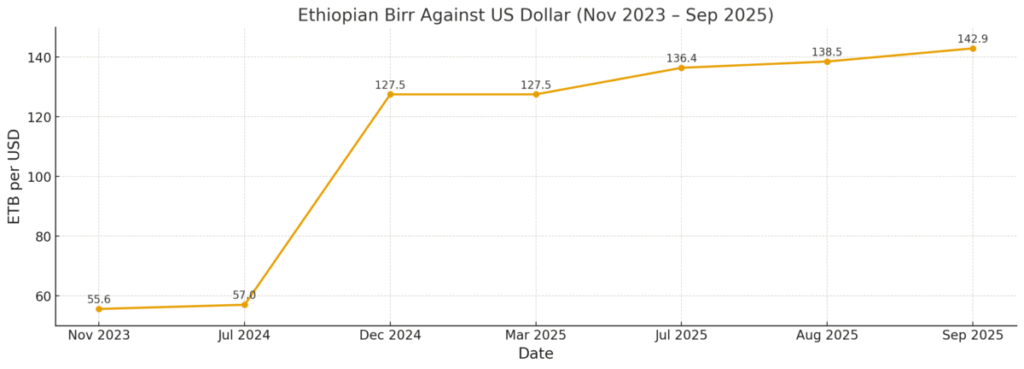
Mihretu’s tenure as Governor of the National Bank of Ethiopia was defined by structural reforms. The most consequential was the introduction of a market-based exchange rate in July 2024, ending decades of strict controls. The reform narrowed the gap between official and parallel market rates, reduced arbitrage, and boosted remittance inflows. By August 2025, foreign exchange reserves had tripled, covering three months of imports compared with critically low levels in 2022.
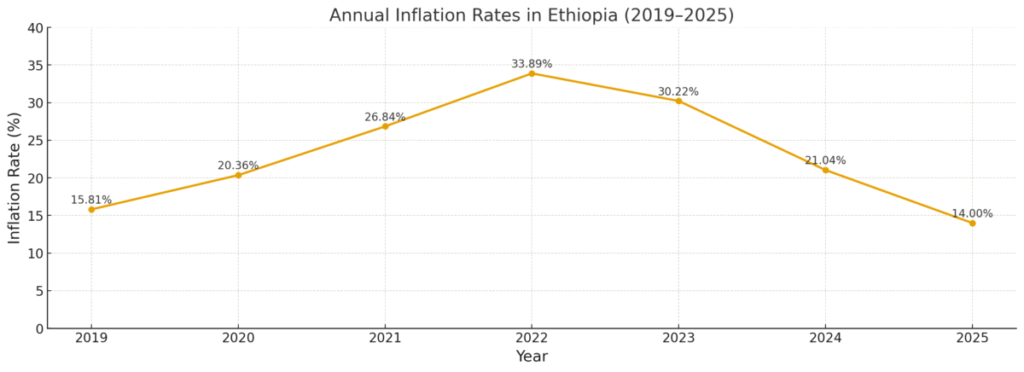
He replaced direct credit controls with an interest-rate-based framework, setting the policy rate at 15% and introducing open market operations. This helped inflation fall to 14% in July 2025, down from nearly 34% in 2022.
Mihretu opened Ethiopia’s banking sector to foreign competition, ending a domestic-only system. By mid-2025, international banks were preparing to enter, and financial sector assets had expanded to over 5 trillion birr ($35 billion). He also oversaw rapid growth in digital financial services, with mobile and fintech payments increasing tenfold.
- Will Ethiopia’s 1.3 Trillion Birr Credit Expansion Deliver on Its Promise?
- Ethiopia Omitted from World Bank’s 2025–2026 Income Classification
Capital market reforms advanced with the launch of the Ethiopian Securities Exchange in early 2025, which began trading in government T-bills. On the global stage, Mihretu secured $10.5 billion in financing from the IMF and World Bank to support reforms. Parliament also passed a new NBE proclamation in 2024, granting the central bank formal independence in line with international standards.
Challenges and Criticism
Reforms were not without costs. The birr’s flotation led to a 30% devaluation, pushing the currency to 138.5 per U.S. dollar by August 2025. The weaker currency drove up import prices, strained households, and hurt small and medium-sized businesses dependent on imported inputs. Critics argued that liberalization was too rapid and risked fueling social unrest in a politically fragile environment.
Questions over Mihretu’s non-economics background persisted, although his results muted some criticism. The 2024 proclamation that strengthened central bank independence created tensions with government officials who preferred stronger executive influence over monetary policy. Analysts suggested such institutional frictions, alongside the social fallout from the birr’s devaluation, may have weighed on his position.
Exit: A Surprise Resignation
On August 28, 2025, Mihretu announced his resignation in a public letter shared on social media. He expressed gratitude to Prime Minister Abiy Ahmed and pride in his contributions, saying he intended to pursue new challenges after seven years in public service.
The announcement surprised many observers, given his central role in ongoing reforms. While Mihretu framed the decision as personal, analysts noted that political pressures, the social impact of economic liberalization, and the complexities of managing an independent central bank could have influenced his exit.
As of September 4, 2025, no successor has been named to replace the 10th Governor of the NBE, leaving the institution in a transition period.
Jefferson Wachira is a writer at Africa Digest News, specializing in banking and finance trends, and their impact on African economies.